



RML2future Press releases

Informative meeting of partners at the Carinthian Slovenes

Download Pdf

Which new impulses can the Carinthian Slovenes offer to other European minorities? What can the Carinthian Slovenes learn from other minorities in Europe, in the field of education?

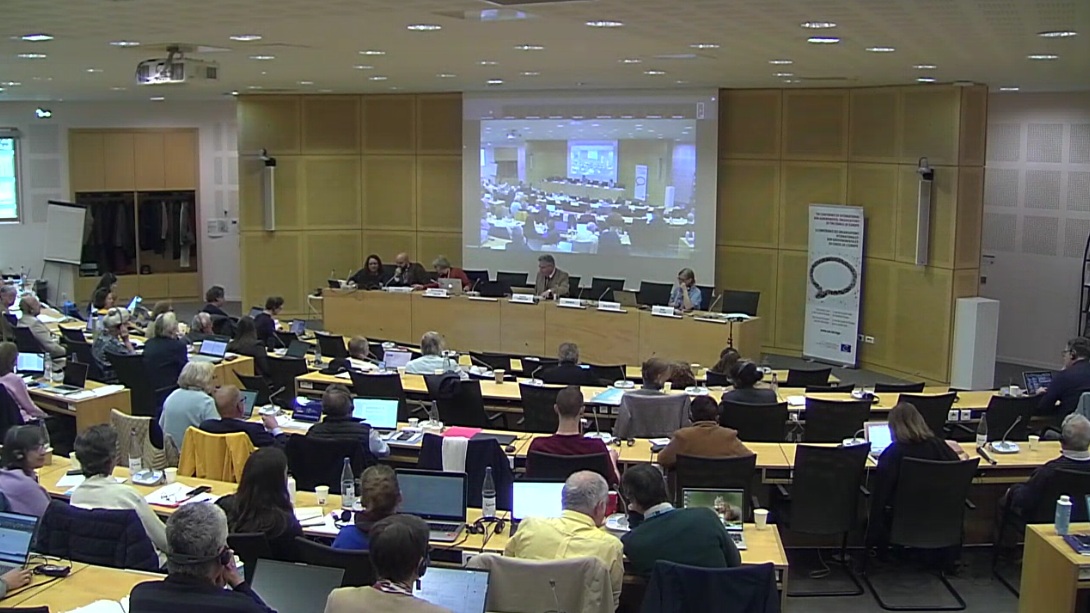
These questions were addressed from the 20th to the 22nd of January in Klagenfurt/Celovec during a meeting of the partners in the network RML2future, which is led by FUEN.  The meeting was organised by the Council of the Carinthian Slovenes, which is involved in the network project and is responsible for the working package “Early language learning”.

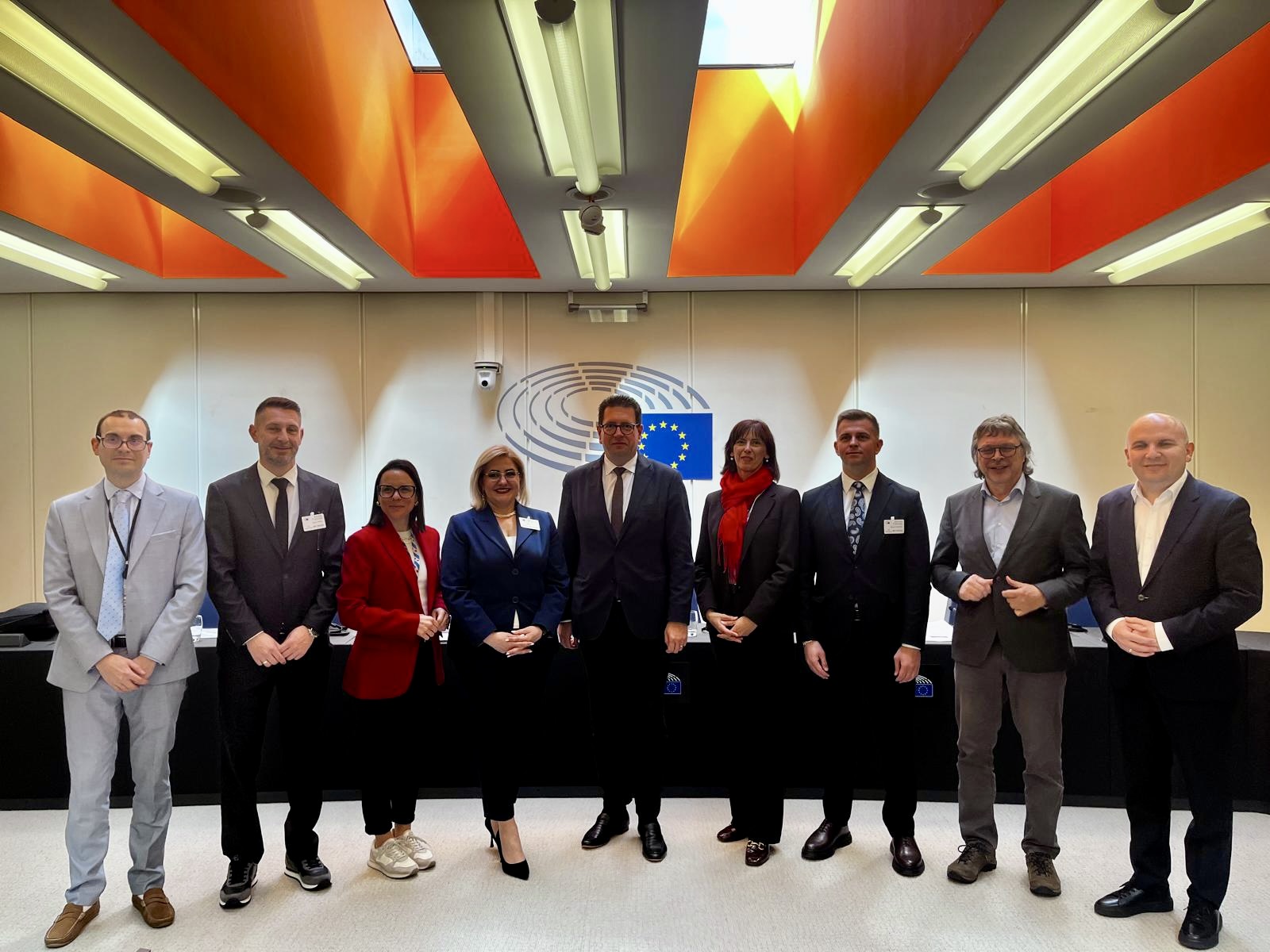
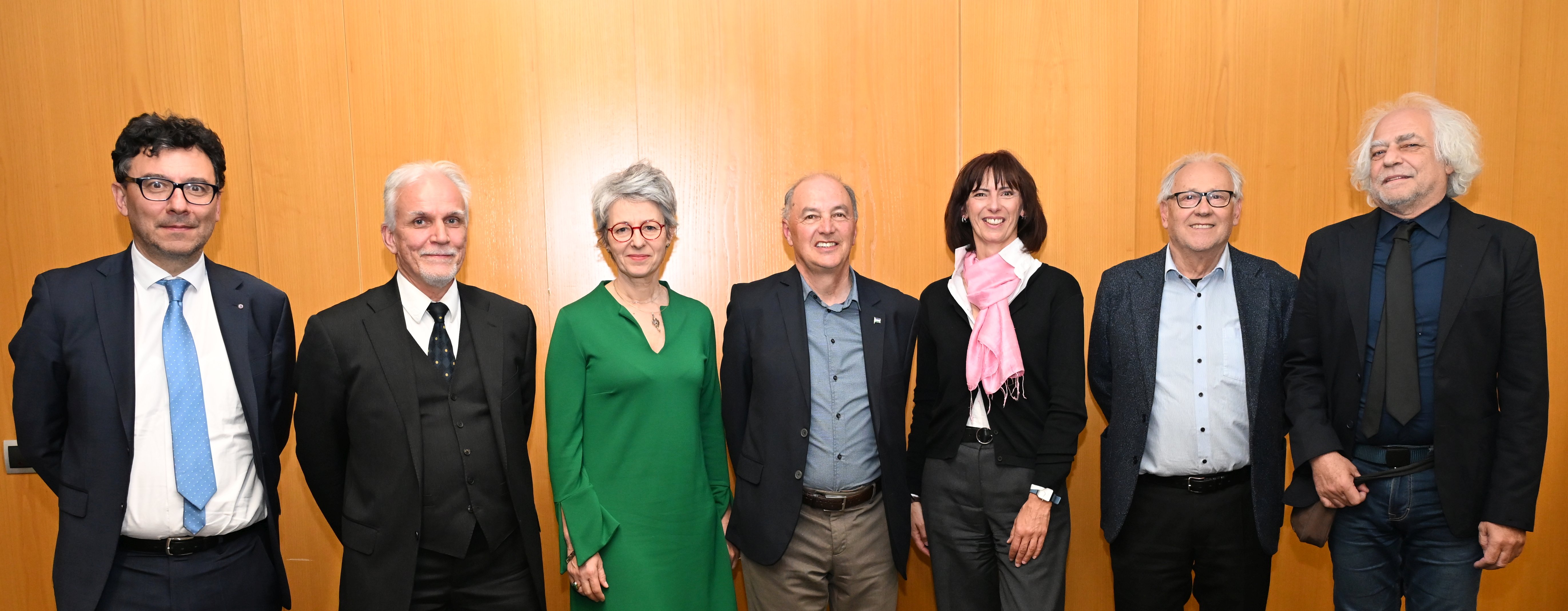
The participants of the labour-intensive and informative meeting between the partners (Judith Walde - FUEN, Hester Knol - YEN, Sabine Wilmes - EURAC, Edgar Hungs – German-speaking Community in Belgium, Timo Iwersen - Højskolen Østersøen, Janko Kulmesch – Council of the Carinthian Slovenes) had the opportunity to discuss the issue of early language learning with competent experts. This was done on the basis of the experiences of early language learning according to the bilingual and multilingual models for the Carinthian Slovenes and the cross-border model in the Alpe-Adria region, i.e. the border region of Carinthia, Slovenia and Italy (Friuli).

The discussion partners for the network were, apart from political representatives of the Carinthian Slovenes, amongst others the chairman of the working group on private bilingual and multilingual kindergartens, Mag. Stefan Kramer, his scholarly adviser and author of models of language learning in preschool education, Prof. Georg Gombos (University of Klagenfurt/Celovec), the director of the Centre for multilingualism and intercultural education at the college of education of Klagenfurt/Celovec, Mag. Ferdinand Stefan, the inspector for the bilingual minority school system in the Carinthian primary schools, Sabine Sandrieser, the vice-chairwoman of the Slovene association for professionals in the education field and Slovene teacher at the federal education institute for kindergarten teaching (BAKIP), Mag. Lucija Ogorevc-Feinig, and Antonilo Pasquaiello, director of the schools in the Friulian border municipality of Tarvisio/Tarvis/Trbiz, as well as employees of the bilingual kindergarten "Naš otrok/Unser Kind" in Klagenfurt/Celovec.

The tenor of the meeting was that the Alpe-Adria region offers an almost ideal regional example for research on practical implementation of the type of multilingualism the EU asks for (each European citizen should speak his mother tongue and two other languages) and in which of course the specific situation of the minority languages must be taken into account. In the discussion the importance of an evaluation of the minority language programmes and their sustainability was highlighted, as was effective promotion of multilingualism and consequently minority languages as well. 

In Carinthia and in the Alpe-Adria region several working meetings on the subject of “early language learning” will follow in 2010 and 2011, with the network involved. The results will be the basis for the Carinthian regional conference in the year 2011, which has as its goal to prepare tangible recommendations for professionals and decision makers and publish these as handout and as report.

Together with the German-speaking Community in Belgium the Network for Multilingualism and Linguistic Diversity will organise its first regional conference in Eupen, Belgium, from the 8th-10th of February 2010. The network would like to invite you all for this conference.

More information: www.rml2future.eu

Contact:
Janko Kulmesch: +43-6645364685
Judith Walde: +49 (0) 173 9936731

Information about the network RML2future

The network RML2future is dedicated to the promotion of multilingualism and linguistic diversity in Europe, actively involving regional and minority languages (RML).

The main aim of the network is to promote the Europe objective of multilingualism, namely that each European citizen learns his own mother language and two additional languages. The network does so by using the European regional and minority languages and trying to exploit this resource of natural bilingualism and multilingualism. The potential of multilingual regions should be used in order to reach the European objective and in regard to the value of multilingualism and its positive effect for the preservation of linguistic diversity.

In order to use the regional potential for education the network, in cooperation between practitioners, experts and decision makers, wants to create language-friendly environments in the regions, including the minority languages. It does so by building up know-how in the field of language planning and language policy amongst those people who are involved.

For this on a regular basis expert conferences are organised within the three years duration of the network, which is supported by the European Union.

The network is supported by European Commission
and the Autonomous Region Trentino-South Tyrol.
This project is funded with support from the European Commission. This publication reflects the views only of the author, and the Commission cannot be held responsible for any use which may be made of the information contained therein.