













70th FUEN Congress opens in Helsinki/Helsingfors
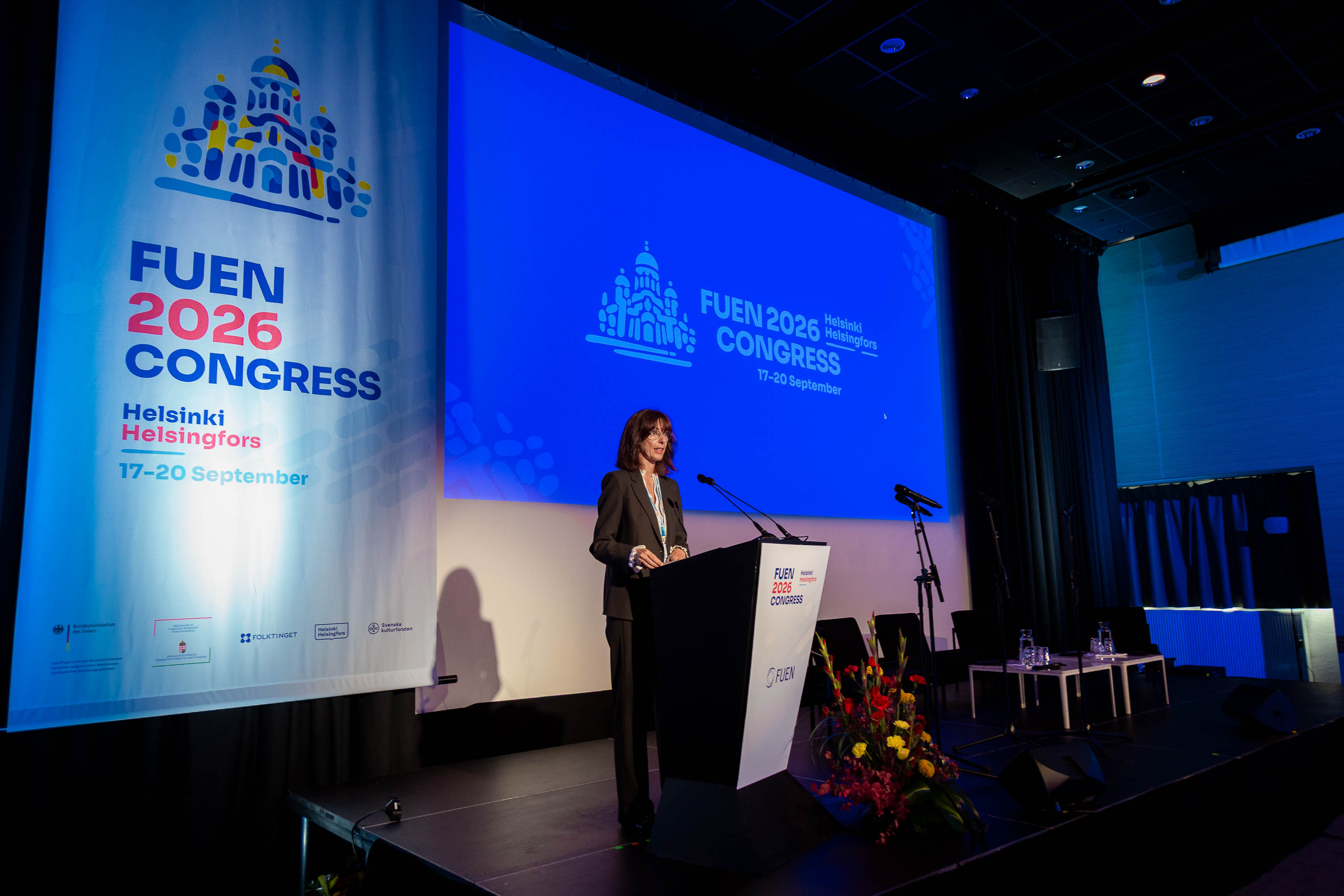
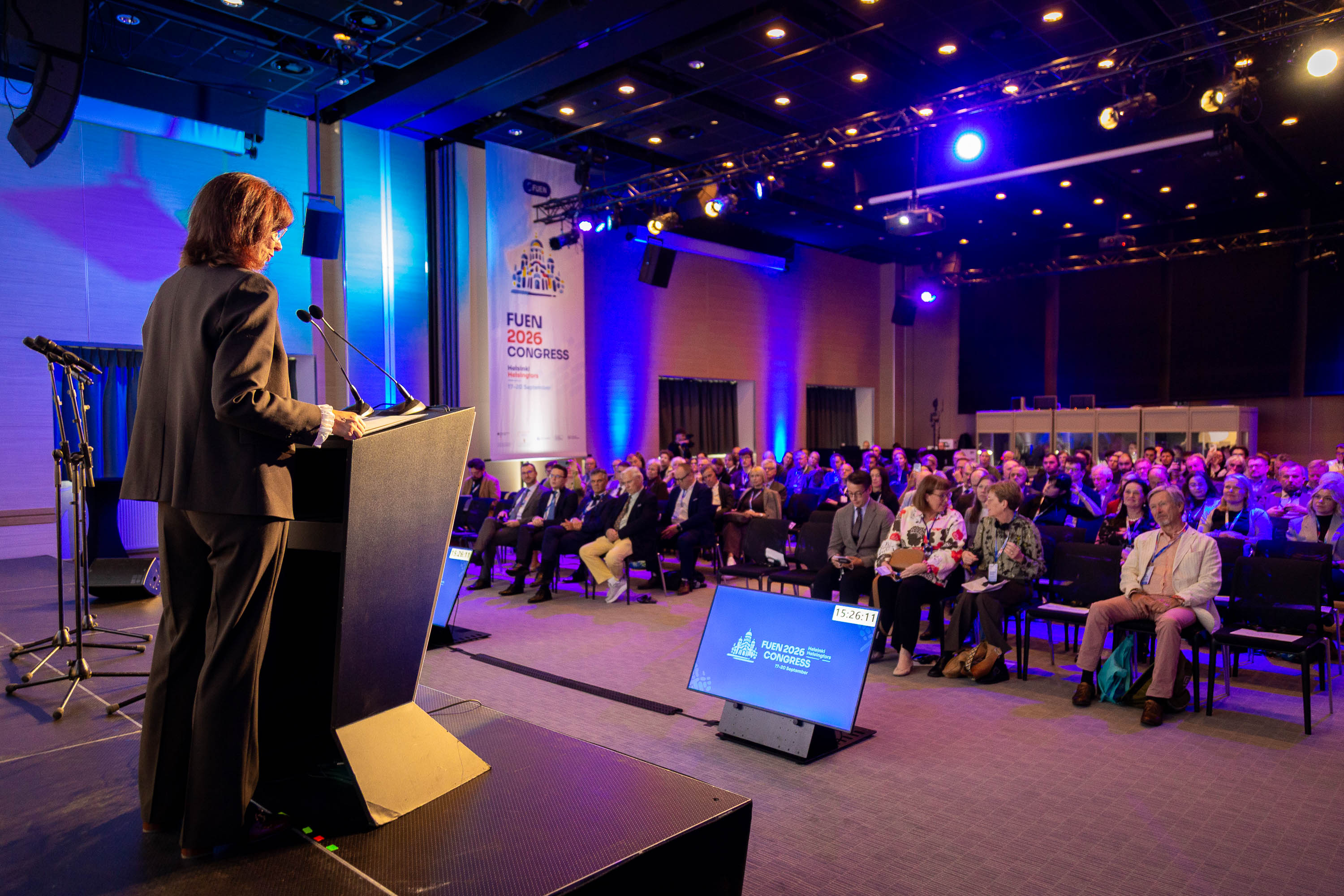
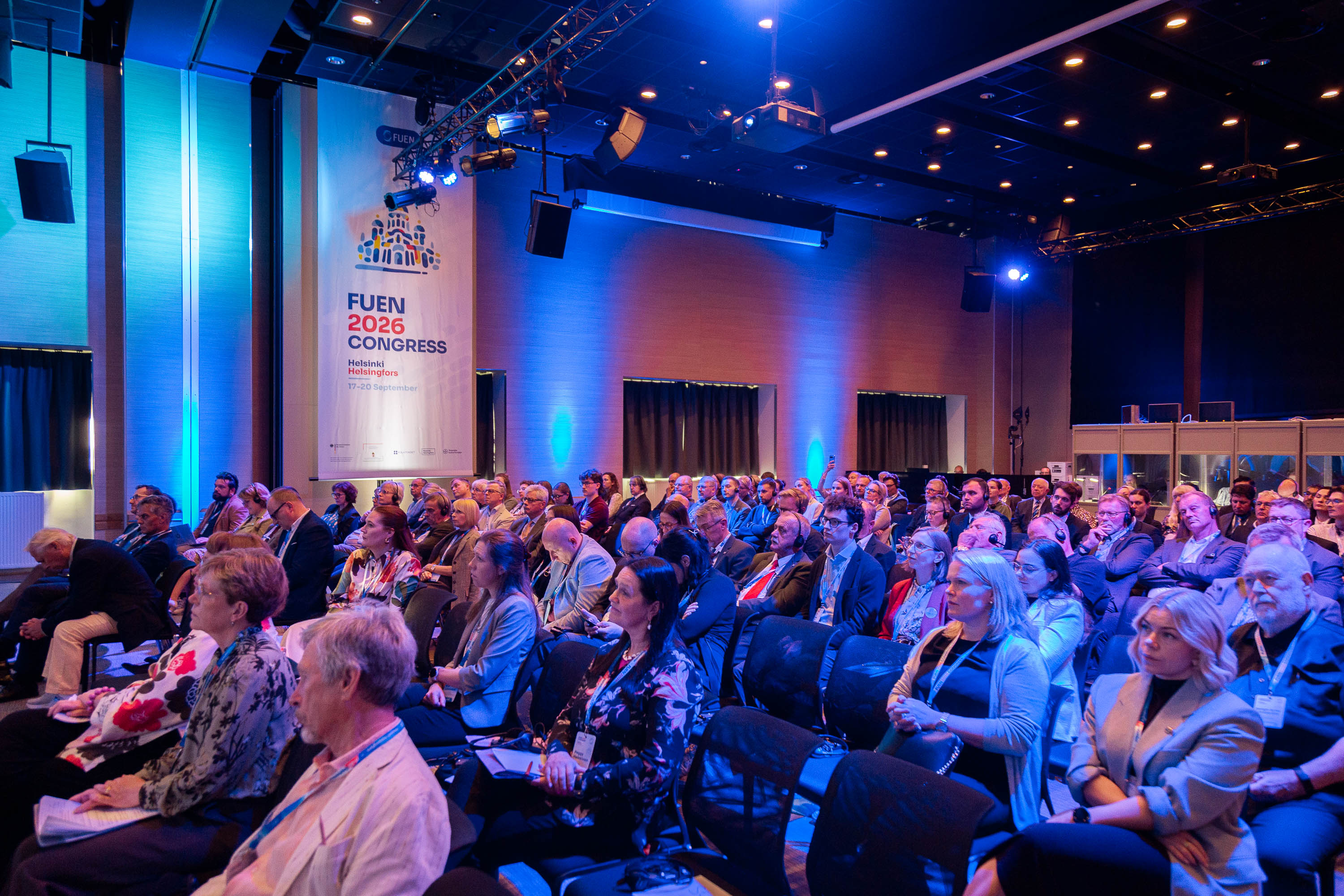
17.09.2026The 70th Annual Congress of the Federal Union of European Nationalities (FUEN) officially opened on Thursday afternoon at the Clarion Hotel Helsinki. This year’s Congress is hosted by Folktinget, the Swedish Assembly of Finland, which works to safeguard linguistic rights and promote the status of the Swedish language in Finland. Until Sunday, representatives of autochthonous national minorities, nationalities and language communities from across Europe will gather in the Finnish capital.
The opening ceremony was accompanied by music performed by a quartet from the women’s choir Lyran. Daniel Sazonov, Mayor of Helsinki, welcomed the participants to the Finnish capital. In his address, he highlighted the city’s identity as a vibrant, international and well-functioning bilingual community. Noting that the proportion of Swedish speakers in Helsinki is above the national average, he emphasised the strong and stable position of Swedish in everyday life, with residents able to access services ranging from early childhood education and healthcare to city council activities in their mother tongue.
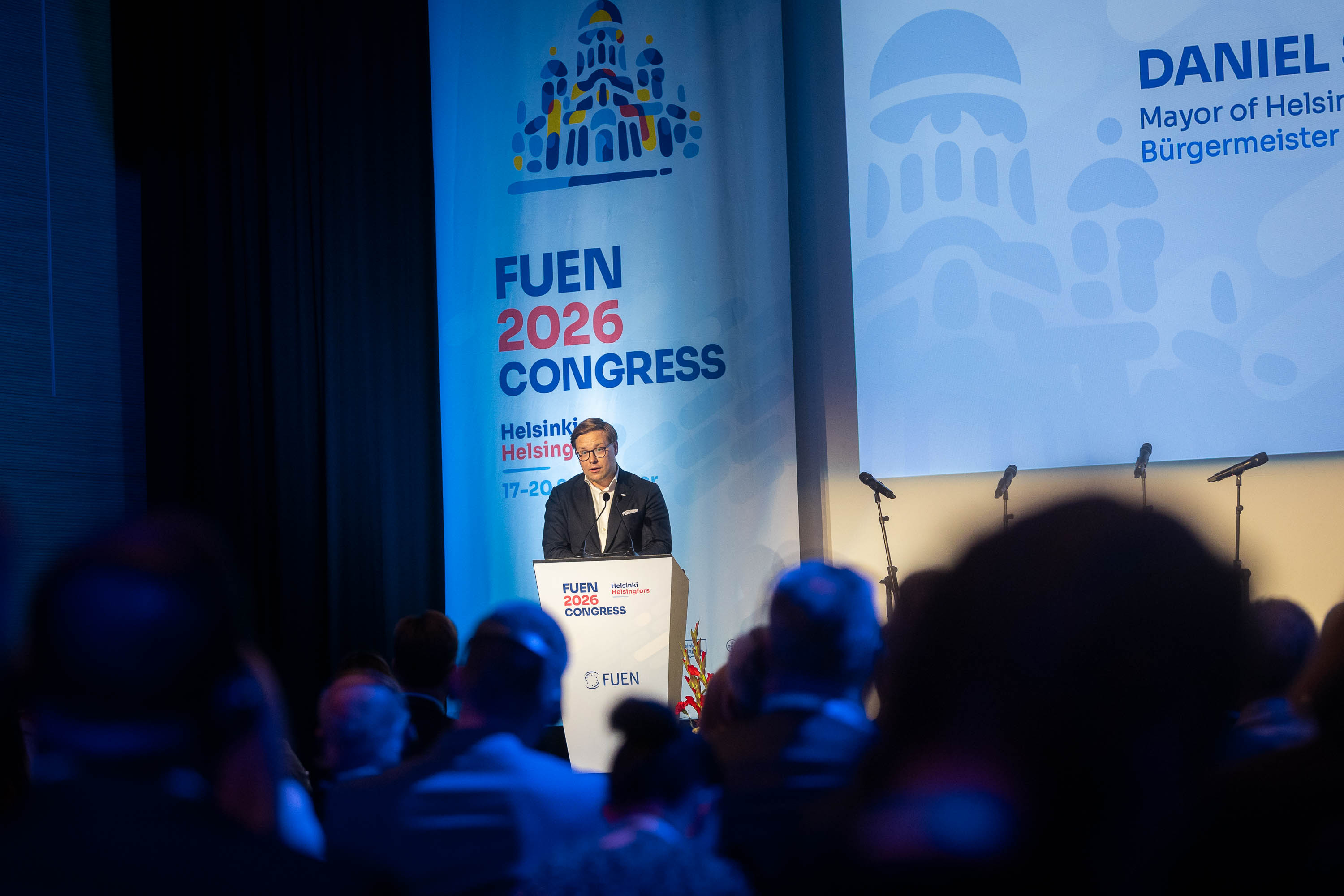
Sazonov also pointed to Helsinki’s growing linguistic diversity. The city recently celebrated reaching 700,000 residents with a campaign highlighting the nearly 160 different languages spoken in Helsinki today. However, he stressed that navigating this modern multitude “cannot negatively affect the meaning of Finnish and Swedish languages as our official national languages.” Reaffirming the city’s commitment to bilingualism, he assured the delegates: “Helsinki is and will remain a bilingual capital.”
Henrik Wickström, Member of the Finnish Parliament and Chair of Folktinget, welcomed the delegates on behalf of the host organisation. He described Finland’s bilingualism as an asset for the country, while stressing that it cannot be taken for granted and needs to be actively monitored, developed and safeguarded. Looking beyond Finland, he called for a Europe in which regional and minority languages are recognised as European languages and can be fully used in education, public services, healthcare and the media.
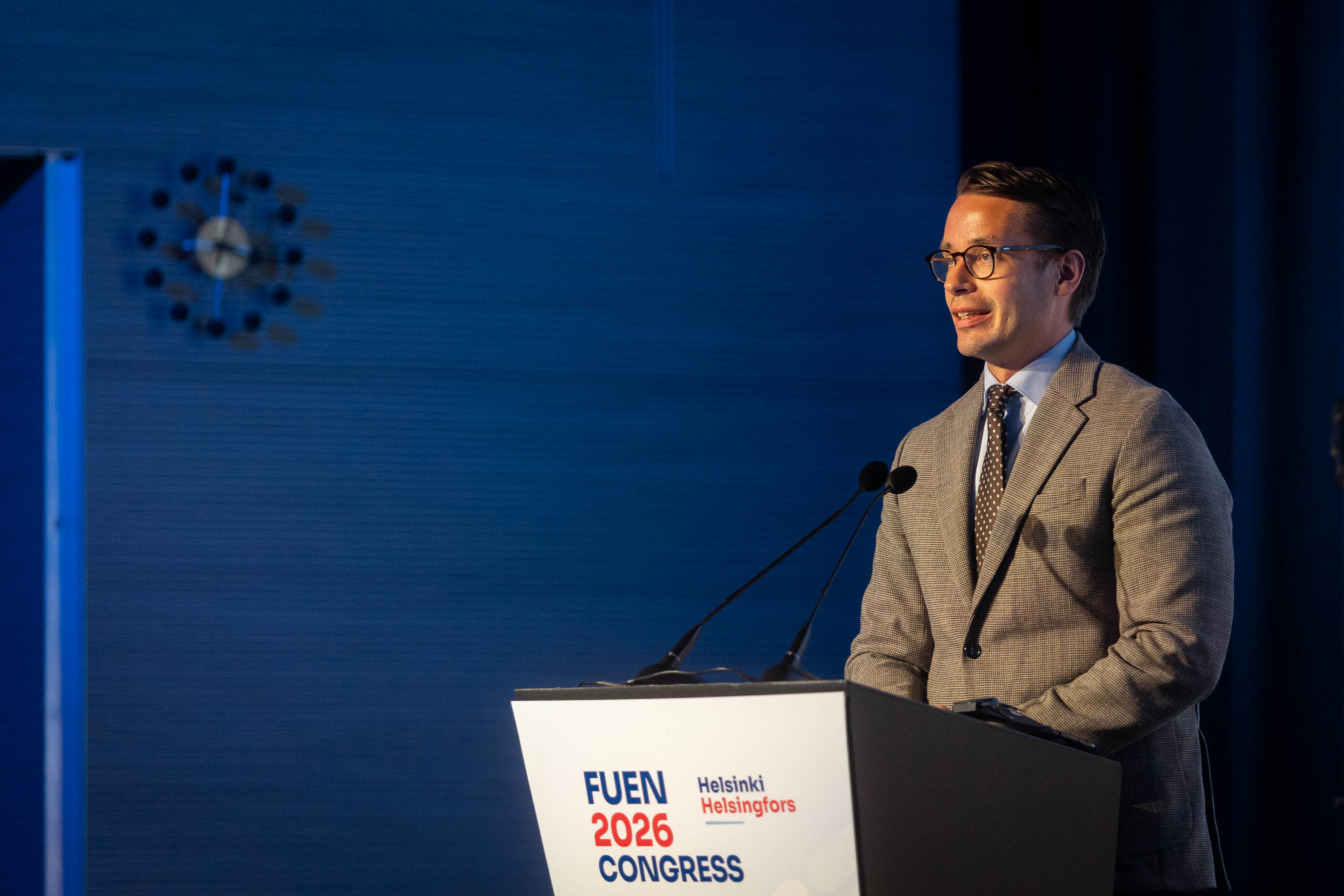
“Linguistic diversity is not a nostalgic relic of the past. It is the living expression of Europe’s democracy, its creativity, and its humanity,” Wickström said. “When we protect our languages, we are not protecting museums, we are protecting communities, identities, and the possibility for every European citizen to be heard in their own voice.”
FUEN President Olivia Schubert welcomed the representatives of FUEN’s member organisations to Helsinki/Helsingfors. In her first Congress address as FUEN President, she described the organisation as a “community of communities” united by the conviction that Europe is stronger when its diversity is respected. Emphasising that minority rights are foundational to democracy and cannot be sidelined during difficult times, she highlighted the urgent need for digital inclusion, warning that no European language should be too small to have a digital future.
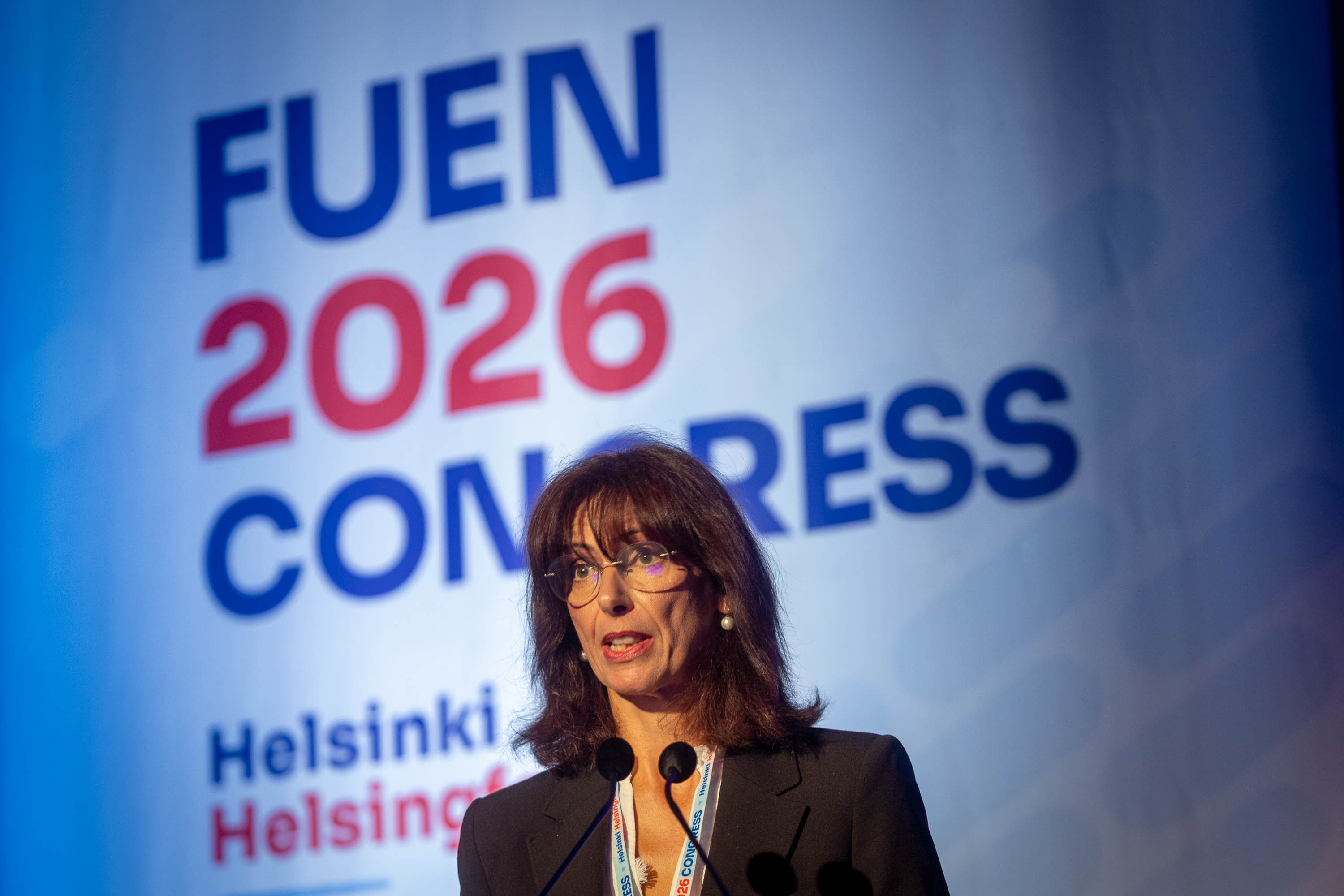
Schubert also framed the Minority SafePack Initiative not as a closed chapter, but as a continuing responsibility for future European policymakers. “A country is not strong because its minorities remain silent. It is strong when minorities can speak with confidence,” she stated, urging Europe not to fear its diversity, but rather to protect, support and take pride in it.
Following the official opening, Mikaela Nylander, State Secretary to the Minister for Education, delivered a keynote on language planning in education and culture in Finland. Speaking on behalf of the Finnish Government, she praised FUEN’s role in ensuring that language rights remain a shared European responsibility. She highlighted Finland’s commitment to its two national languages, reflected in parallel Finnish and Swedish educational pathways from early childhood through higher education.
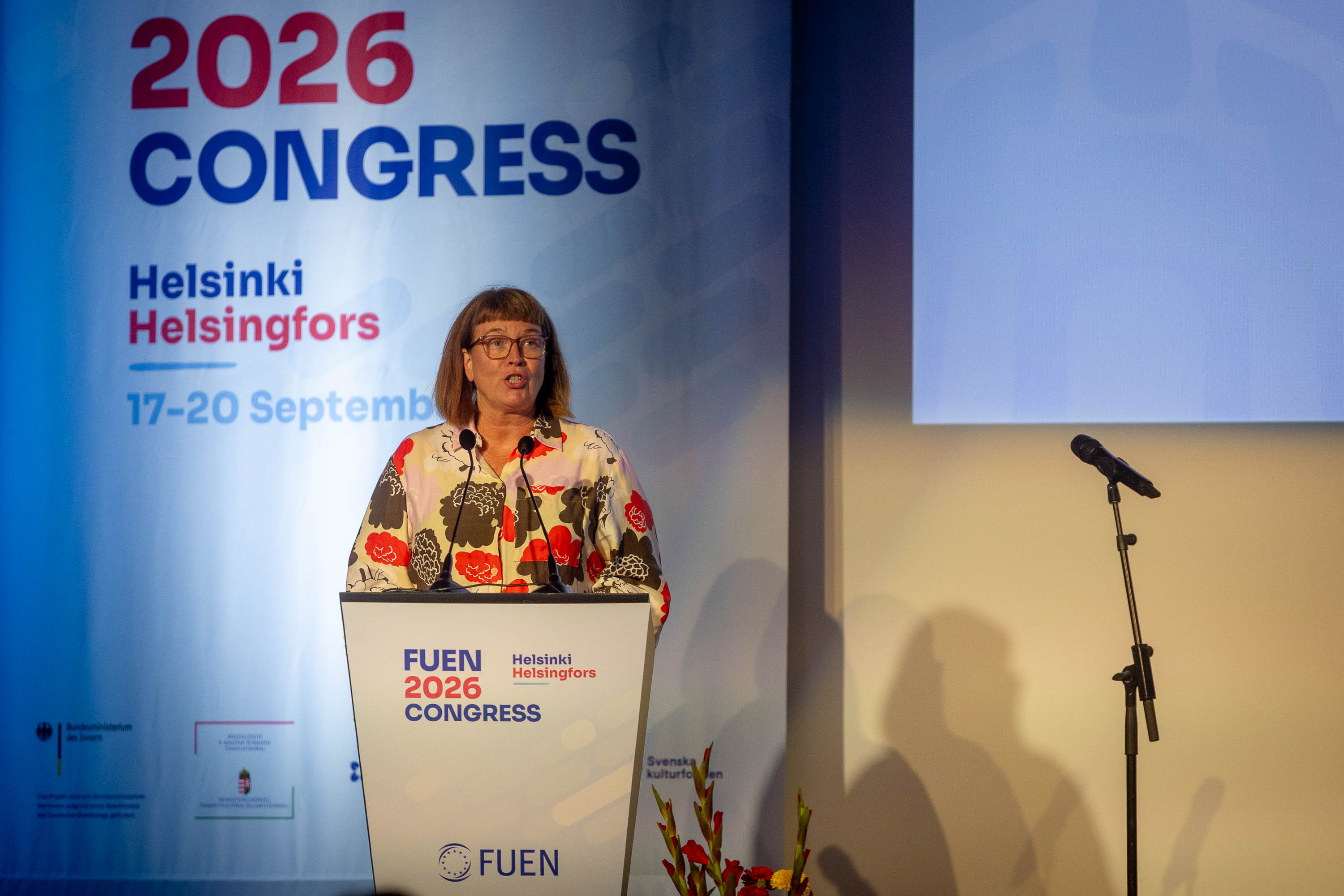
Acknowledging a concerning decline in overall language studies, Nylander outlined the government’s countermeasures, including additional weekly language and literature lessons in primary schools, funding for bilingual immersion and stronger integration programmes within the Swedish education system. She also underscored the importance of securing distance learning for the three Sámi languages, noting that most Sámi children now live outside their traditional homeland. Emphasising the broader significance of these educational policies, she concluded: “The realisation of these rights show where we stand as a society.”
The opening session continued with a presentation by Christina Gestrin, Secretary General of Folktinget, on the status and future of the Swedish language in Finland. She explained that Swedish speakers account for approximately 5.1 per cent of the population and that their share has stabilised, supported in part by the fact that nearly 70 per cent of bilingual families now choose Swedish-language education for their children.
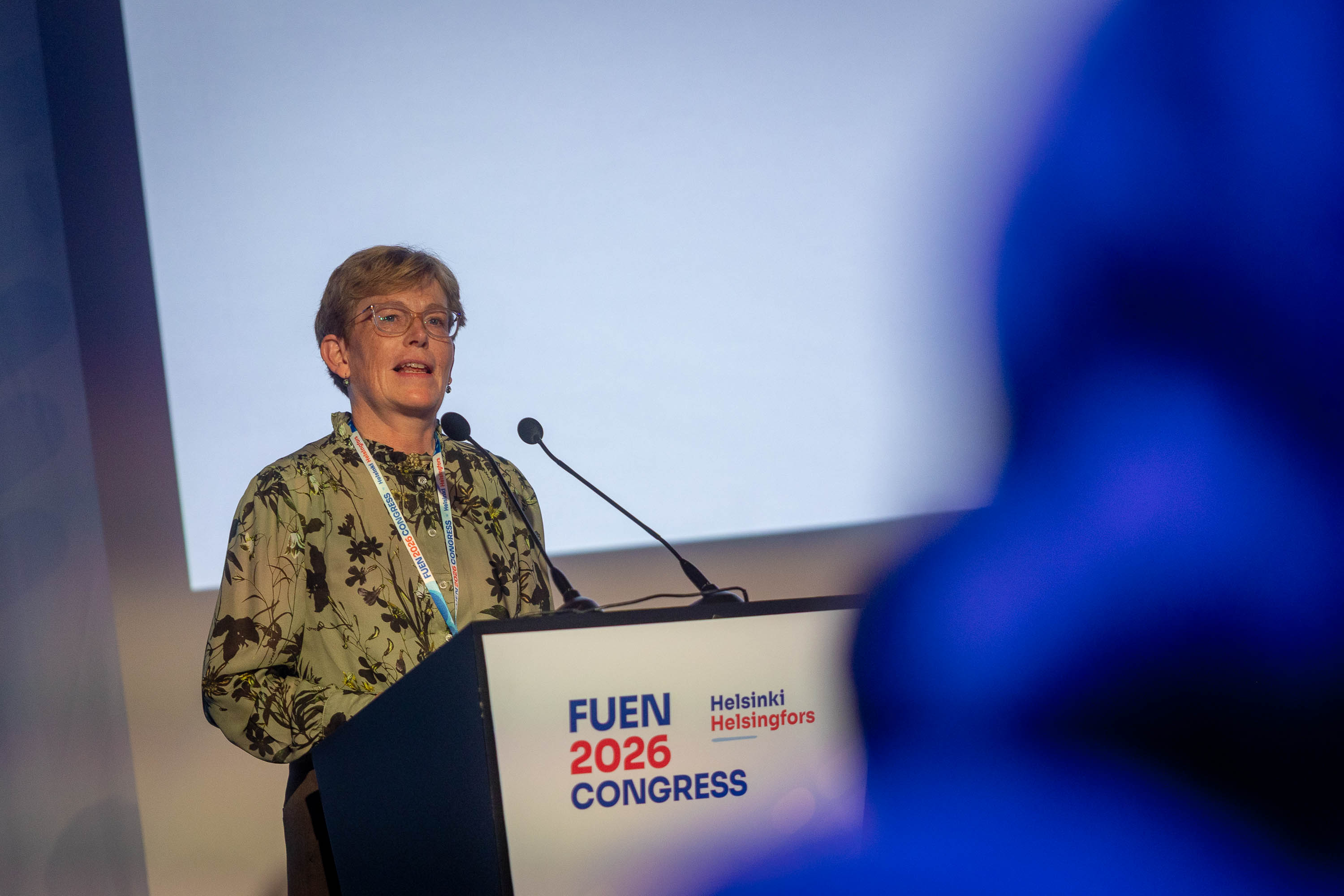
Gestrin emphasised that Finland’s Constitution guarantees equal legal status for Finnish and Swedish, entitling citizens to access public services, education and healthcare in their mother tongue. However, she cautioned that putting these rights into practice remains an ongoing challenge, requiring organisations such as Folktinget to actively safeguard them. She also highlighted Finland’s linguistic diversity as a strategic asset, noting that the country’s shared language and cultural heritage with its Nordic neighbours helps strengthen security cooperation across the region.
The opening session marked the start of the 70th FUEN Congress and four days of meetings and exchange among representatives of Europe’s autochthonous national minorities, nationalities and language groups. The Congress continues until Sunday, 20 September.
COMMUNIQUÉ DE PRESSE
- 8th Annual Meeting of the FUEN Working Group on Education: vocational education, minority languages and AI in focus
- FUEN discussed minority issues with EU institutions in Brussels
- FUEN exhibition opens at the European Parliament: putting minority languages on the European agenda
- FUEN Working Group on Education meets in Eupen: Focus on vocational education, minority languages and AI
- FUEN Assembly of Delegates 2026 calls for greater inclusion of minority languages in artificial intelligence
- FUEN Congress discusses geo-blocking and the protection of minority languages
- FUEN Congress Examines Mother-Tongue Access in Healthcare and Social Services
- FUEN Congress Spotlights the Future of Minority Languages in Public-Service Broadcasting
- For Protection of the Cultural Identity: The Case of the Breton Community in France
- An Existence Under Question: The Case of the Greek-Orthodox Community of Istanbul