






Minorities and Artificial Intelligence: Bringing Dialects to Life in the Digital Era
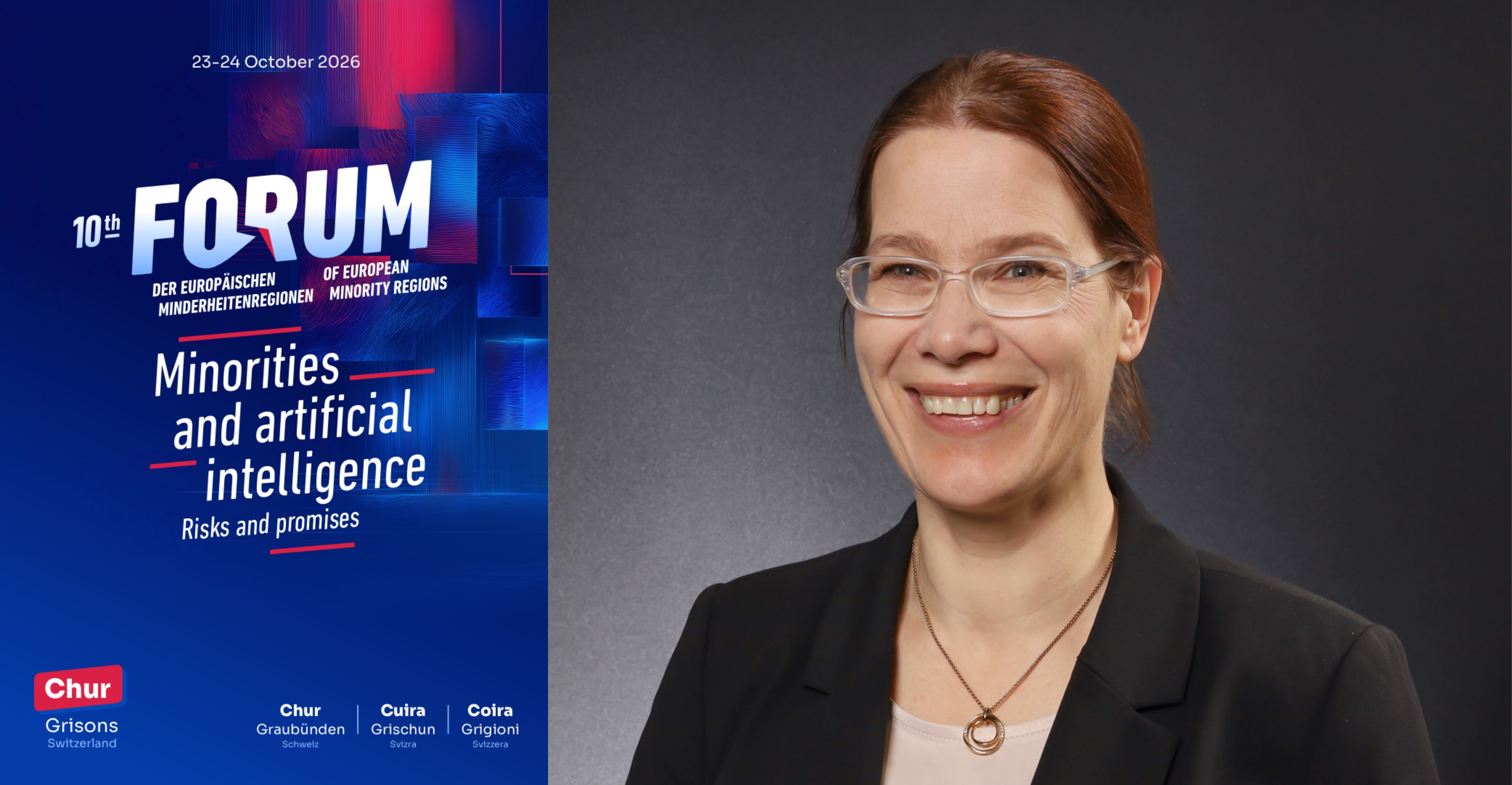
19.10.2026The rapid advancement of artificial intelligence presents both unprecedented opportunities and significant challenges for the preservation of minority languages and cultural identities across Europe. To address these vital dynamics, the 10th Forum of European Minority Regions will take place on 23 and 24 October 2026 in Chur/Cuira/Coira (Switzerland). Centered around the theme "Minorities and A.I. – risks and promises," the Forum will bring together regional leaders, cultural workers, researchers, and minority advocates to explore how emerging technologies impact lesser-used languages. A key feature of this year's Forum will be interactive learning, where participants can directly test AI gadgets and immersive projects.
>> Björn Teir: What we do not digitize today is not visible to the world tomorrow
>> Minorities and Artificial Intelligence: Coding Heritage into the Digital Age
Among the experts participating in this year's Forum is Elke Schlote, a researcher and expert in multimedia pedagogy at the Fachhochschule Graubünden (University of Applied Sciences of the Grisons). Her work explores the intersection of applied future technologies, education, and language preservation. She is currently involved in the groundbreaking "IdiomVoice" project, which seeks to develop an interactive AI "chatbot family" designed to help users actively practice and converse in Romansh idioms. Her approach demonstrates how AI can move beyond simple preservation and become an engaging, daily tool for linguistic vitality. We asked her about building up the IdiomVoice and its practical use.
Your work at Fachhochschule Graubünden focuses on multimedia pedagogy. What drew your academic interest to the intersection of applied future technologies and the preservation of minority languages?
Elke Schlote: – I come from a research background in linguistics, specifically dialectology, the study of regional varieties of language. What excites me most today is that technology now lets us support minority languages and cultures in ways that go beyond simply preserving them for archives.
Switzerland has a long-standing tradition of documenting its remarkably diverse local dialects and, more recently, turning that knowledge into digital resources like online dictionaries. But new interactive and immersive technologies can take this much further: they can bring local dialects directly to people through the mobile devices they already use every day.
This matters especially to younger people from my canton, the Grisons, who study and work outside their communities. It can help them stay connected to their linguistic and cultural roots in a personal, accessible way. It also matters for newcomers: people moving to Grisons are expected to have a practical grasp of the local dialect for daily life. Alongside traditional language courses, we can now create engaging digital tools that make practising and improving the dialect attractive, more flexible, and more widely available. In short, the goal is not only to record dialects before they disappear, but to help people actively use, learn, and experience them in everyday life.
You are involved in the "IdiomVoice" project, which uses a chatbot family to support Romansh idioms. What is the greatest promise conversational AI holds for communities keeping their dialects in active daily use?
– AI language models, such as the one our interdisciplinary team at the University of Applied Sciences has trained, can support communities in many practical ways. Possible uses include tourism, helping people communicate in everyday local life, and supporting communication with older people living in residential care.
With “IdiomVoice”, I am helping to develop a prototype “chatbot family” that supports conversational practice in one of the Romansh idioms. The idea is simple: instead of learning only from exercises, people can practise real conversations by talking and writing with different virtual family members.
To make the experience engaging, we use compelling personas for the chatbots that are knowledgeable in aspects of the local culture. People can chat about everyday life, family traditions, recipes, local topics, and the kinds of small talk that help feel at home in a community. The chatbots offer a relaxed, low-pressure environment, and learners can practise without worrying about making mistakes in front of others.
Our colleagues at the Pedagogical University see it as a valuable addition to their textbooks and teaching materials. The “chatbot family” will be available through the digital extension of their updated language curriculum, giving learners a new way to build confidence and competence in Romansh. Of course, it is still a machine, and we make that clear.
When building chatbots for minority idioms, developers face severe data shortages. How do you ensure the underlying language models maintain unique regional characteristics and protect the linguistic diversity of the community?
– That is a real challenge, and our data-science team is preparing a publication explaining our approach to solving it. In short, we retrained an existing AI model using a broad range of Romansh-language data of one specific dialect.
The first step was to gather and combine existing datasets, and we received valuable support from Lia Rumantscha, the Grisons-based umbrella organization for Romansh language and culture. Romansh includes five main written regional varieties, Sursilvan, Sutsilvan, Surmiran, Puter, and Vallader (as well as many local spoken variants). For “IdiomVoice”, we focused on the variety of Sursilvan.
Existing linguistic resources typically contain formal texts, dictionaries, or literature, but not enough of the casual, conversational language an AI chatbot needs. So, we also had to look for new sources of dialogue and everyday sentences.
AI itself helped speed this up. We used transcription tools to convert local television and radio interviews in Sursilvan into text far more quickly than manual transcription would allow. We also generated synthetic conversational data tailored to the chatbot’s intended personas. Essentially, example dialogues designed to match the situations in which users might interact with the system. Native speakers then reviewed this material before it entered the training data.
Throughout the process, maintaining textual variety was essential. When an AI model is trained on a particular body of text, it learns the patterns and norms embedded in that text. If the data is too narrow, the model, too, may effectively promote a certain kind of formal language as a new standard. This is why we frequently test the language output of the AI model with native speakers from the community.
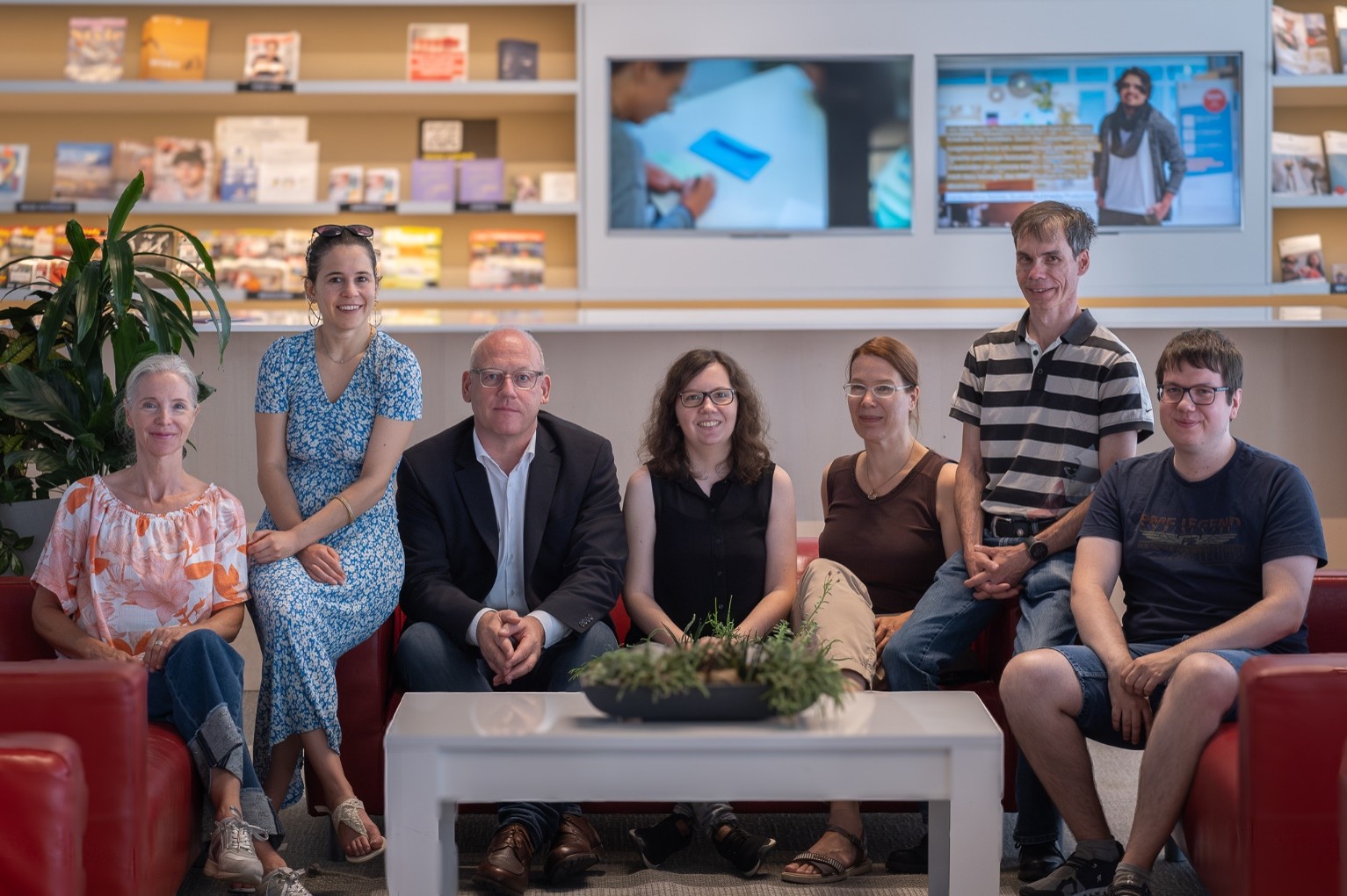
IdiomVoice project team (Simonne Bosiers, Flavia Hobi, Oliver Bendel, Nadine Ganz, Elke Schlote, Gion Sialm, Curdin Marxer)
AI offers excellent tools, but utilizing them requires specific digital literacy. What steps must educational institutions in European minority regions take right now to empower their youth to become creators of AI solutions?
– AI offers excellent tools, but using them well requires more than access to a smartphone or a chatbot. Young people need digital and AI literacy. A practical example, to make use of our AI language model for new developments: understanding what a conversational AI is, what it means to fine-tune one, why no AI system is error-free, and how to judge the quality, bias, safety, and real value of its outputs. I’d like to add that AI should create more value for people, especially in regions whose languages, cultures, and needs are often underrepresented in mainstream systems.
This also touches the question of sovereignty and inclusion. Dependence on a small number of global providers is particularly risky for minority regions. The growing availability of local, specialized, open-access models is promising, but it will only matter if we invest in the data, infrastructure, and funding needed to make it usable – and also safe in terms of IT security.
The policy direction for the European minority regions is clear as the EU AI Act makes AI literacy a shared responsibility for providers and deployers of AI systems and calls on the Commission and Member States to support those efforts.
This year’s Forum encourages interactive learning, allowing participants to test AI gadgets directly. From a multimedia production standpoint, what specific features make a technological tool successful in engaging a minority community?
– We look beyond the technical model to show, in practical terms, how AI can make media experiences more immersive and meaningful, whether it is helping people connect with one another, discover Switzerland’s minority languages, and encounter other places, cultures, and lived realities.
To do this responsibly, the tools must respond to real needs identified within the minority language community, work reliably rather than as a rough “vibe-coded” prototype, and offer clear, transparent navigation as well as data privacy by design. Personally, I see community involvement throughout development as essential, alongside an innovative approach that goes beyond simply applying existing technology.
As a publicly funded university, we also aim to publish everything as an Open Access product or Open Educational Resource. This supports wider reuse, adaptation, and long-term benefit for other communities and institutions; such openness is also increasingly expected by our funding bodies. This approach aligns with broader efforts to build accessible digital infrastructure for minority languages, where community participation, reliable tools, and open resources are central to sustainable impact.
Looking forward, how can minority regions collaborate effectively with research institutes like yours to develop tailored AI tools for their specific cultural needs?
– A lot depends on the dialogue across minority regions and their educational institutions, exchanging best practices and sharing experiences with AI tools and their adaptions in different regions. Certain topics can be grouped together, and solutions may be possible for various minority regions, allowing for the exploitation of synergies. This can increase efficiency in development and foster innovation without a singular focus e.g. on AI automation and replacing people.
Looking ahead, minority regions can collaborate with research institutes by building community-led partnerships: communities define the cultural priorities and requirements, while researchers contribute technical expertise, evaluation, and shared infrastructure. This approach ensures that AI tools are culturally relevant rather than imposed from outside, a principle emphasized in participatory and culturally sensitive AI development. Effective AI development should treat communities as active partners throughout design, data governance, deployment, and evaluation.
The goal is not to replace people or standardize cultures, but to amplify local knowledge and make everyday digital services more accessible in minority languages and cultural contexts.
Join the Conversation in Chur
Attendees will have the opportunity to engage directly with Elke Schlote and a diverse panel of expert speakers, policymakers, and minority representatives at the 10th Forum of European Minority Regions. Interested individuals and representatives can meet her and the other speakers on 23 and 24 October 2026 in Chur/Cuira/Coira to share insights, test interactive AI tools like IdiomVoice, and help shape the future of minority language preservation in the age of Artificial Intelligence.

COMMUNIQUÉ DE PRESSE
- Minorities and Artificial Intelligence: Coding Heritage into the Digital Age
- Turkic minorities and communities are gathering in Skopje, the capital of North Macedonia
- Björn Teir: What we do not digitize today is not visible to the world tomorrow
- 8th Annual Meeting of the FUEN Working Group on Education: vocational education, minority languages and AI in focus
- FUEN discussed minority issues with EU institutions in Brussels
- FUEN exhibition opens at the European Parliament: putting minority languages on the European agenda
- FUEN Working Group on Education meets in Eupen: Focus on vocational education, minority languages and AI
- FUEN Assembly of Delegates 2026 calls for greater inclusion of minority languages in artificial intelligence
- FUEN Congress discusses geo-blocking and the protection of minority languages
- FUEN Congress Examines Mother-Tongue Access in Healthcare and Social Services