








For Protection of the Cultural Identity: The Case of the Breton Community in France
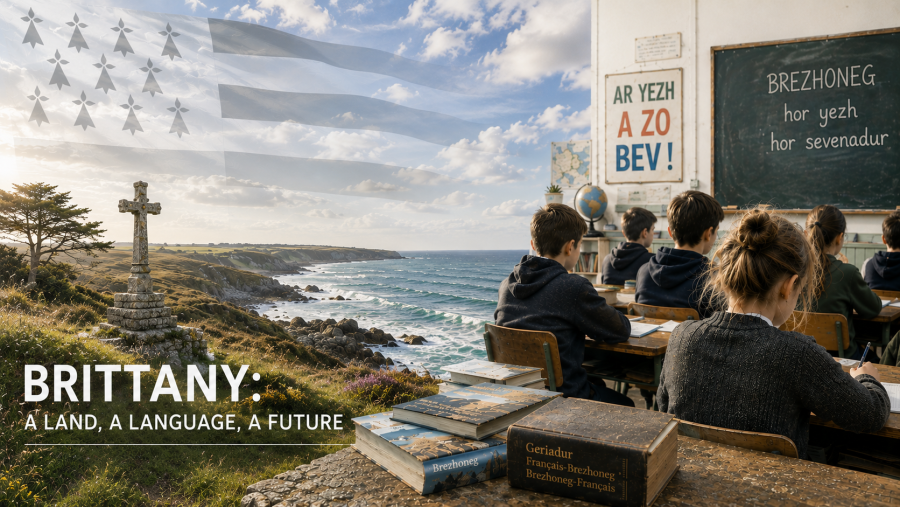
15.09.2026The Minority Monitor has published a detailed examination of the ongoing cultural, linguistic, and territorial challenges confronting the Breton community in north-western France. Grounded in resolutions submitted by the Cultural Institute of Brittany from 2014 to 2025, the case examines how regional identity and cultural distinctiveness navigate the traditionally centralized French republican framework.
The analysis centers on interconnected areas where institutional recognition falls short of guaranteeing practical protection, starting with territorial reunification. Administrative reforms severed Loire-Atlantique and Nantes from Brittany in 1941 without democratic consultation, and despite a 2018 petition signed by 105,000 citizens, the central government has yet to authorize a democratic consultation on administrative reunification.
In terms of linguistic landscapes, standardized addressing under France’s 3DS Law has led to the Frenchification or erasure of historical Breton place names, threatening vital intangible cultural heritage in Breton-speaking localities. Furthermore, Breton-language education faces severe structural hurdles across bilingual streams, university research posts, and the Diwan immersive school network, which is exemplified by severe overcrowding and deficient facilities at the Diwan secondary school in Carhaix.
Because France remains outside key binding treaties like the Framework Convention for the Protection of National Minorities, Breton identity is recognized primarily as regional heritage rather than an enforceable minority right.
Readers can examine the full case report on the new, improved Minority Monitor platform.
COMMUNIQUÉ DE PRESSE
- The 10th Forum of European Minority Regions Addressed Artificial Intelligence and Minority Languages
- The 12th Annual Meeting of FUEN TAG was hosted by the Turks of North Macedonia
- Minorities and Artificial Intelligence: Bringing Dialects to Life in the Digital Era
- Minorities and Artificial Intelligence: Coding Heritage into the Digital Age
- Turkic minorities and communities are gathering in Skopje, the capital of North Macedonia
- Björn Teir: What we do not digitize today is not visible to the world tomorrow
- 8th Annual Meeting of the FUEN Working Group on Education: vocational education, minority languages and AI in focus
- FUEN discussed minority issues with EU institutions in Brussels
- FUEN exhibition opens at the European Parliament: putting minority languages on the European agenda
- FUEN Working Group on Education meets in Eupen: Focus on vocational education, minority languages and AI