













FUEN Congress discusses geo-blocking and the protection of minority languages
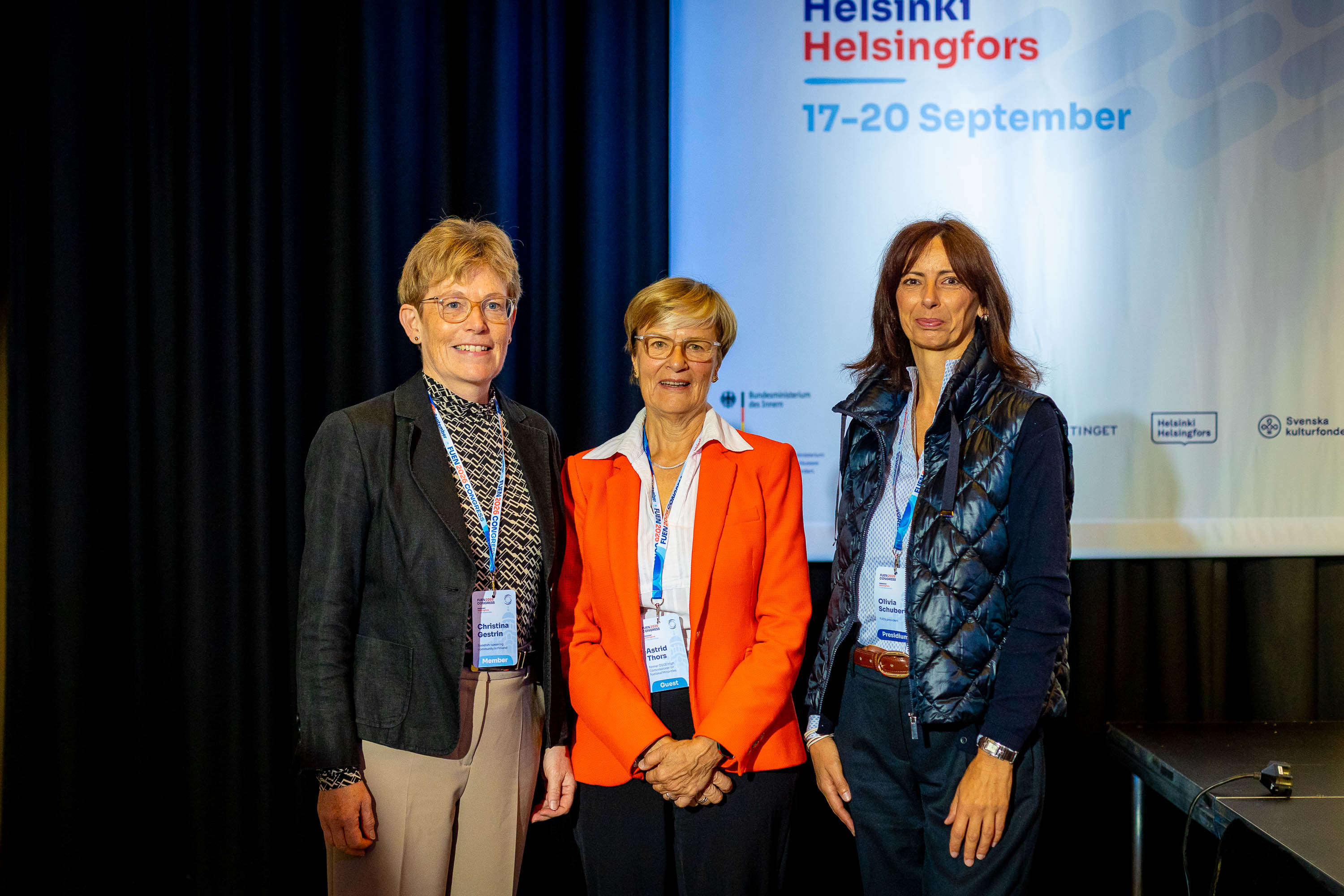
18.09.2026The deteriorating situation of minority rights in Europe, restrictions on cross-border access to audiovisual content and the commercial use of minority-language terms were among the topics discussed during the opening session of the second day of the 70th Congress of the Federal Union of European Nationalities (FUEN). In her keynote address, former OSCE High Commissioner on National Minorities Astrid Thors warned of growing nationalism and increasing pressure on minority protection. A subsequent panel discussion examined how European legislation could better address the needs of minority communities in the digital single market.
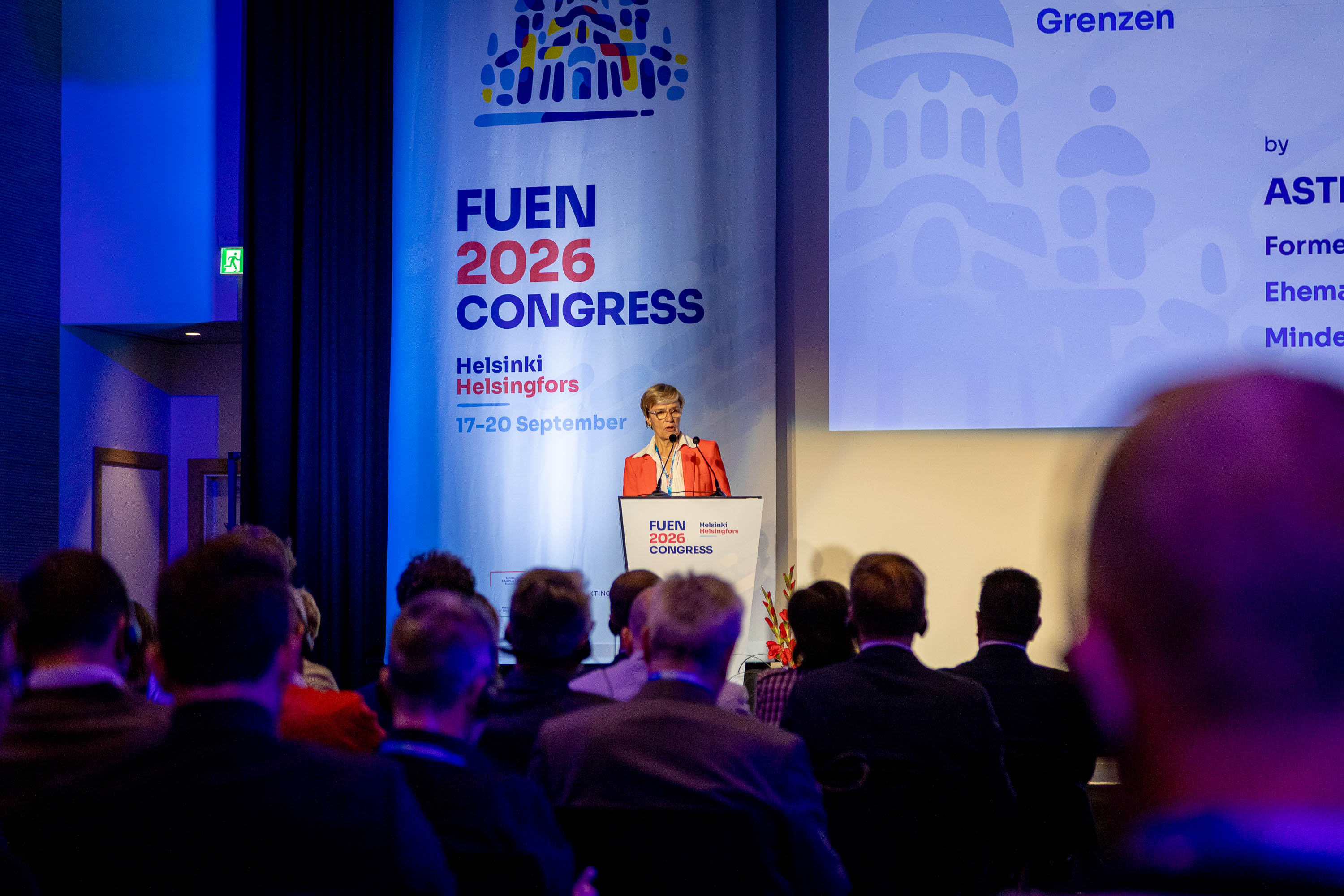
Looking back at the decade since her previous address to the FUEN Congress in 2016, Thors expressed concern about developments affecting national minorities across Europe. She pointed to Russia's war against Ukraine, the refugee crisis and rising nationalism as factors that have negatively influenced attitudes towards minorities and linguistic diversity. She also warned of increasing political pressure on experts working within European minority protection mechanisms and a declining willingness among some states to implement their recommendations.
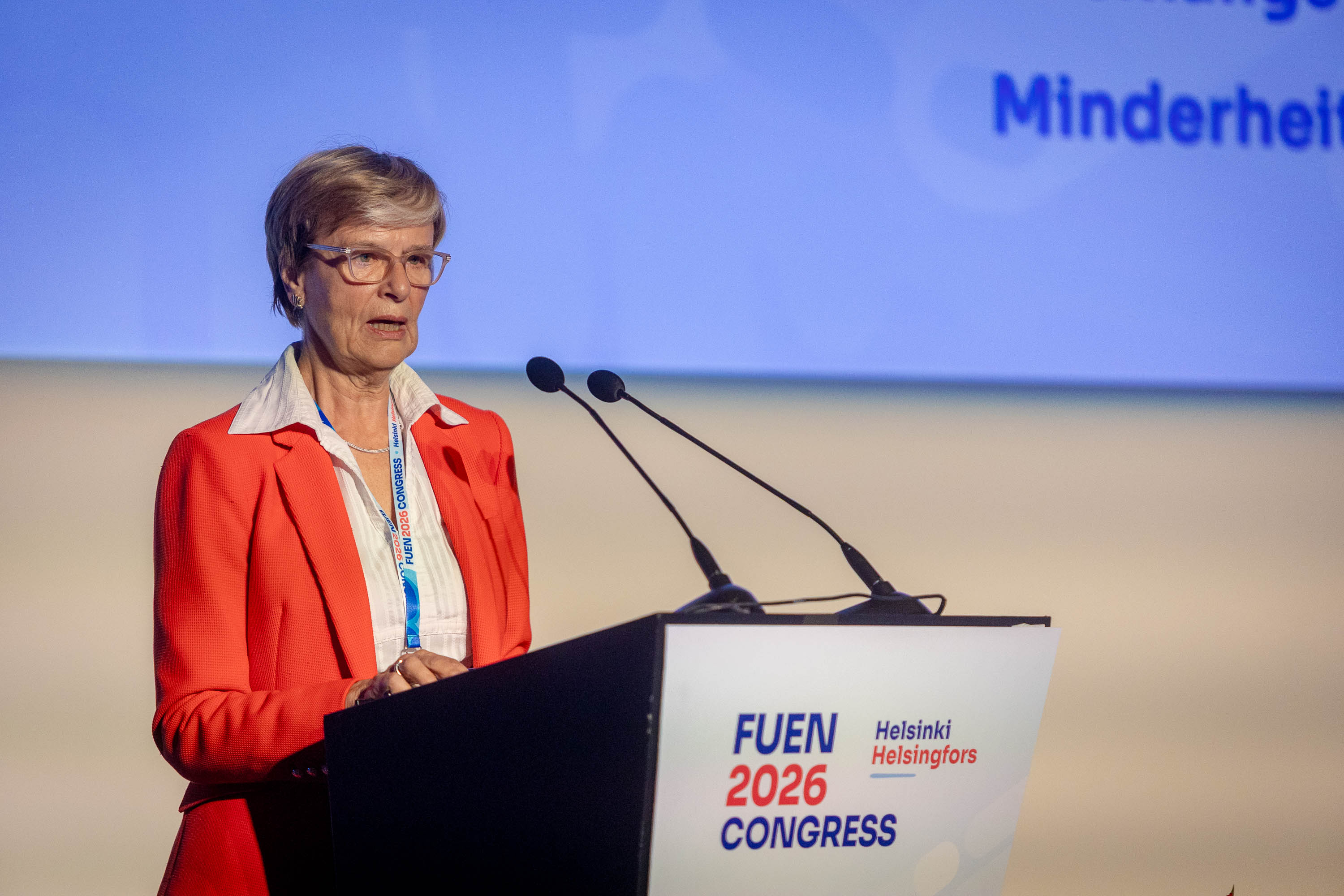
Thors emphasised that respect for the rule of law is a prerequisite for effective minority protection. Referring to the EU's Copenhagen criteria, she recalled the importance of minority rights during European enlargement and stressed the need for stronger monitoring after countries have joined the European Union. She also highlighted the role minorities can play as bridges between neighbouring countries and warned against their political instrumentalisation.

Turning to the digital market, Thors recalled how Swedish-speaking families in Finland had traditionally been able to receive television broadcasts from neighbouring Sweden. Today, geoblocking and licensing restrictions can prevent minority communities from accessing audiovisual content in their mother tongues. She welcomed efforts to find a European solution while acknowledging the complexity of broadcasting rights and copyright legislation.
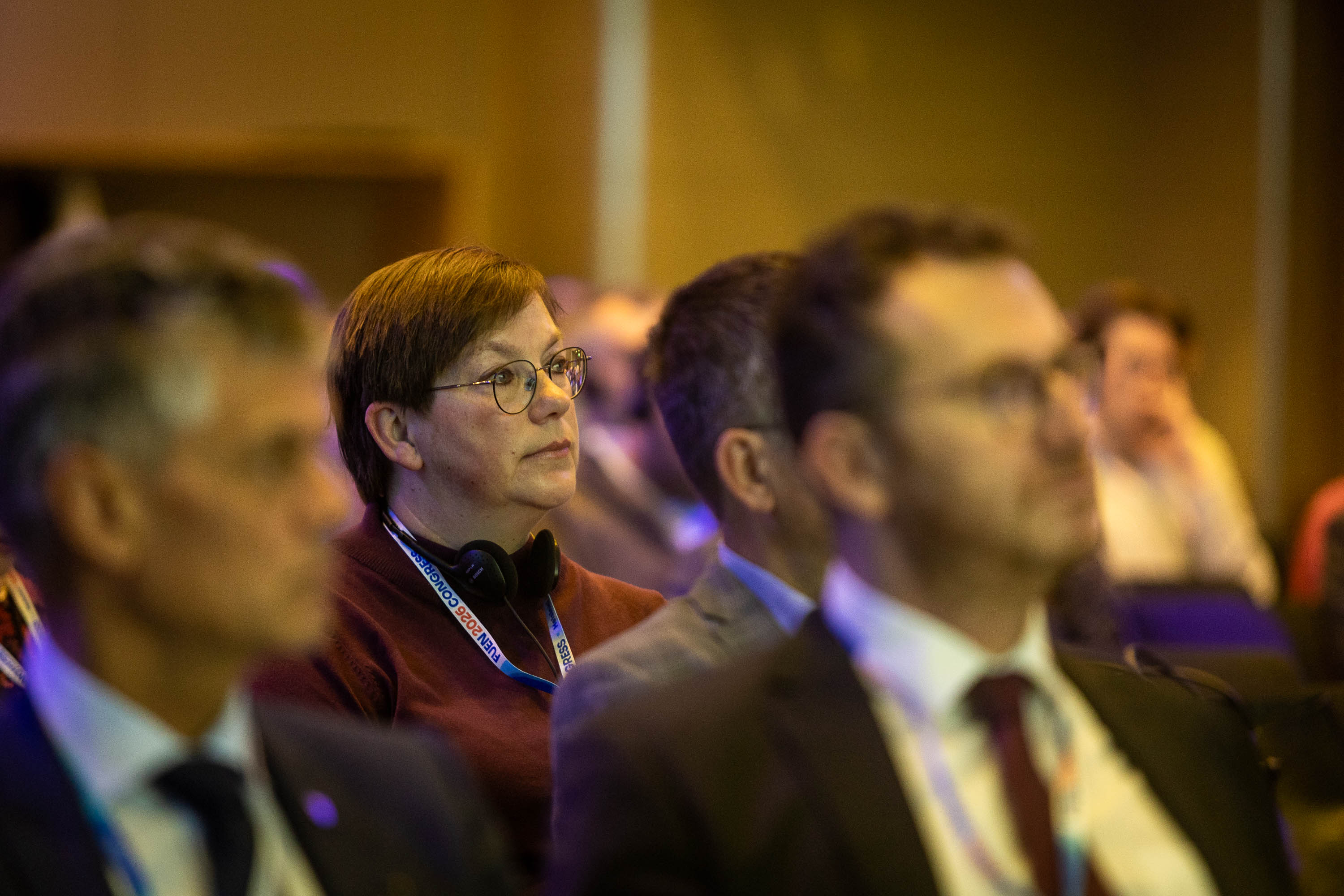
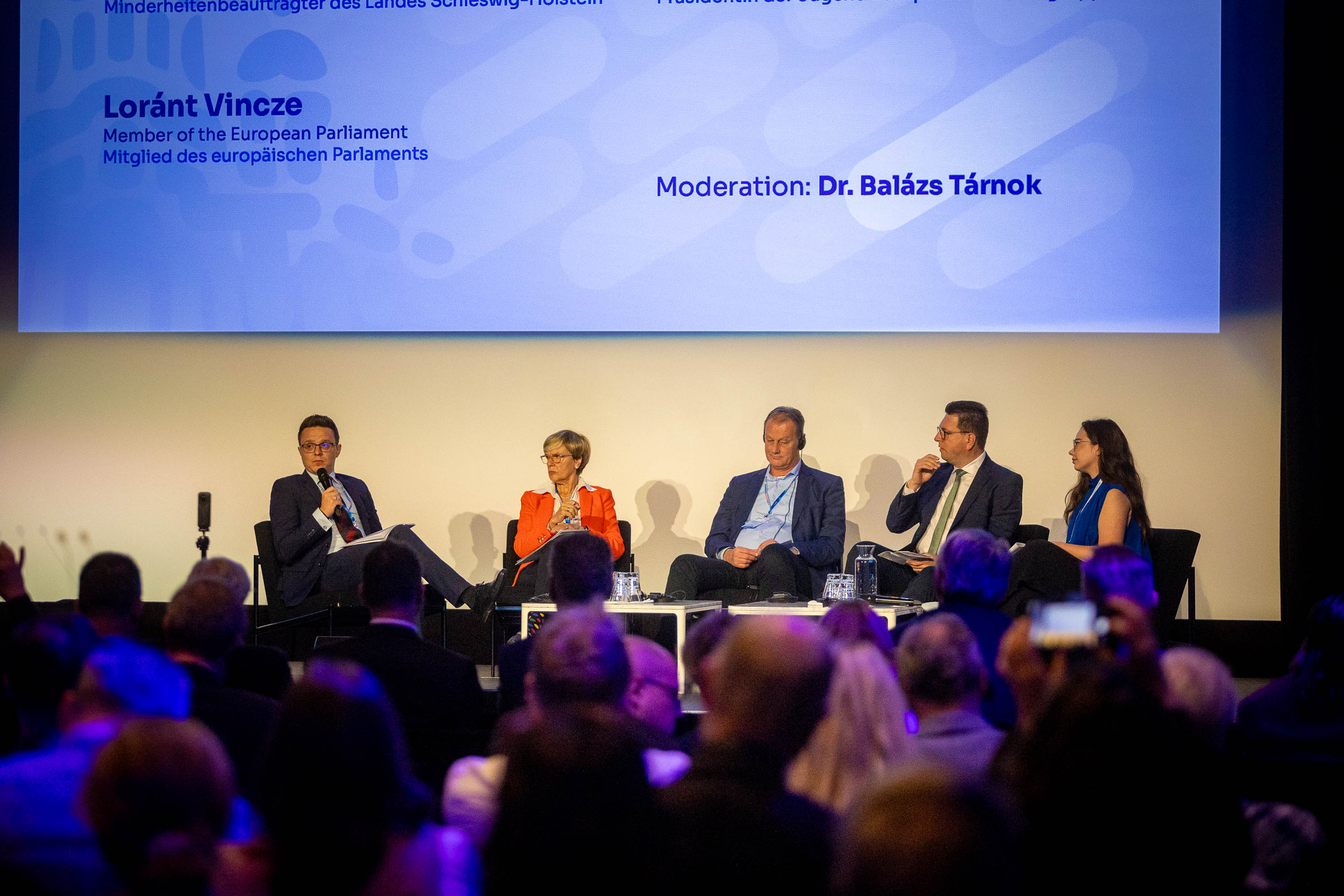
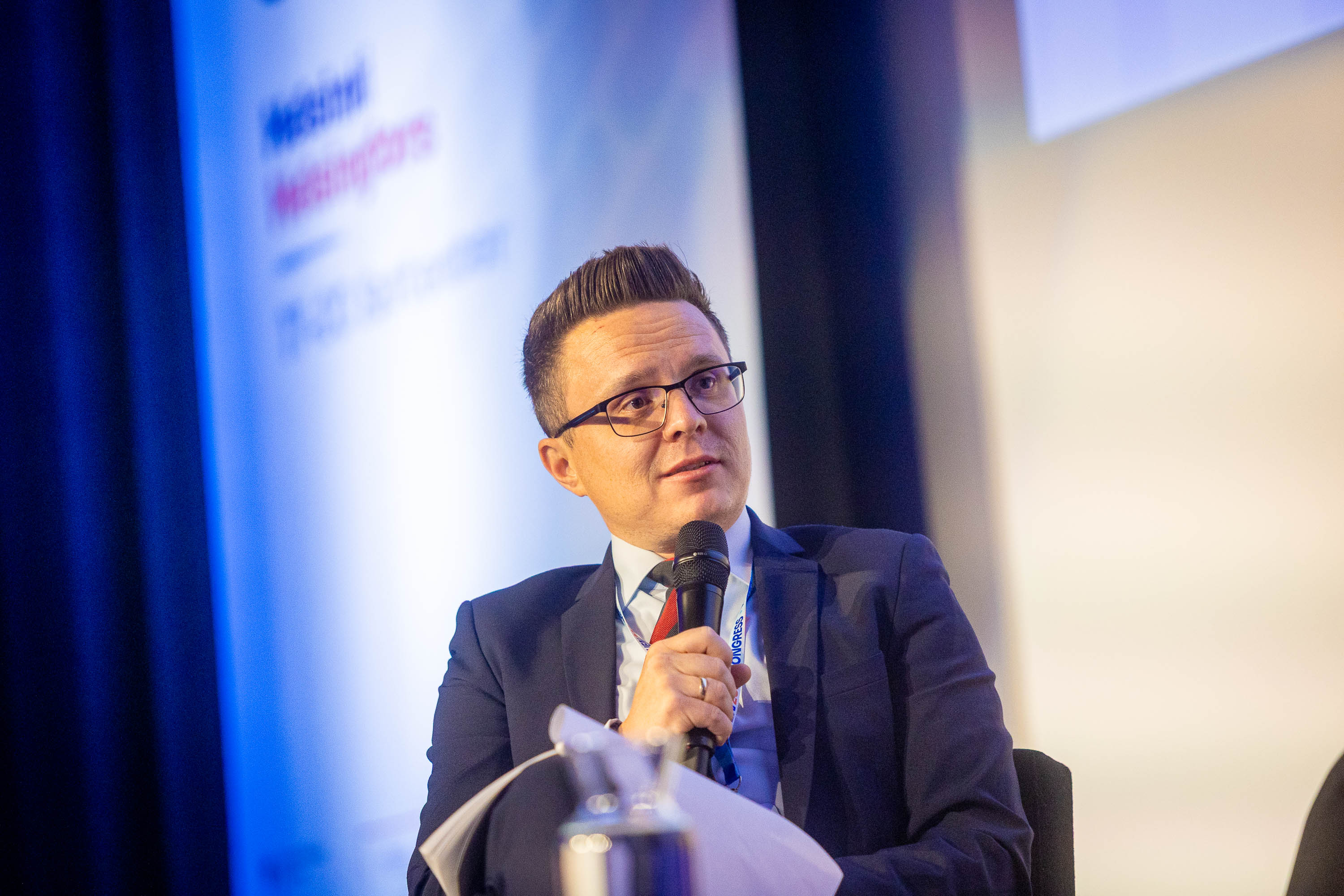
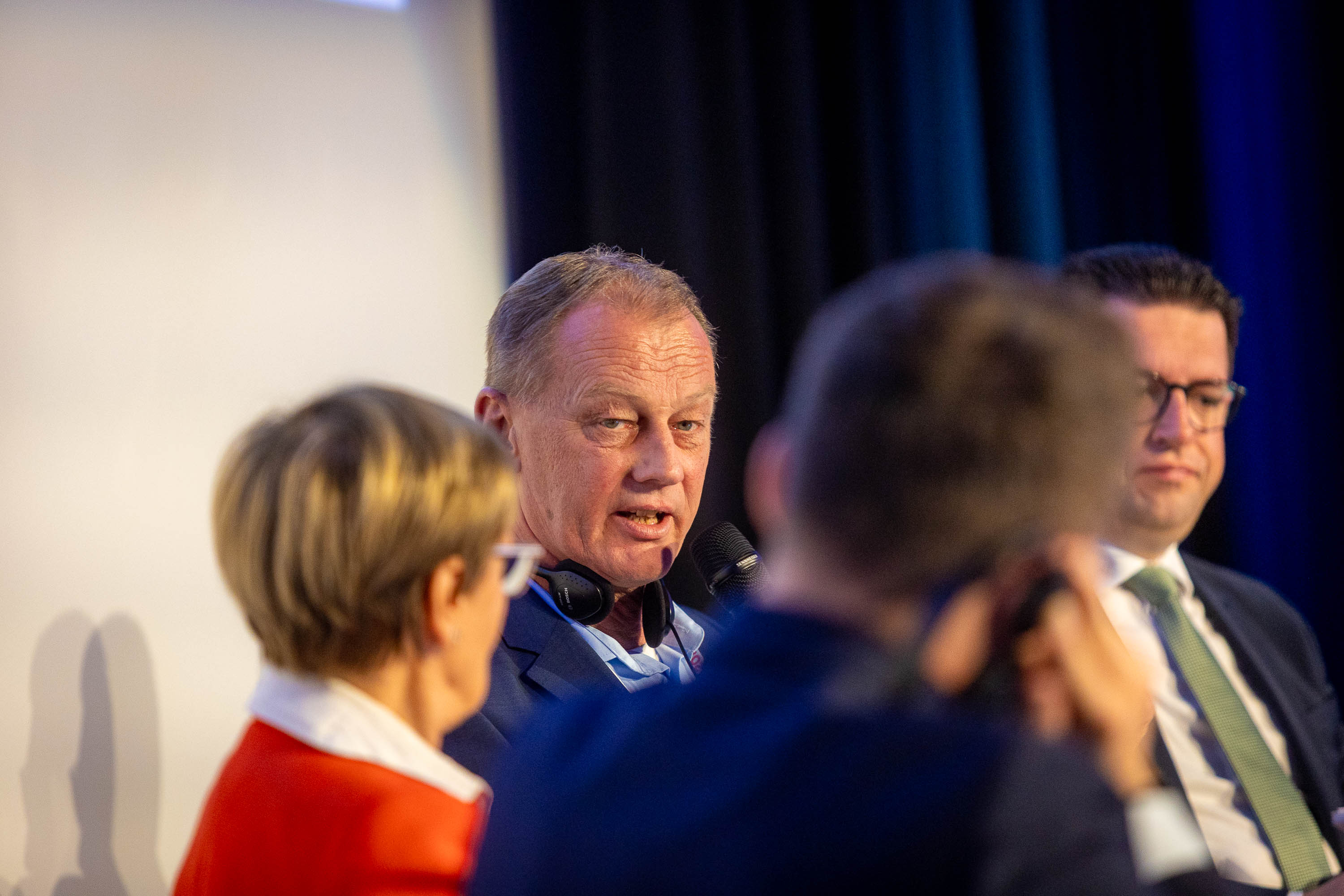
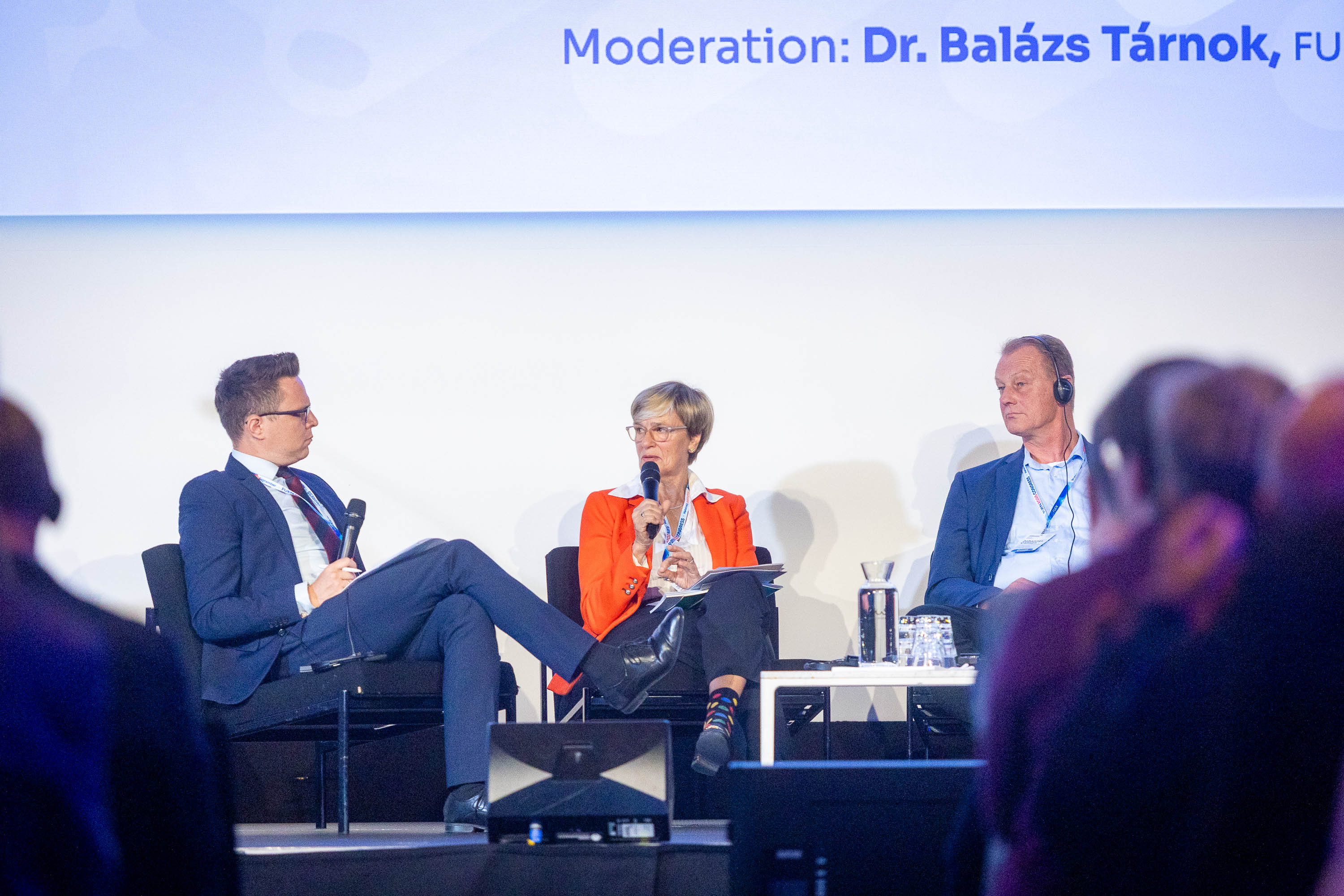
The subsequent panel discussion, entitled “Boundaries online and brands without borders”, brought together Johannes Callsen, Minority Commissioner of Schleswig-Holstein in Germany, Loránt Vincze, Member of the European Parliament and former FUEN President, and Johanna Kézdi, President of the Youth of European Nationalities (YEN). Moderator and FUEN Vice-President Dr. Balázs Tárnok outlined two interconnected challenges: ensuring cross-border access to minority-language content and protecting minority-language words from inappropriate commercial monopolisation.
Johannes Callsen illustrated the consequences of geoblocking through the German-Danish border region. Both the Danish minority in Schleswig-Holstein and the German minority in Denmark depend on access to media in their respective mother tongues. Restricting this access, he argued, prevents communities from experiencing their language as a natural part of a shared linguistic space.
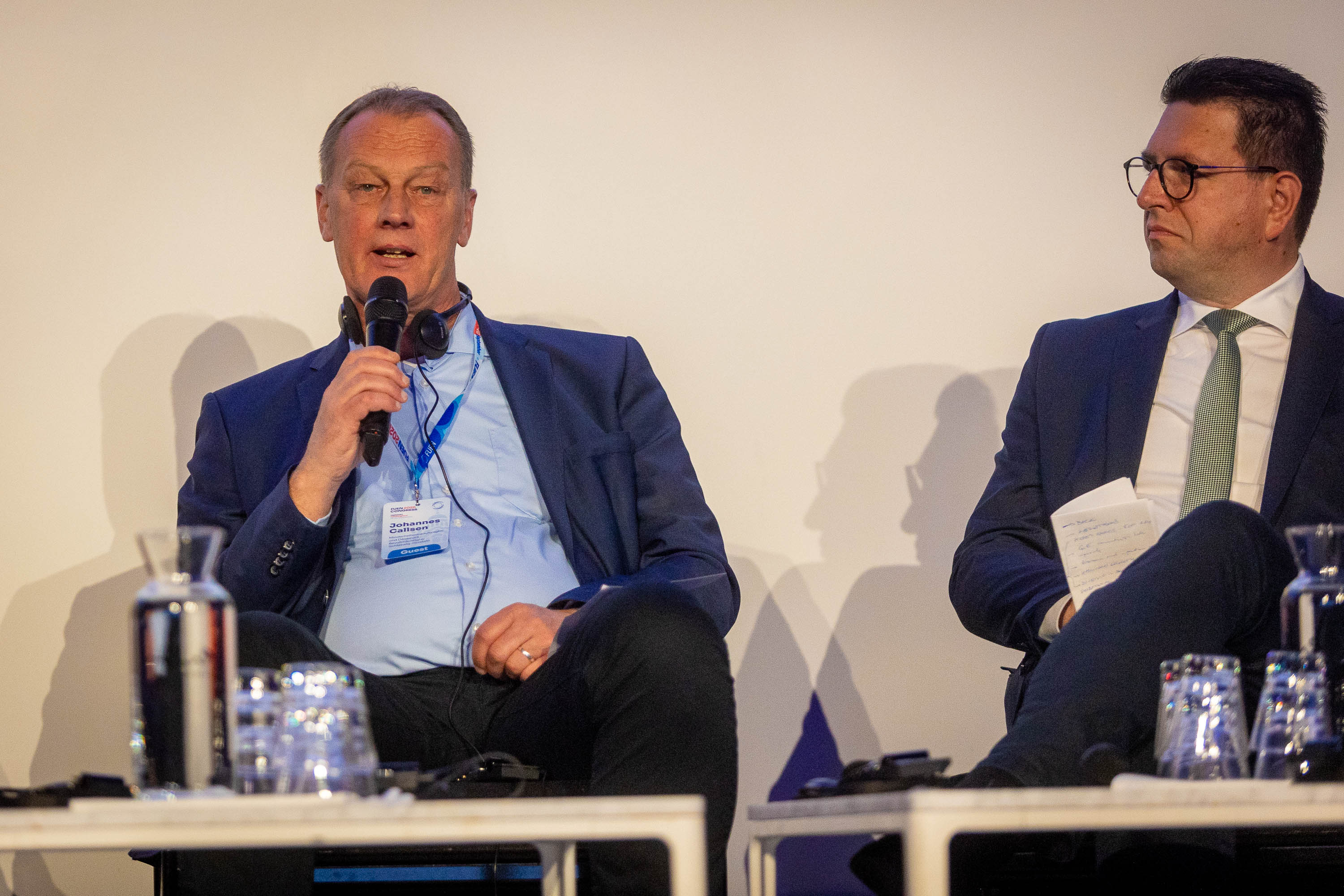
Callsen also highlighted the case of the Frisian word Öömrang, which refers to the island of Amrum and its local language. The term had been registered as a trademark for an alcoholic beverage by a US spirits producer, raising concerns that Frisian businesses could be prevented from using a word belonging to their own linguistic heritage for comparable products. Callsen argued that European trademark rules do not sufficiently account for smaller regional and minority languages. He called for stronger protection and expressed hope that an initiative by the German federal government towards Brussels would bring about changes.
Lóránt Vincze outlined European-level efforts to address both issues. Referring to the declaration adopted at the FUEN Congress in 2025, which condemned geoblocking as a form of discrimination against minority communities, he explained that the European Parliament's Minority Intergroup had raised the issue with the European Commission and proposed a specific exception for national minorities.
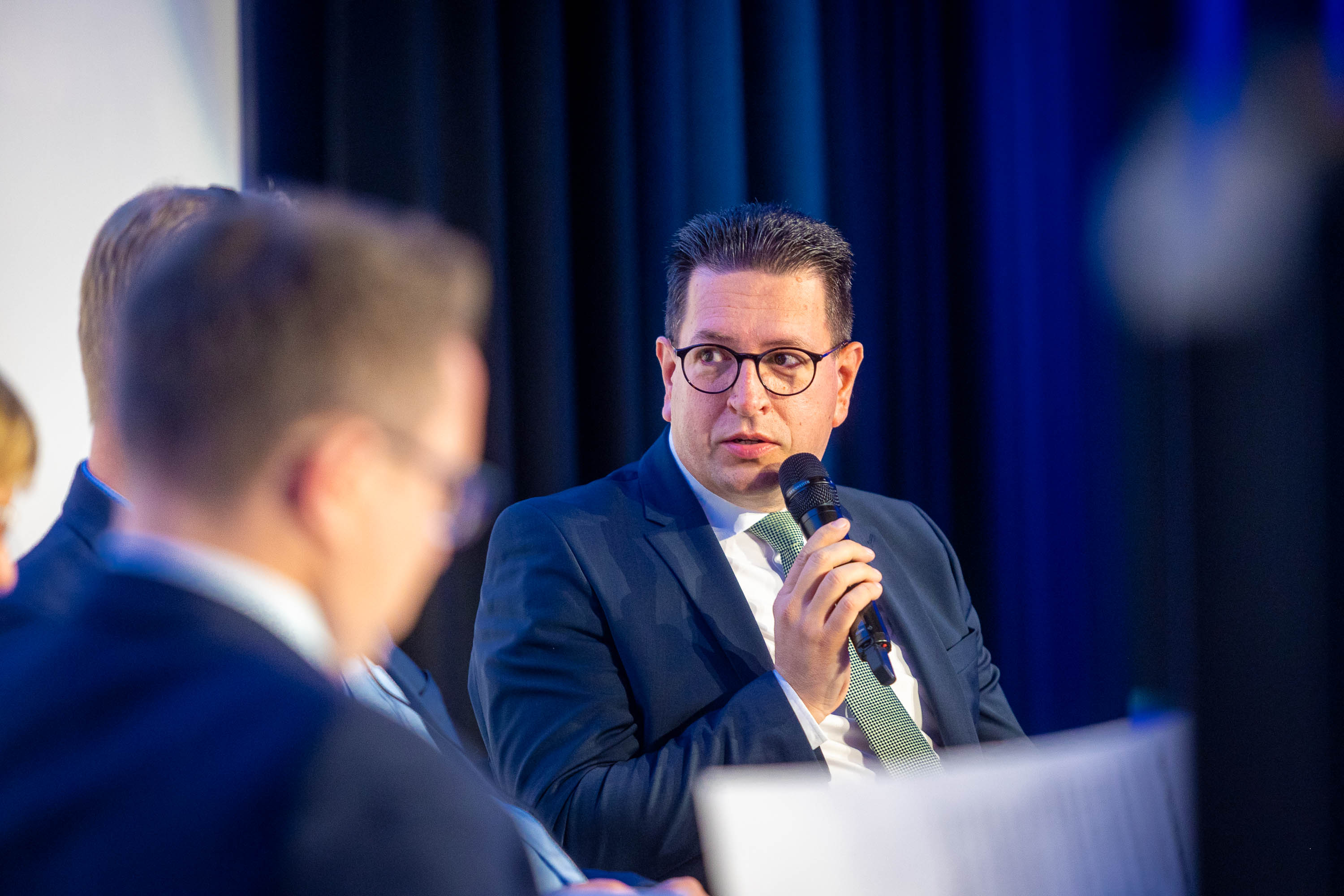
While acknowledging the importance of intellectual property rights and the financial interests of broadcasters and cultural producers, Vincze argued that legal solutions could facilitate cross-border access to audiovisual content. He cited existing contractual arrangements in the German-speaking Community of Belgium as an example.
Vincze called on FUEN and its member organisations to collect concrete examples of geoblocking in European minority regions. Such documentation, he stressed, would provide evidence for discussions with the European Commission ahead of the upcoming review of the Geoblocking Regulation. He also advocated preventive safeguards in European trademark legislation to protect minority-language expressions from exclusive commercial registration.
Johanna Kézdi brought the perspective of younger generations into the discussion. Recalling how her family had installed an antenna to receive television broadcasts in their mother tongue, she described how geographical restrictions now prevent access to many of the same programmes online. She emphasised that geoblocking affects children's language development, access to information and participation in popular culture.
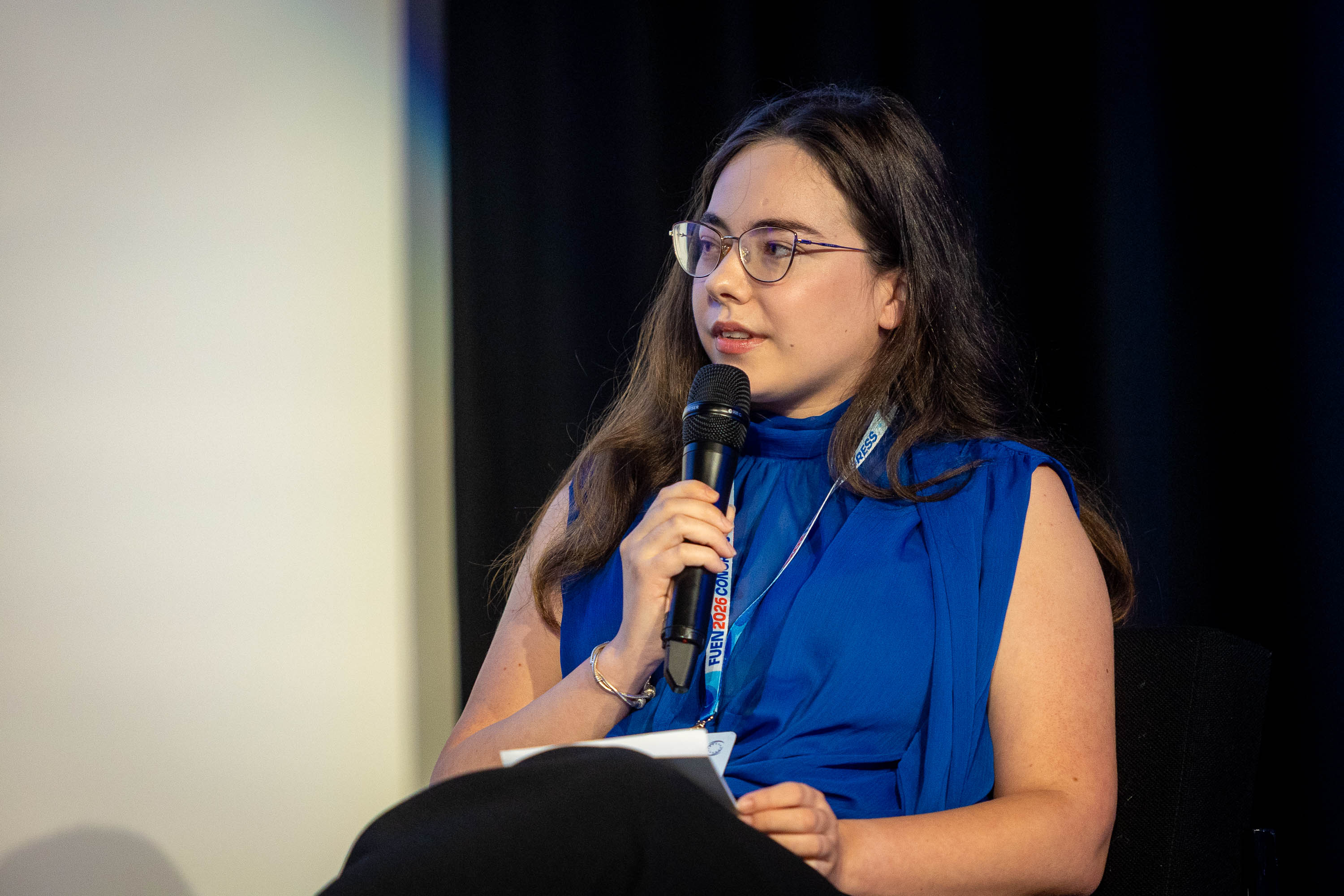
Kézdi argued that access to audiovisual content in one's mother tongue should not depend on the ability to afford technical solutions such as VPN services. She also called for young people to be actively involved in discussions about digital access and language policy.
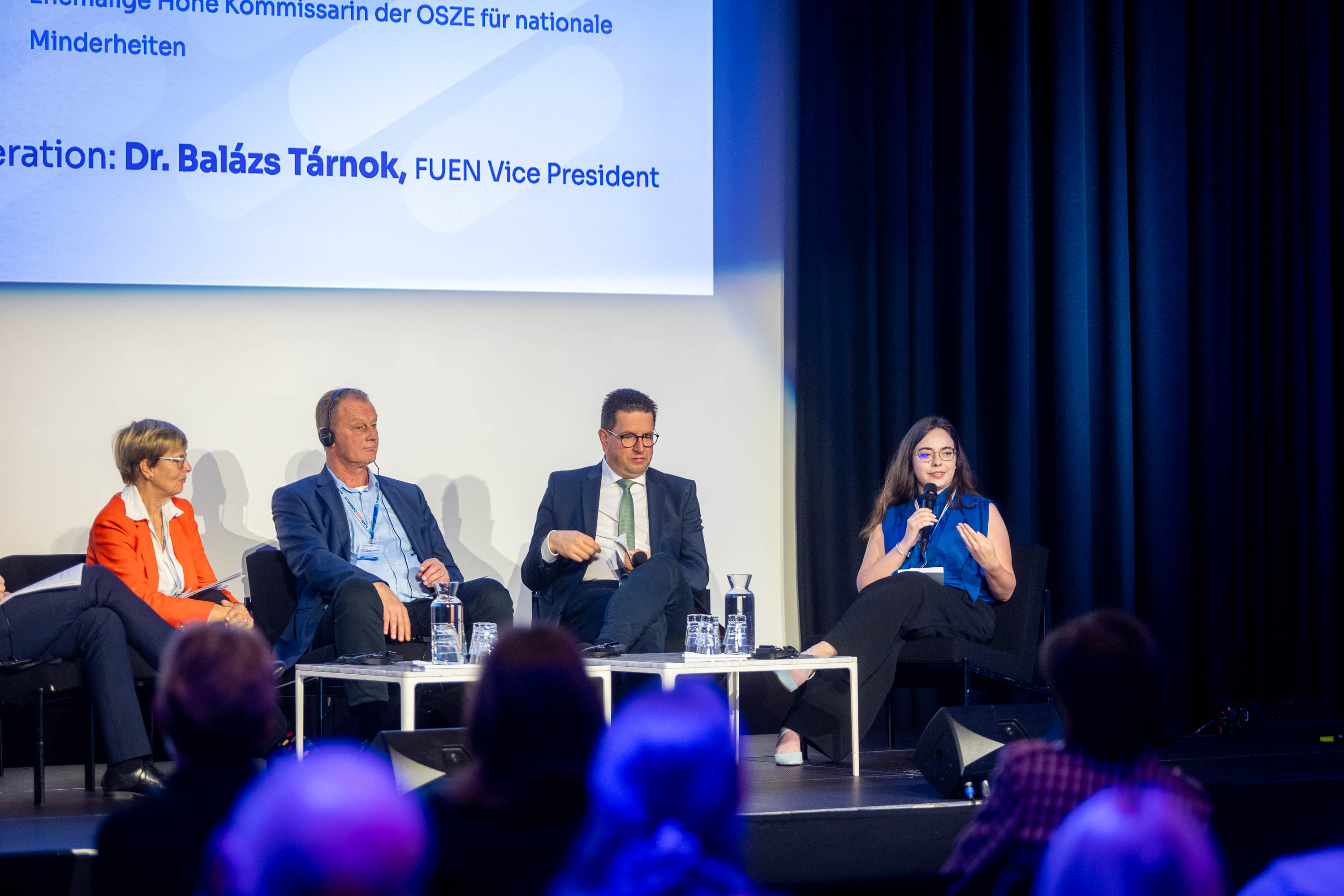
Beyond access to media, she stressed the importance of informal spaces where young minority speakers can communicate with their peers. Minority languages must be used in everyday life, she argued, rather than being confined to formal education or communication between generations.
The discussion also addressed the opportunities offered by artificial intelligence and language technologies. Thors and Vincze highlighted their potential to improve translation, increase the availability of digital services in smaller languages and strengthen linguistic diversity.
The panel discussion underscored the need for European digital market rules and trademark legislation to take the circumstances of national minorities into account. The speakers emphasised that protecting linguistic diversity requires both legal safeguards and practical opportunities for minority communities to access, use and develop their languages in an increasingly digital society.
Following the session, the five FUEN working groups held their respective internal meetings. In the afternoon, participants took part in study visits to the Helsinki Rescue School, the Finnish Broadcasting Company YLE and a comprehensive school in Espoo. The programme continued with a boat tour of the Helsinki archipelago and concluded with a dinner reception at Helsinki City Hall, featuring a cultural performance by Elna Romberg.
PRESS RELEASES
- 8th Annual Meeting of the FUEN Working Group on Education: vocational education, minority languages and AI in focus
- FUEN discussed minority issues with EU institutions in Brussels
- FUEN exhibition opens at the European Parliament: putting minority languages on the European agenda
- FUEN Working Group on Education meets in Eupen: Focus on vocational education, minority languages and AI
- FUEN Assembly of Delegates 2026 calls for greater inclusion of minority languages in artificial intelligence
- FUEN Congress Examines Mother-Tongue Access in Healthcare and Social Services
- FUEN Congress Spotlights the Future of Minority Languages in Public-Service Broadcasting
- 70th FUEN Congress opens in Helsinki/Helsingfors
- For Protection of the Cultural Identity: The Case of the Breton Community in France
- An Existence Under Question: The Case of the Greek-Orthodox Community of Istanbul