














Minorities and Artificial Intelligence: Coding Heritage into the Digital Age
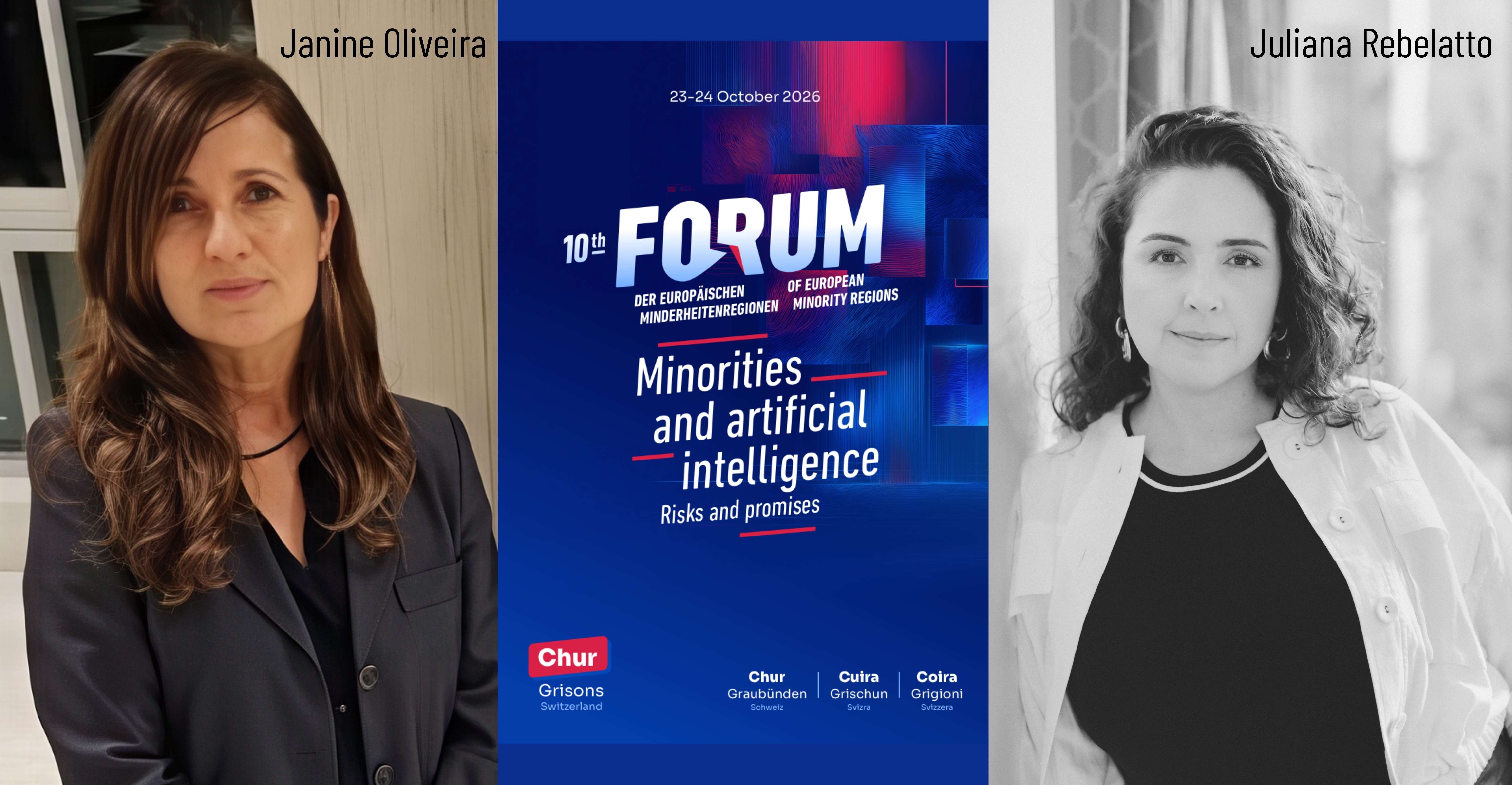
16.10.2026The rapid advancement of artificial intelligence presents unprecedented opportunities and significant challenges for the preservation of minority languages and cultural identities across Europe. To address these vital dynamics, the 10th Forum of European Minority Regions will take place on 23 and 24 October 2026 in Chur/Cuira/Coira, Switzerland. Centered around the theme "Minorities and A.I. – risks and promises," the Forum will bring together regional leaders, cultural workers, researchers, and minority advocates to explore how emerging technologies impact lesser-used languages and what strategies ensure minority heritage thrives in the digital era. Participants will have the opportunity to interact with AI gadgets and projects during the event.
Among the distinguished speakers participating in this year's dialogue are Janine Oliveira and Juliana Rebelatto. Janine Oliveira serves as Lenovo's Executive Director of Business Development and ESG Initiative Leader on Endangered Minority Languages. Juliana Rebelatto is the Lenovo MBG Head of Globalization and ESG Initiative Leader on Endangered Minority Languages. Together, they spearhead Motorola's Digital Inclusion of Indigenous Languages Initiative. Their work focuses on bridging the global digital divide by integrating endangered and minority languages directly into mobile user interfaces and leveraging artificial intelligence to scale language preservation with unprecedented speed and precision.
We talked to them about Lenovo's vision for global minority languages and the motivations behind it.

You both spearhead Motorola's Digital Inclusion of Indigenous Languages Initiative. What was the defining moment that motivated you to tackle linguistic equity, and does a personal or minority background influence the passion you bring to this work?
Janine Oliveira and Juliana Rebelatto: – The defining moment came in 2020-2021 when our Globalization team at Motorola recognized a digital divide: despite smartphones being the primary gateway to information, connection, and economic participation globally, millions of Indigenous and minority language speakers were completely unable to interact with their devices in their native languages.
According to UNESCO, one Indigenous language disappears every two weeks, putting over 3,000 unique languages at risk of vanishing by the end of the century. Our Globalization team therefore decided to contribute to language revitalization and cultural continuity by creating the first UI localization for Nheengatu, an Indigenous language spoken in the Amazon, in 2021.
Driven by Lenovo's core mission of "Smarter Technology for All," we believe that the digital representation of Indigenous and minority languages will both bridge the digital divide and help with language revitalization efforts. Seeing native speakers interact with a smartphone in their own language for the very first time provided the catalyst to transform a corporate initiative into a long-term global movement aligned with UNESCO's International Decade of Indigenous Languages (2022-2032).
Integrating an endangered language into a modern smartphone is a massive operational undertaking. What does this process actually look like on the ground, and how do you navigate translating complex tech terminology into languages that may not yet have equivalent words?
– Our process is governed by a rigorous four-pillar framework (detailed in our White Paper collaboration with UNESCO):
Language Endangerment Status: Assessing threat levels using UNESCO classifications.
Digital Inclusion Status: Evaluating existing Unicode support, local data, and keyboard tools.
Community Consensus & Desire: Partnering only with communities that actively seek digital language tools to ensure full ownership and consent.
Subject Matter Expertise: Partnering with local linguists, academic institutions, and elders (such as the Free University of Bozen-Bolzano for Ladin or UNICAMP for Latin American languages).
Operationally, localizing a mobile user interface (UI) requires handcrafting, reviewing, and translating tens of thousands of software strings, such as the 200,000+ words digitized for the Ladin UI.
Navigating complex technical terminology where equivalent words do not exist (e.g., terms for camera settings, biometric authentication like "Face Unlock," or SD card storage) requires linguistic innovation. Rather than forcing direct or literal translations, we conduct inter-regional workshops bringing together speakers across different regional dialects (e.g. for Ladin, representatives from Val Badia, Fassa, and Fodom discussed word innovations). Together with scholars, like Professor Paul Videsott in the case of our Ladin localization initiative, the community co-creates new, mutually intelligible technical terms that respect the linguistic rules of the language while establishing modern vocabulary for digital domains.
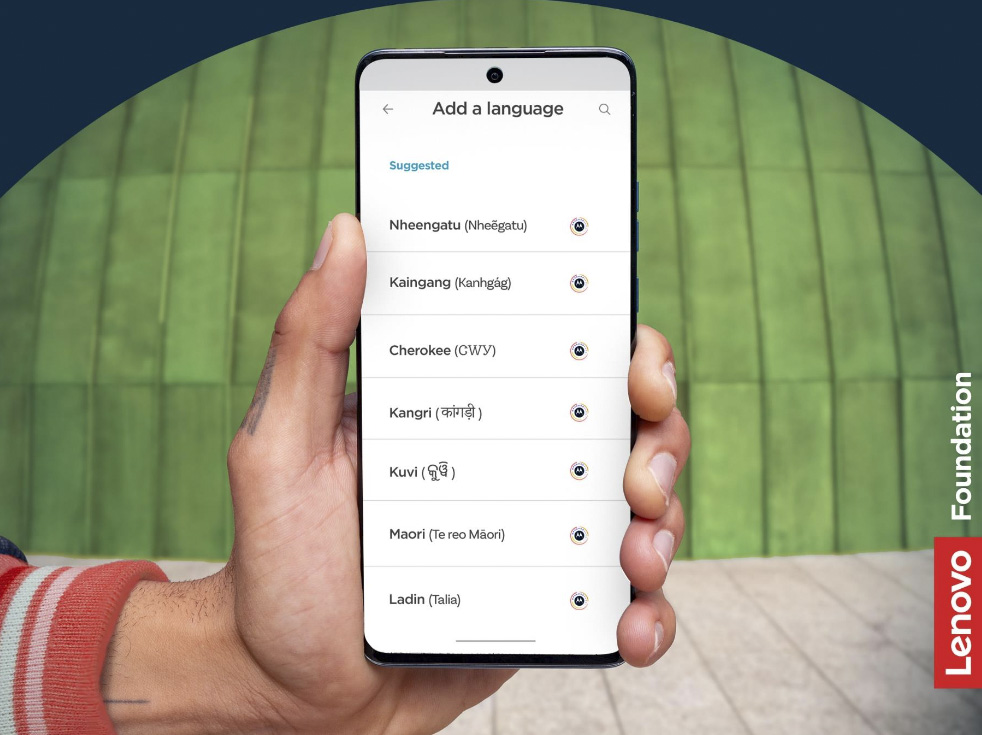
Illustration: Cover illustration for "Hello Indigenous: a blueprint on the preservation of endangered Indigenous languages through digital inclusion"
This year's Forum theme focuses on the risks and promises of AI for minorities. Artificial intelligence has immense potential to accelerate translation and language preservation. How is Lenovo leveraging AI to scale up the digital inclusion of minority languages?
– At Lenovo, we view artificial intelligence not as a replacement for human culture, but as a powerful amplifier for linguistic diversity. AI allows us to scale language preservation with unprecedented speed and precision, but technology alone is only half the equation. True digital inclusion requires continuous engagement with local communities, collaborating directly on their terms, whenever it makes sense to them, and ensuring our efforts bring genuine, long-term value to minority language speakers. By pairing cutting-edge AI innovation with community-led partnerships, we can build tools that truly respect and sustain these unique heritage languages.
In our collaboration with Samuell Frontull, researcher at University of Innsbruck, Motorola's English-Ladin UI corpus added over 1,000 previously undocumented vocabulary words to Tradutur – a Machine Translation (MT) platform for Ladin. This open integration produced dramatic quality improvements, boosting domain-specific translation scores, while simultaneously improving general translation performance across global benchmarks like FLORES+ and BOUQUET.
Furthermore, utilizing Lenovo's GPU infrastructure and collaborating with Eldorado research centers, we developed LiLa, named after the combination of the first two letters of "Ligurian Ladin," and is a specialized, fine-tuned 1.3-billion parameter model based on NLLB. At WMT 2026, LiLa achieved 1st place among open, reproducible machine translation systems for both Ligurian and Ladin. Throughout both of these initiatives, the Ligurian and Ladin communities were at the forefront of them. This shows how focused expertise, collaboration, and innovation can create meaningful impact for underserved language communities.
On the flip side, AI systems can easily reinforce discrimination through severe data shortages for minority groups. Since large language models are trained overwhelmingly on dominant languages, what must the tech industry do to prevent AI from accelerating linguistic assimilation?
– To prevent AI from becoming an instrument of linguistic assimilation, the tech industry must adhere to three foundational principles:
Data Sovereignty & Community Ownership: Indigenous and minority communities must retain absolute ownership and governance over their language, voice, and cultural data. Data collection must be consent-driven, ensuring communities decide how their data is used and shared.
Mitigating Cultural Flattening & Appropriation: Large language models trained on web-scraped data often erase dialectal nuances, sacred contexts, and complex social structures. AI models must incorporate community-driven development to preserve exact cultural contexts rather than flattening languages.
Open-Sourcing Quality Datasets to Bridge Data Scarcity: Rather than building proprietary, closed-source models that exploit minority data without returning value, hardware manufacturers and AI developers must open-source verified corpora with community consent. Sharing high-quality datasets empowers local researchers, educators, and developers to build their own tools, ensuring minority languages participate fully in the AI era.
A recurring topic at the Forum is that minorities contribute significantly to economic and social development. Because global tech giants have historically focused on the wealthiest language markets, how do you successfully make the internal business case that digital inclusion for endangered languages is a sustainable investment?
– The Digital Inclusion initiative has remained not-for-profit, focusing on the needs of Indigenous and minority language communities. While its primary objective is social impact, its sustainability depends on demonstrating strategic value to the business. This requires aligning the corporate perspective to long-term ESG (Environmental, Social, and Governance) leadership and technology innovation:
Core Corporate ESG & IDIL Alignment: Demonstrating alignment with global goals, such as UNESCO's International Decade of Indigenous Languages, positions the company as a pioneering leader in Corporate Citizenship and DEIB (Diversity, Equity, Inclusion, and Belonging).
Global Industry Recognition & Brand Affinity: The initiative has earned top industry accolades, including the Engage for Good Gold Halo Award (2025) and the Tom's Guide Diversity in Tech Award (2023), alongside academic citations in the European Journal of Minority Studies and Studies of Computational Intelligence. Media campaigns for launches like the Zapotec keyboard generated over 24 million impressions across major markets.
R&D and AI Infrastructure Value: Both open-sourcing data and standardizing low-resource localizations directly enhances core software architecture, Unicode support, and AI/MT translation pipelines. By open-sourcing data as well as building efficient models (like LiLa) and open-source corpora, we create reusable technological assets that lower long-term localization costs and establish scalable frameworks for new market expansions.
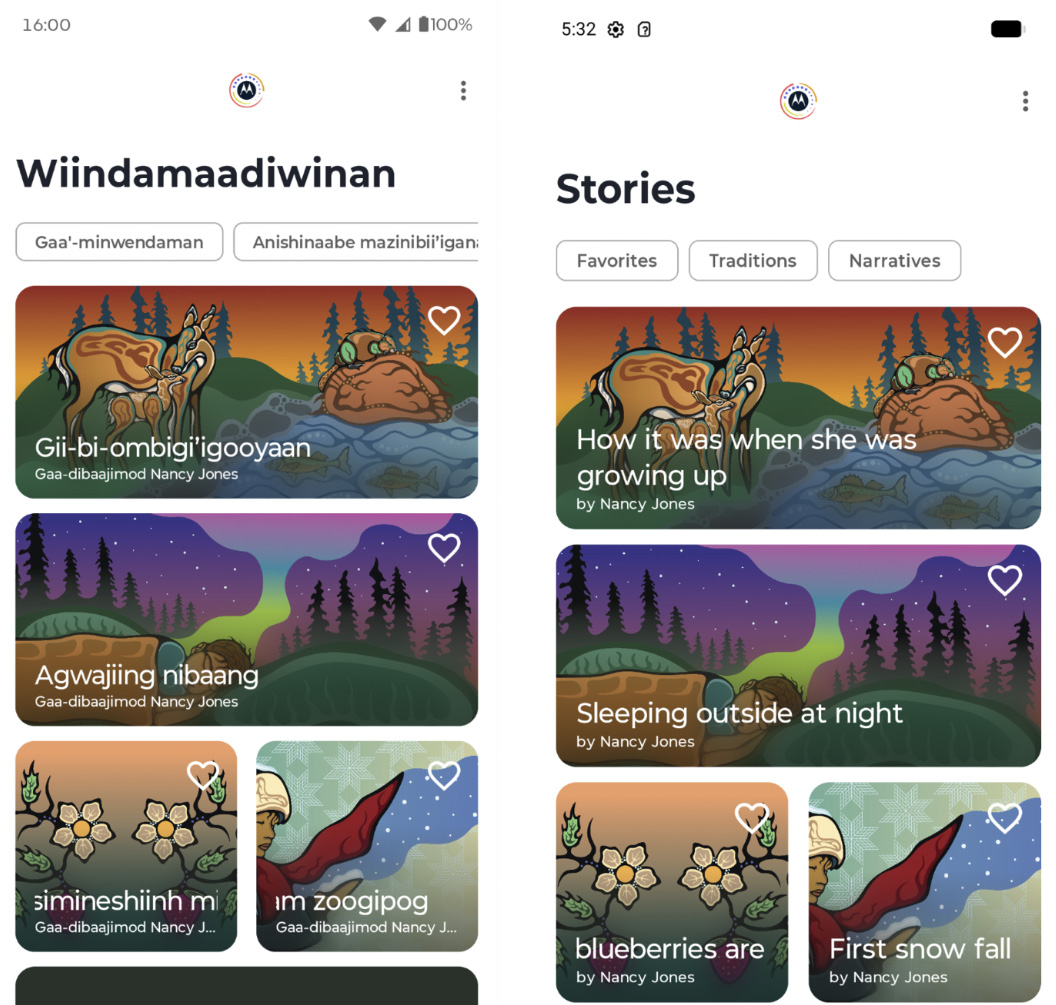
Illustrations: Indigenous Collections app by Motorola, created to discover, preserve and celebrate Ojibwe heritage
Your initiative has successfully localized devices for minority languages in regions like the Dolomites. For the European regional policymakers attending this Forum, how can they proactively partner with hardware manufacturers to ensure their languages secure a place in the digital ecosystem?
– European regional policymakers can replicate the success of the Dolomite (Ladin) model by taking four actionable steps:
Establish Multi-Stakeholder Partnerships: Act as a bridge between regional cultural institutions, university language departments, and technology OEMs. In South Tyrol/Dolomites, collaboration between the Free University of Bozen-Bolzano, Ladin Cultural Institutes, and Motorola was essential to delivering a fully localized Ladin UI.
Focus on Regional Digitization & Open Corpora: Invest research efforts into standardizing digital orthographies, creating digitized dictionaries, and generating open-access corpora. When a region presents an organized, high-quality dataset, hardware manufacturers can integrate the language into operating systems much more rapidly.
Co-Invest in AI & GPU Infrastructure: Regional governments can partner with tech leaders to fund compute resources for fine-tuning open-source machine translation systems (such as Tradutur and LiLa), guaranteeing digital representation in next-generation AI tools.
Policy & Educational Integration: Mandate the use of localized mobile technology and digital tools within local school curricula and public administration to foster daily digital usage among younger generations.
If you could establish one mandatory industry standard for how AI developers and tech hardware companies approach global linguistic diversity, what would that standard look like?
– We would establish the "Community-First Digital Sovereignty & Open Data Standard" for global technology developers.
Under this standard, any hardware OEM or AI developer seeking to digitize or train models on minority or Indigenous languages would be required to:
Mandate Community Governance: Obtain explicit consent and partner directly with recognized community elders, linguists, and cultural institutions before harvesting or processing language data.
Open-Source System Terminology & Corpora: In alignment with the applicable community, require all baseline UI localizations, technical glossaries, and anonymized translation datasets funded or produced by major tech firms to be released open-source.
Enforce Ethical AI Evaluation Benchmarks: Require AI models deployed in public systems to be benchmarked for low-resource language accuracy, dialectal authenticity, and preservation of cultural context. This ensures that minority language communities are served with equal quality, dignity, and accuracy as dominant language markets.
Join the Conversation in Chur
Attendees will have the opportunity to engage directly with Janine Oliveira, Juliana Rebelatto, and a diverse panel of expert speakers, policymakers, and minority representatives at the 10th Forum of European Minority Regions. Interested individuals and representatives can meet them and the other speakers on 23 October 2026 in Chur/Cuira/Coira to share insights, explore innovative strategies, and shape the future of minority language preservation in the age of Artificial Intelligence.

PRESS RELEASES
- Turkic minorities and communities are gathering in Skopje, the capital of North Macedonia
- Björn Teir: What we do not digitize today is not visible to the world tomorrow
- 8th Annual Meeting of the FUEN Working Group on Education: vocational education, minority languages and AI in focus
- FUEN discussed minority issues with EU institutions in Brussels
- FUEN exhibition opens at the European Parliament: putting minority languages on the European agenda
- FUEN Working Group on Education meets in Eupen: Focus on vocational education, minority languages and AI
- FUEN Assembly of Delegates 2026 calls for greater inclusion of minority languages in artificial intelligence
- FUEN Congress discusses geo-blocking and the protection of minority languages
- FUEN Congress Examines Mother-Tongue Access in Healthcare and Social Services
- FUEN Congress Spotlights the Future of Minority Languages in Public-Service Broadcasting