










FUEN exhibition opens at the European Parliament: putting minority languages on the European agenda
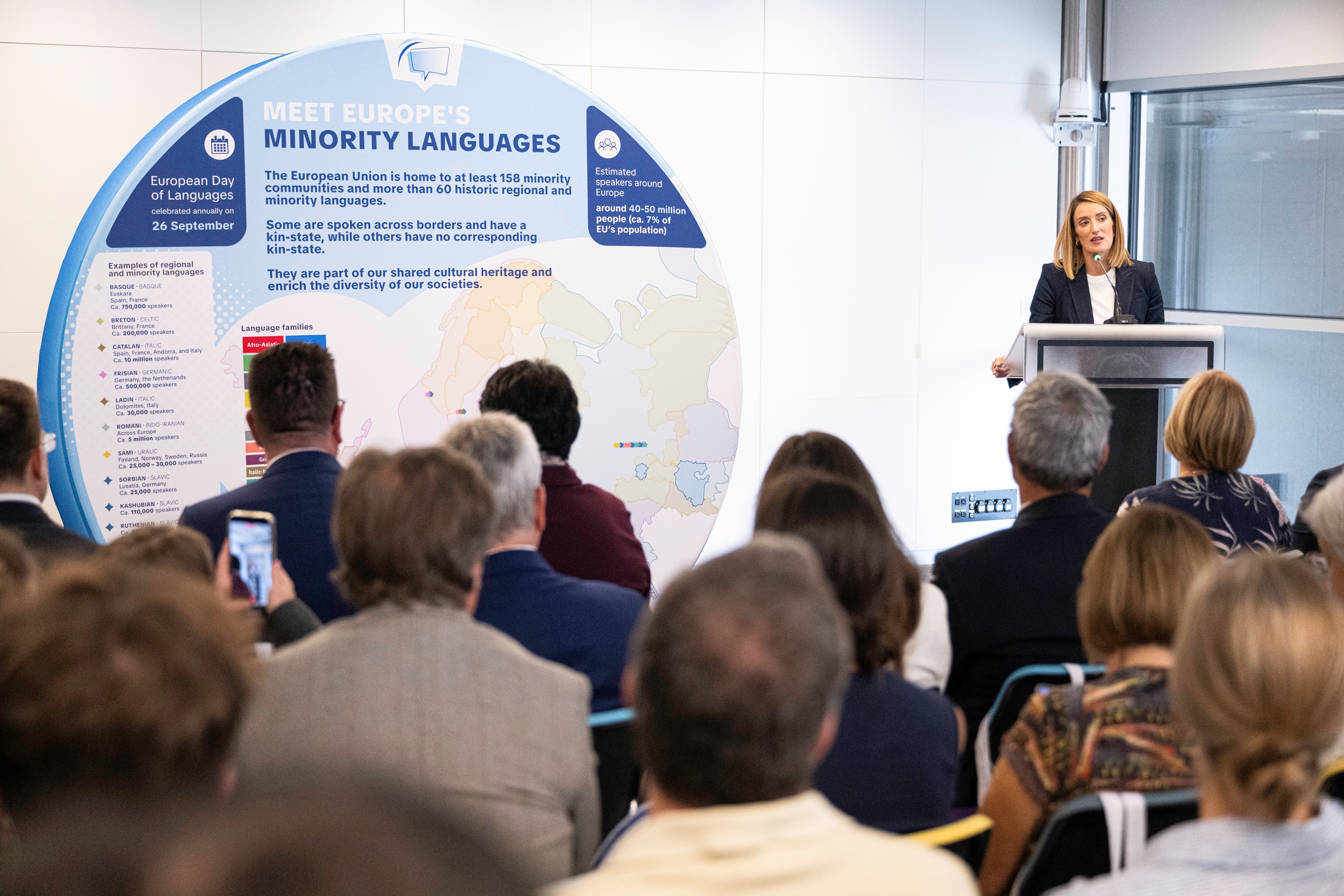
30.09.2026Europe’s regional and minority languages took centre stage on Tuesday as the Federal Union of European Nationalities (FUEN) officially opened its exhibition on national and linguistic minorities at the Info Hub of the European Parliament in Brussels. Held on the occasion of the European Day of Languages, the event brought together representatives of European institutions, political decision-makers and minority communities from across Europe.
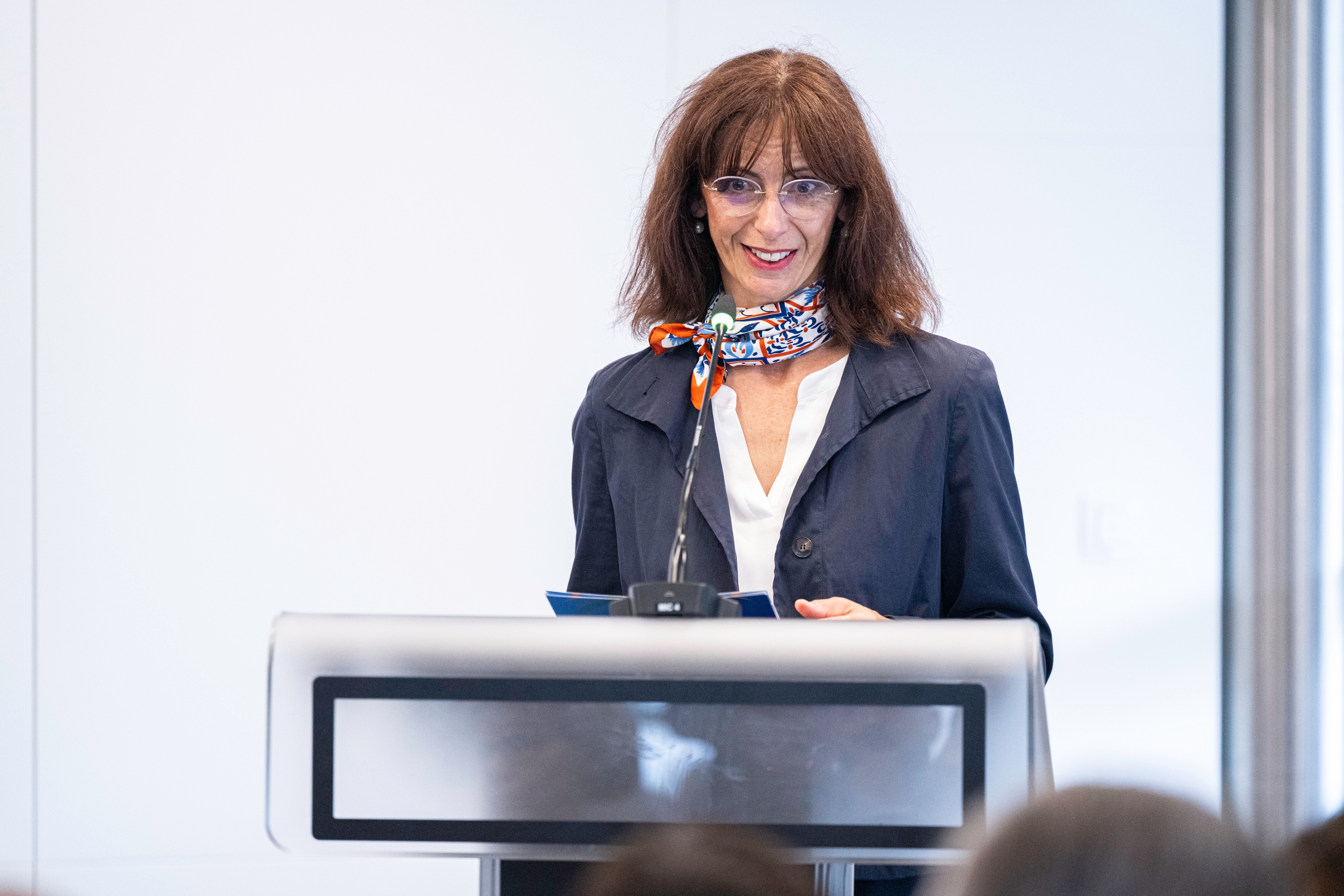
The exhibition was developed by FUEN and hosted by Loránt Vincze, Member of the European Parliament and Chair of the Intergroup on Traditional Minorities, National Communities and Languages. Speakers included President of the European Parliament Roberta Metsola, First Vice-President Sabine Verheyen, FUEN President Olivia Schubert and Ambassador Andriy Zayats, Head of the Council of Europe Liaison Office to the European Union.
President of the European Parliament Roberta Metsola emphasized that Europe has never been about fitting people into a homogeneous community, but rather about building a union that delivers for everyone and gives every person a chance to participate. Representing the world's only directly elected transnational parliament, Metsola noted that linguistic diversity makes Europe richer, strengthens democratic participation, and preserves identities and histories. Highlighting the alarming statistic that at least 40% of the world's 7,000 languages are endangered, she praised the Intergroup as one of the most active in the Parliament and reaffirmed the institution's commitment to standing up for multilingualism and fighting discrimination. She also praised FUEN for its work in the field of minority protection.

First Vice-President of the European Parliament Sabine Verheyen, the patron of the event, highlighted multilingualism as one of the defining features of the European Parliament. Its 24 official languages allow Members from 27 Member States to participate in parliamentary work in their own languages and enable citizens to follow European politics in a language they understand.
At the same time, she stressed that Europe’s linguistic diversity extends far beyond these official languages. Referring to her home region of Aachen (Germany), Verheyen described how dialects create connections across the borders with Belgium and the Netherlands. Such examples, she said, show how regional and minority languages can strengthen ties between people and regions.
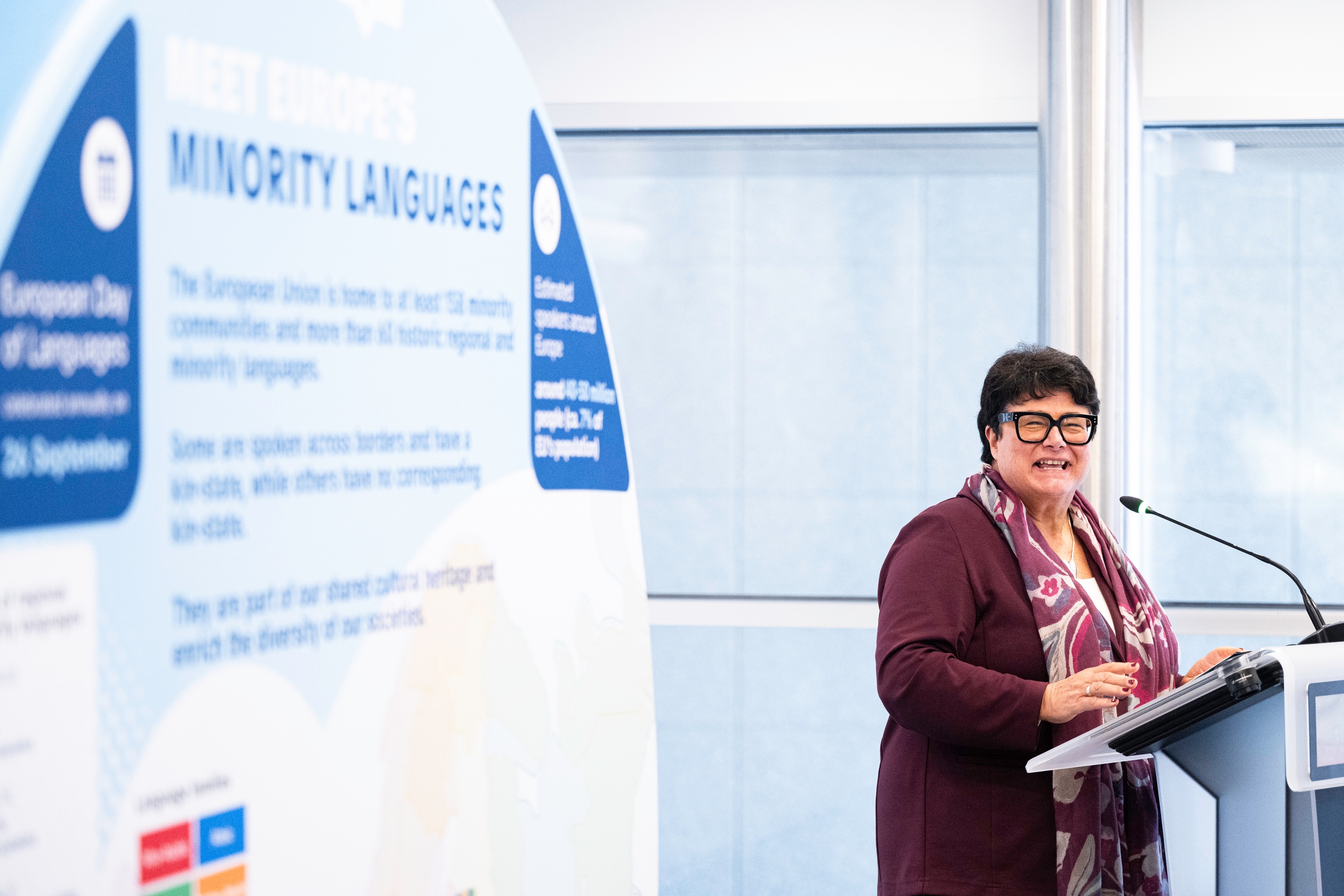
Loránt Vincze underlined that Europe’s linguistic landscape reaches far beyond the 24 official languages of the European Union. Across the continent, languages and communities cross borders and enjoy very different levels of recognition and protection. Regional and minority languages, he said, form an essential part of Europe’s history and identity and must continue to have a place in education, public life and the digital sphere.
Vincze also pointed to the growing importance of technology. As artificial intelligence becomes increasingly present in everyday life, he stressed that Europe’s smaller languages must not be left behind. Linguistic diversity, he argued, must also be reflected in the digital future.
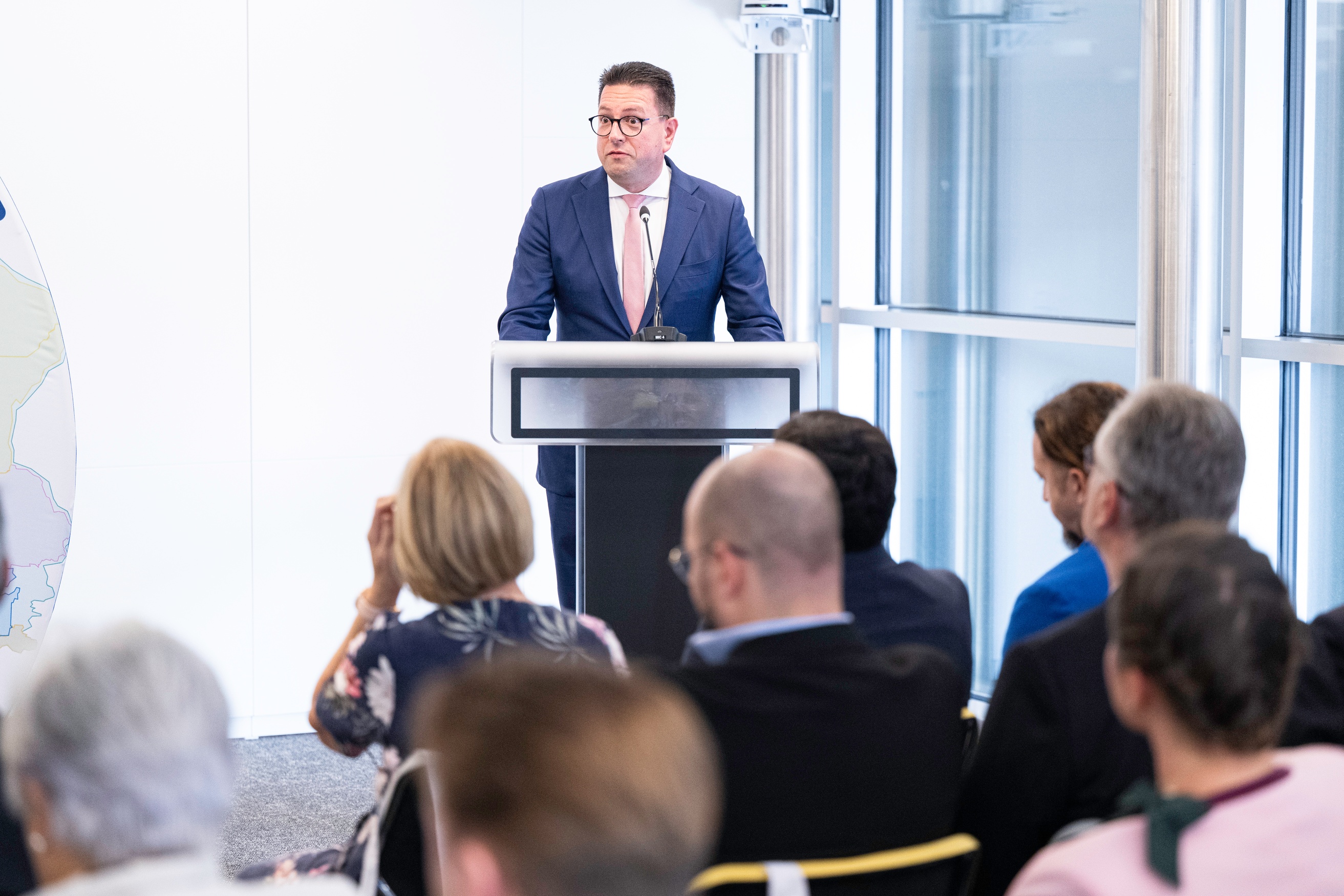
Governor of South Tyrol Arno Kompatscher talked about the 80-year old autonomy model which allowed the German-speaking and Ladin communities in South Tyrol to thrive and said now it is their turn to give something back to the community of nations that have helped them to achieve their status.
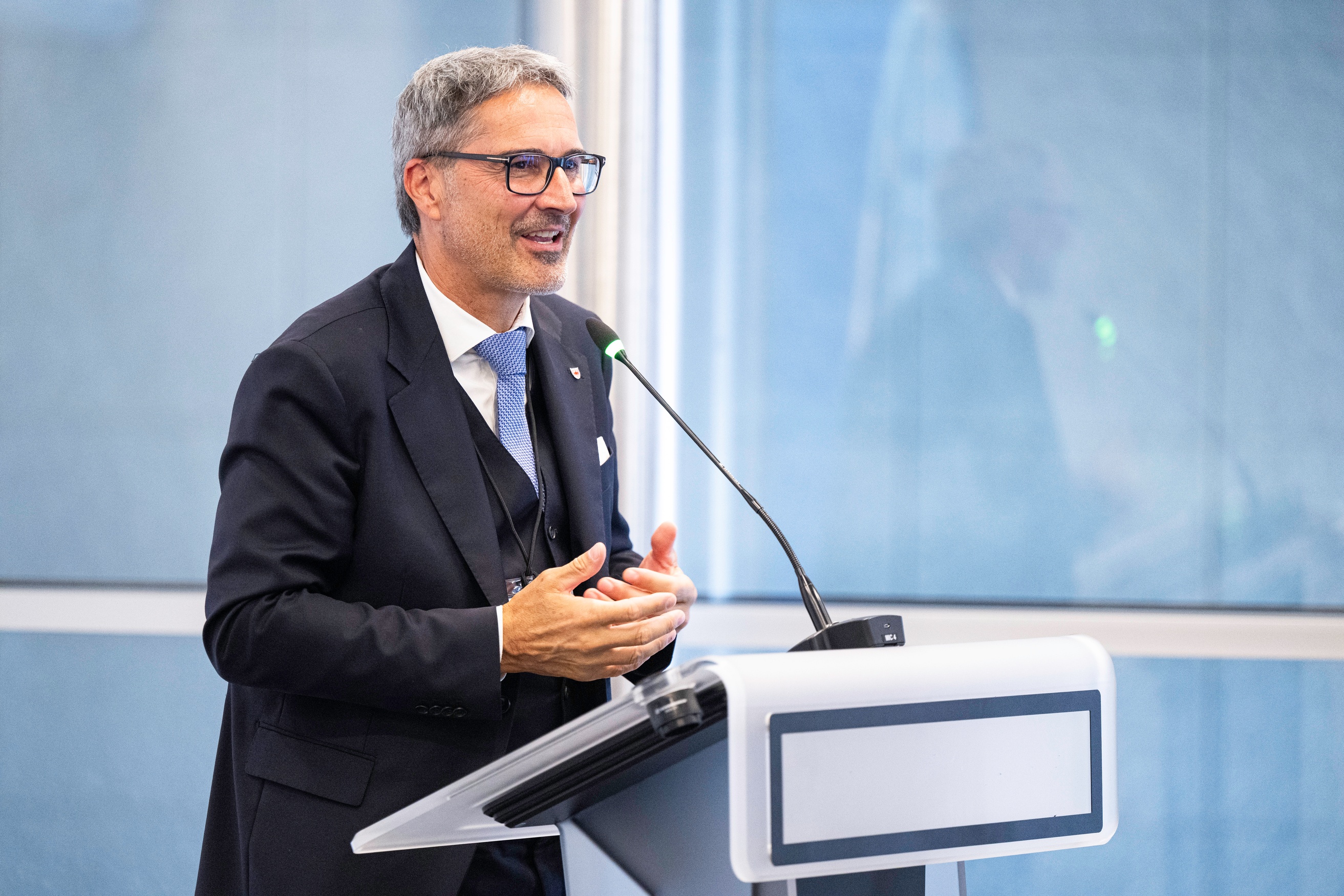
Ambassador Andriy Zayats, Head of the Council of Europe Liaison Office to the European Union, highlighted the importance of the European Charter for Regional or Minority Languages, which currently protects 84 languages. As the world's only treaty specifically dedicated to protecting and promoting regional or minority languages, it provides an internationally recognised framework that helps maintain Europe’s cultural wealth and forms an important foundation for democracies. Zayats noted that protecting these languages does not come at the expense of official languages, and emphasized that the Charter’s findings are crucial benchmarks for countries seeking to join the European Union. He celebrated the shared principle of "unity in diversity" that guides both the Council of Europe and the European Union.
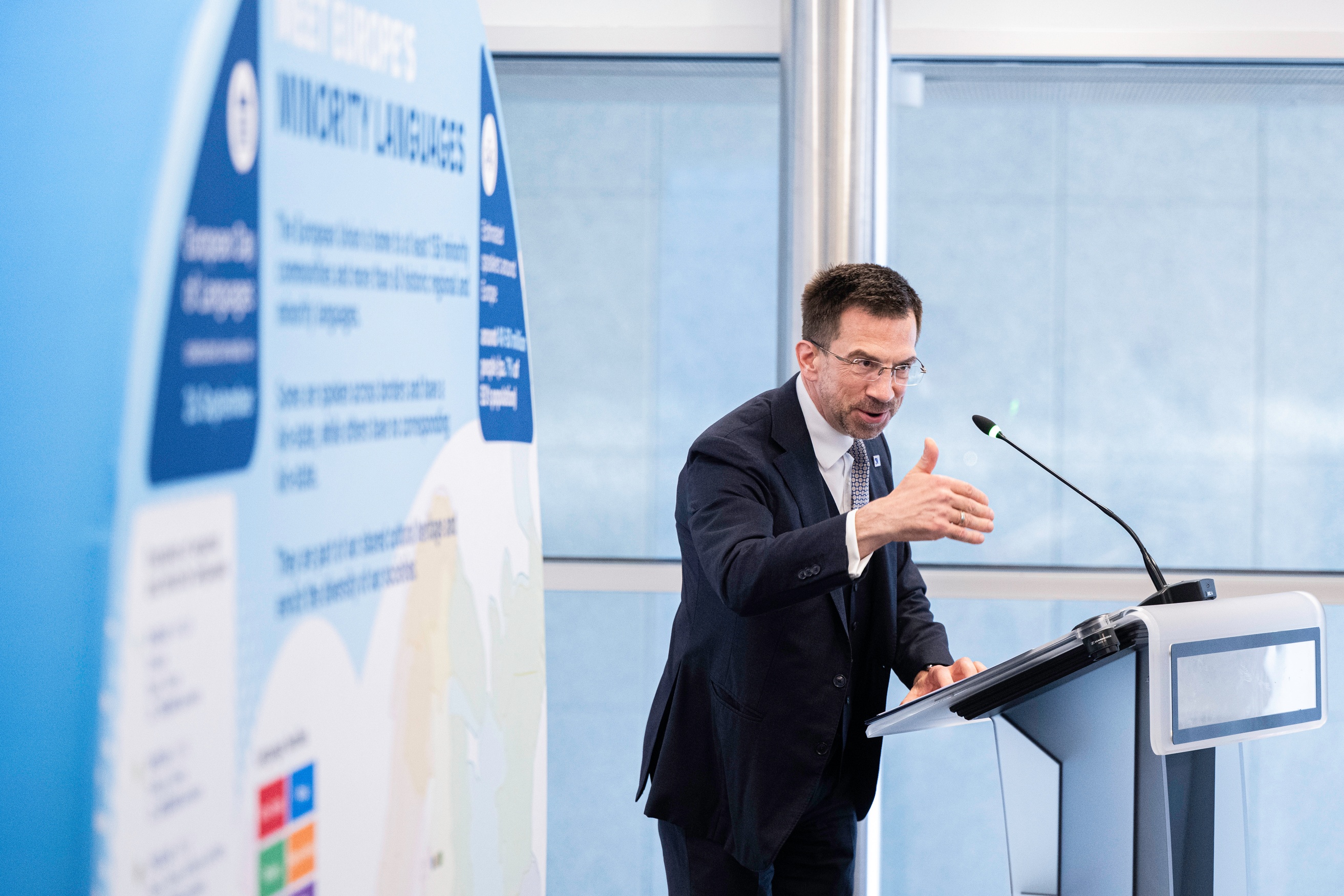
FUEN President Olivia Schubert focused on the meaning of language for minority communities themselves. For millions of Europeans belonging to national and linguistic minorities, she said, language is closely linked to identity, memory and the transmission of knowledge and traditions. It is also a question of rights.
Schubert also pointed to the very different realities faced by minority languages across Europe. Some benefit from strong institutional protection and are present in education, public administration, media and political life, while others struggle to remain visible. The exhibition, she stressed, was created to give the people behind these languages a face and a voice and to bring their perspectives directly into the European debate.
Looking ahead, Schubert called for stronger involvement of minority communities in decisions affecting their future. Protecting minority languages, she said, is also about ensuring that they continue to be spoken, taught and used by future generations.
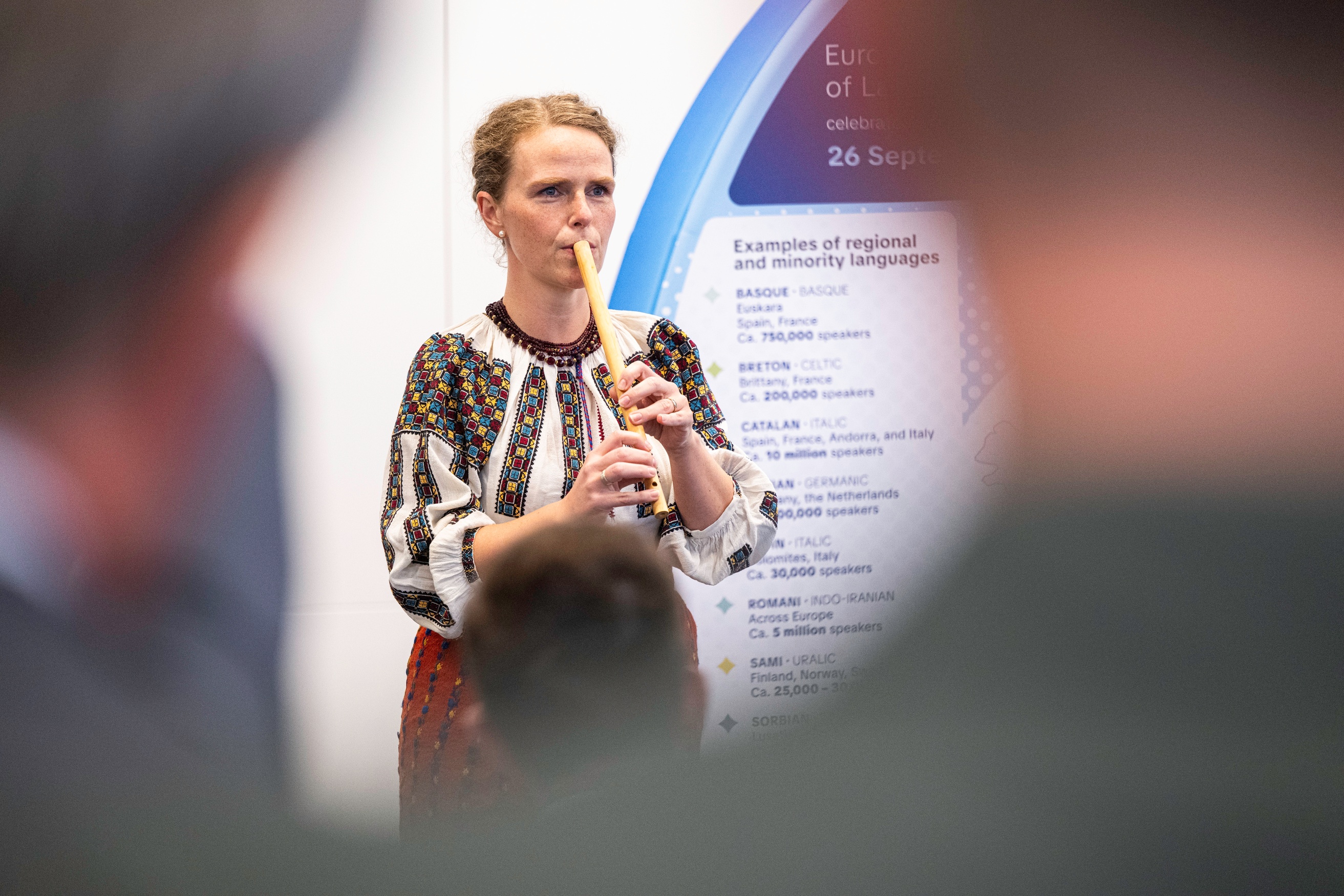
The programme was accompanied by two musical performances reflecting Europe’s linguistic diversity. Panna Katalin Demeter performed songs in Csángó Hungarian, while Pieter Gysbert Zijlstra brought Frisian-language hip-hop to the European Parliament. The event concluded with a guided tour of the exhibition.
The exhibition presents Europe’s national and linguistic minorities, their languages, existing protection standards and the challenges communities face in preserving and developing their identities. It is intended to raise awareness among European decision-makers and to strengthen the political dialogue on minority rights and linguistic diversity.
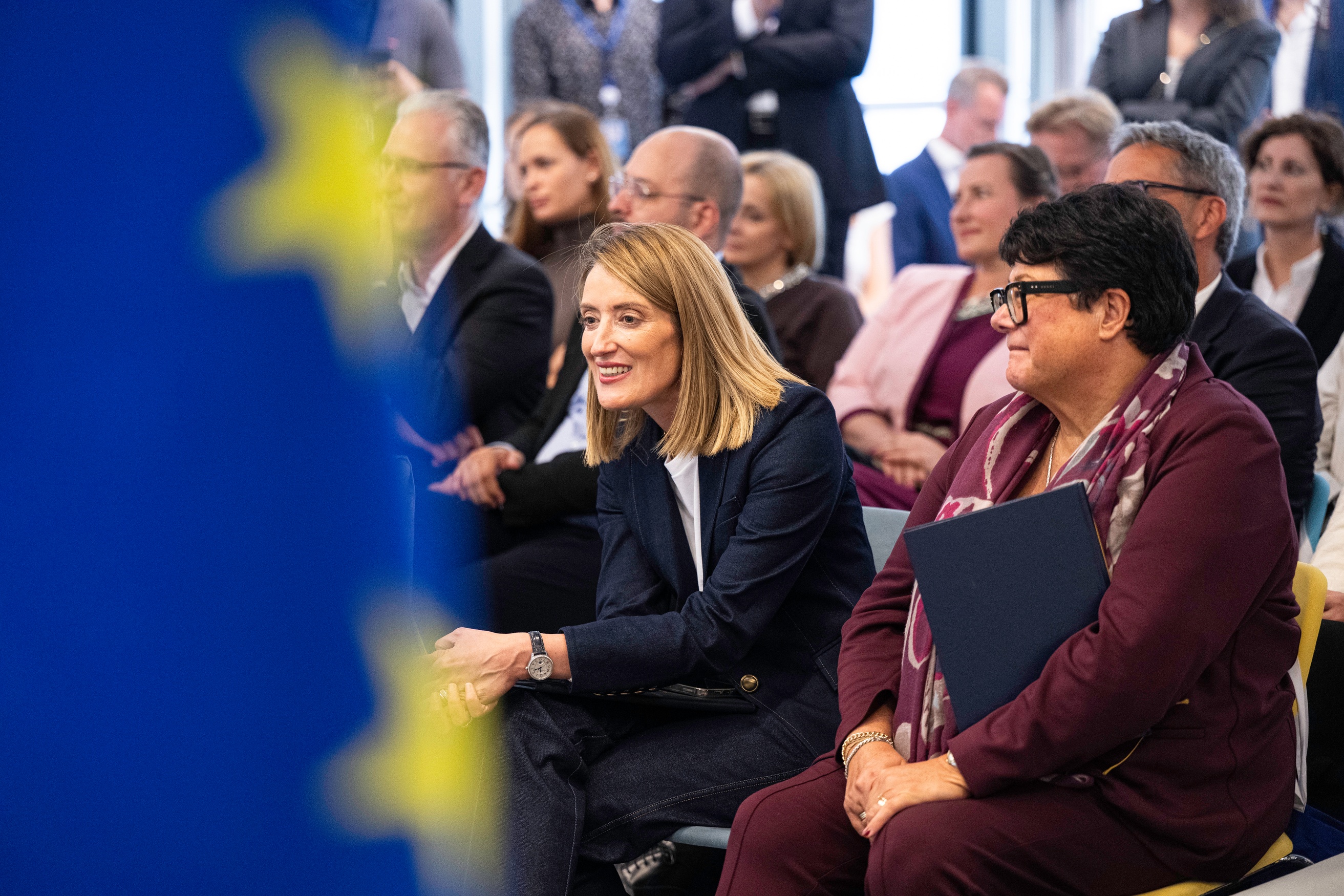
A delegation of the European Dialogue Forum (EDF) also took part in the event. It included FUEN President Olivia Schubert, YEN President Johanna Kézdi, Jens A. Christiansen of the South Schleswig Association, Bernard Gaida of the Association of German Social-Cultural Societies in Poland and Gösta Toft of the Federation of Germans in Northern Schleswig. During their Brussels visit, the delegation is holding meetings with representatives of the European Committee of the Regions, the European Parliament and the European Commission. Discussions focus on minority rights, equality policies, access to information and audiovisual content in minority languages, and closer dialogue with the European institutions.
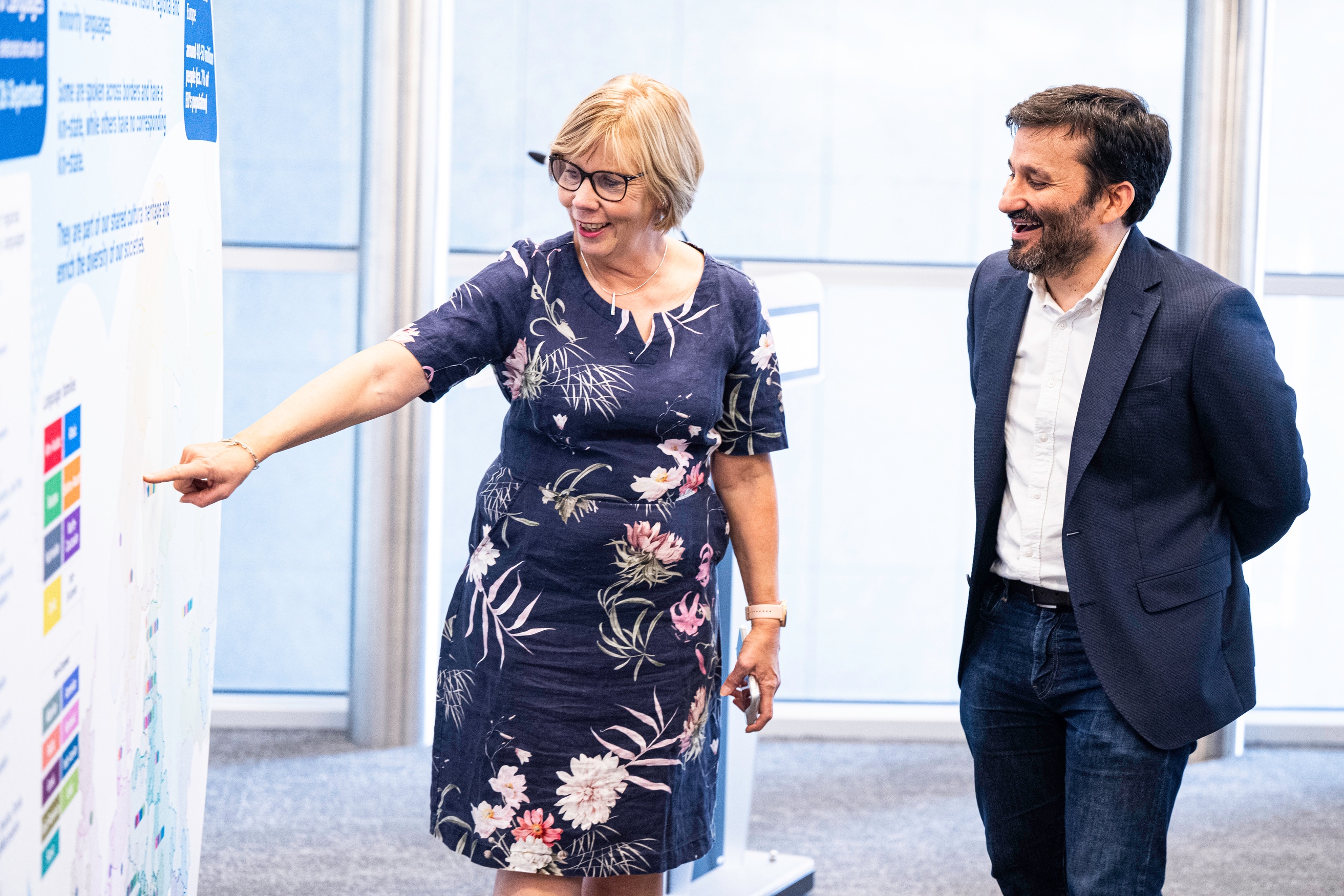
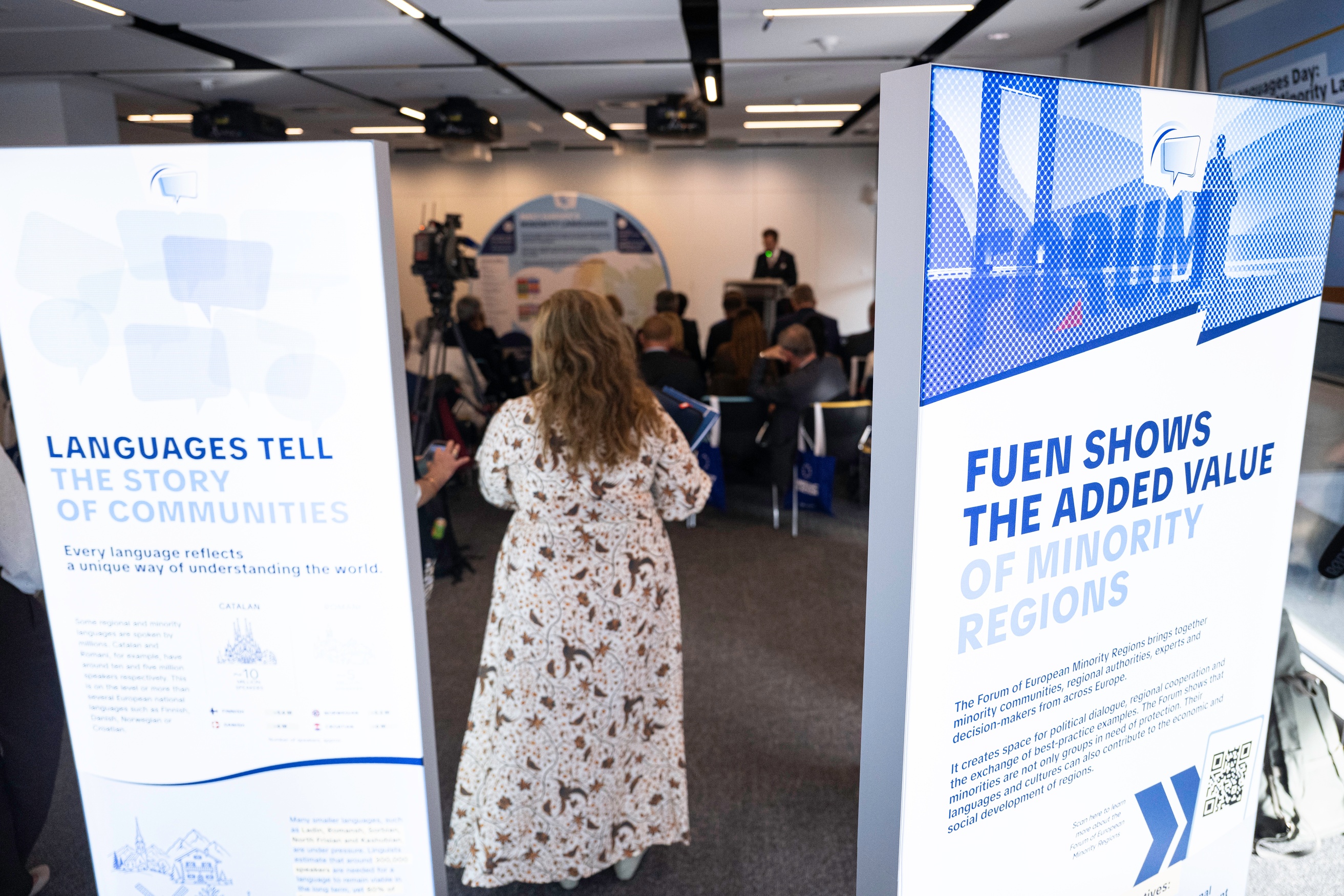
Photo credits: © European Union 2026 - Source : EP
PRESS RELEASES
- FUEN Working Group on Education meets in Eupen: Focus on vocational education, minority languages and AI
- FUEN Assembly of Delegates 2026 calls for greater inclusion of minority languages in artificial intelligence
- FUEN Congress discusses geo-blocking and the protection of minority languages
- FUEN Congress Examines Mother-Tongue Access in Healthcare and Social Services
- FUEN Congress Spotlights the Future of Minority Languages in Public-Service Broadcasting
- 70th FUEN Congress opens in Helsinki/Helsingfors
- For Protection of the Cultural Identity: The Case of the Breton Community in France
- An Existence Under Question: The Case of the Greek-Orthodox Community of Istanbul
- The renewed Minority Monitor presents the case of Catalans
- Save the Date: Forum of European Minority Regions 2026