











8th Annual Meeting of the FUEN Working Group on Education: vocational education, minority languages and AI in focus
05.10.2026How can minority languages remain present when young people move from school into vocational training and working life? What can minority communities learn from different education systems across Europe? And how should schools respond to the growing use of artificial intelligence? These questions were at the centre of the 8th Annual Meeting of the FUEN Working Group on Education, held from 29 September to 2 October 2026 in Eupen (Belgium).
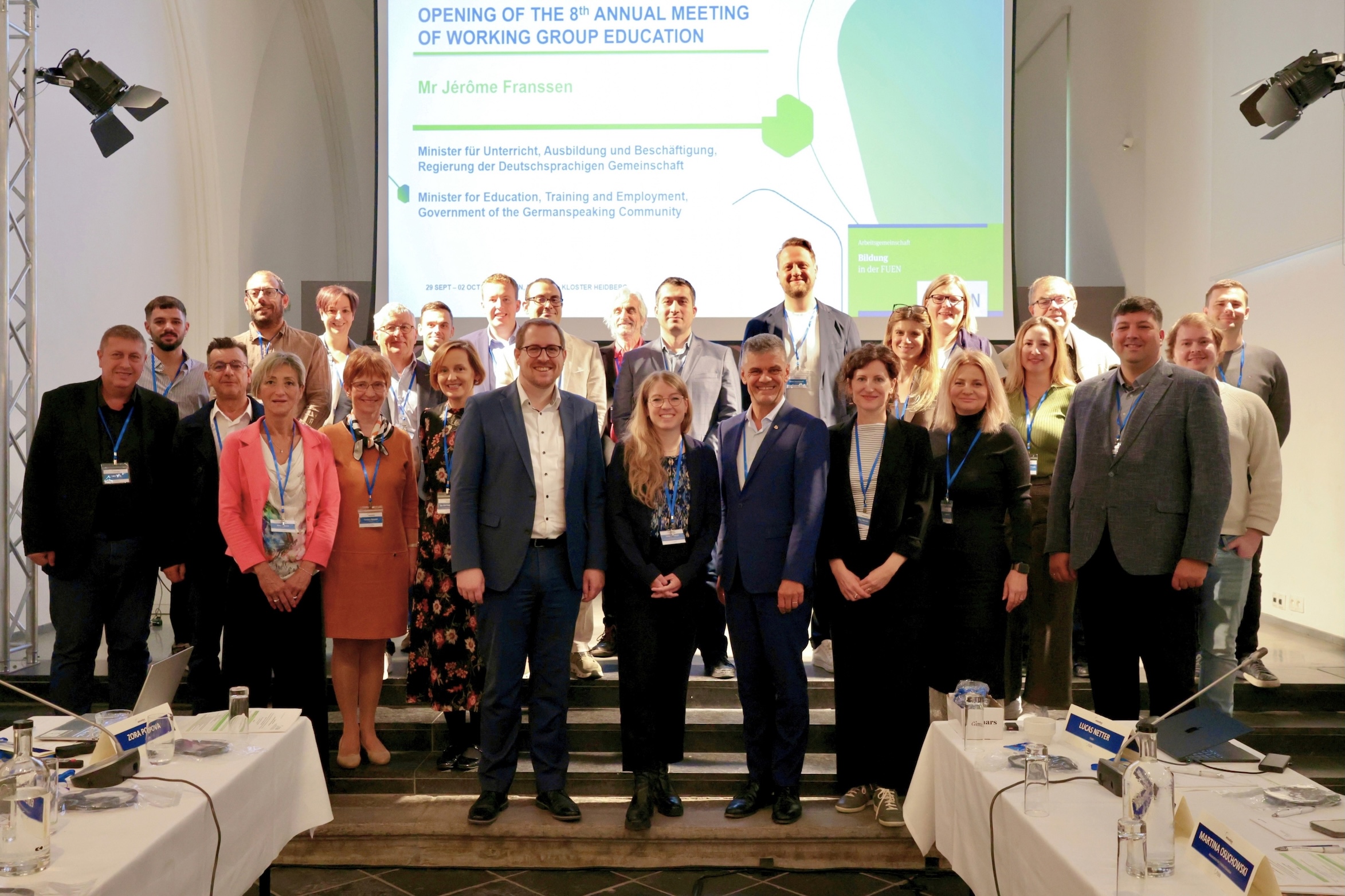
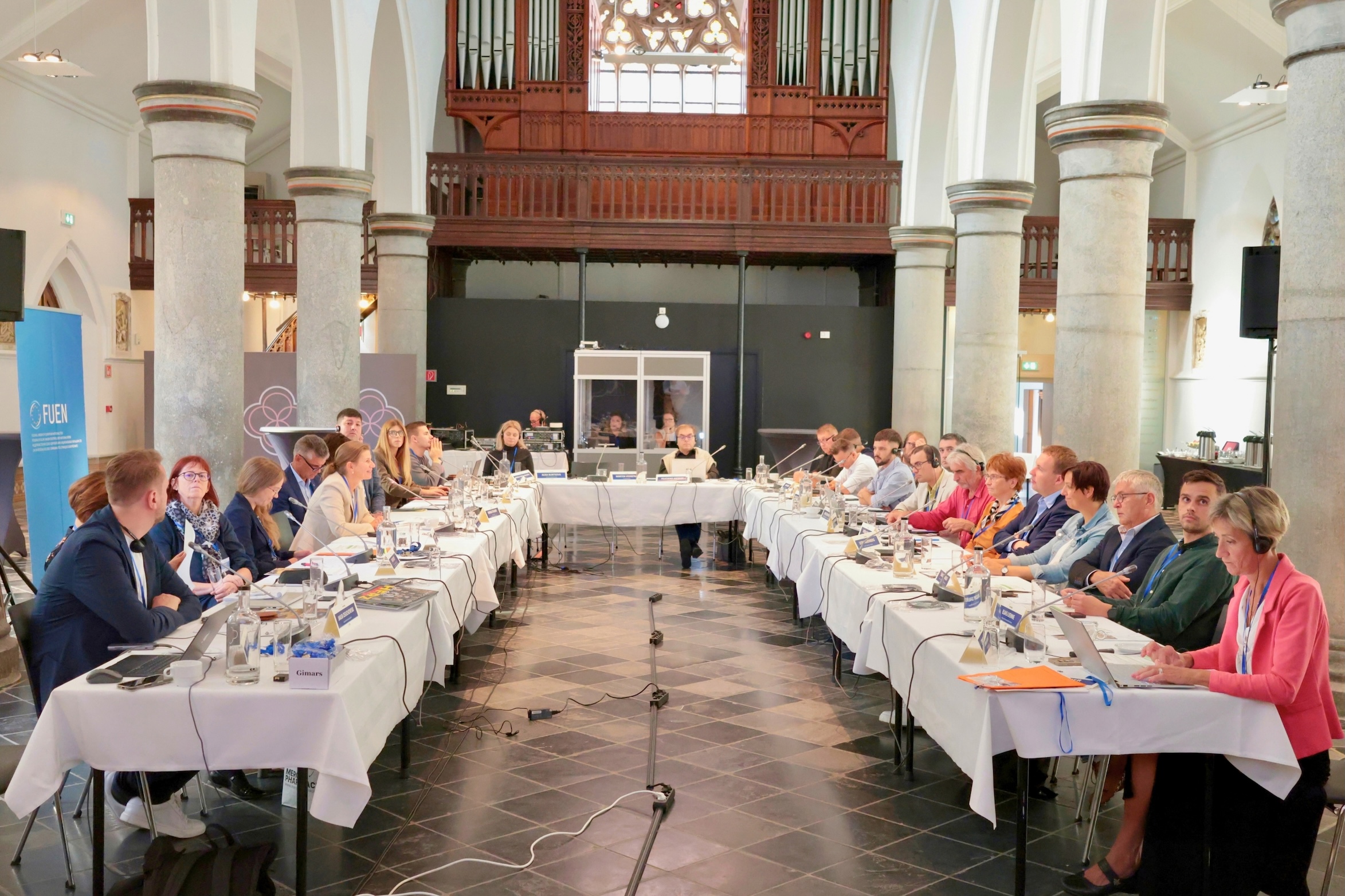
Representatives of 16 minority communities from 15 countries took part in the meeting, hosted by FUEN member organisation ProDG in cooperation with the German-speaking Community of Belgium and its educational institutions.
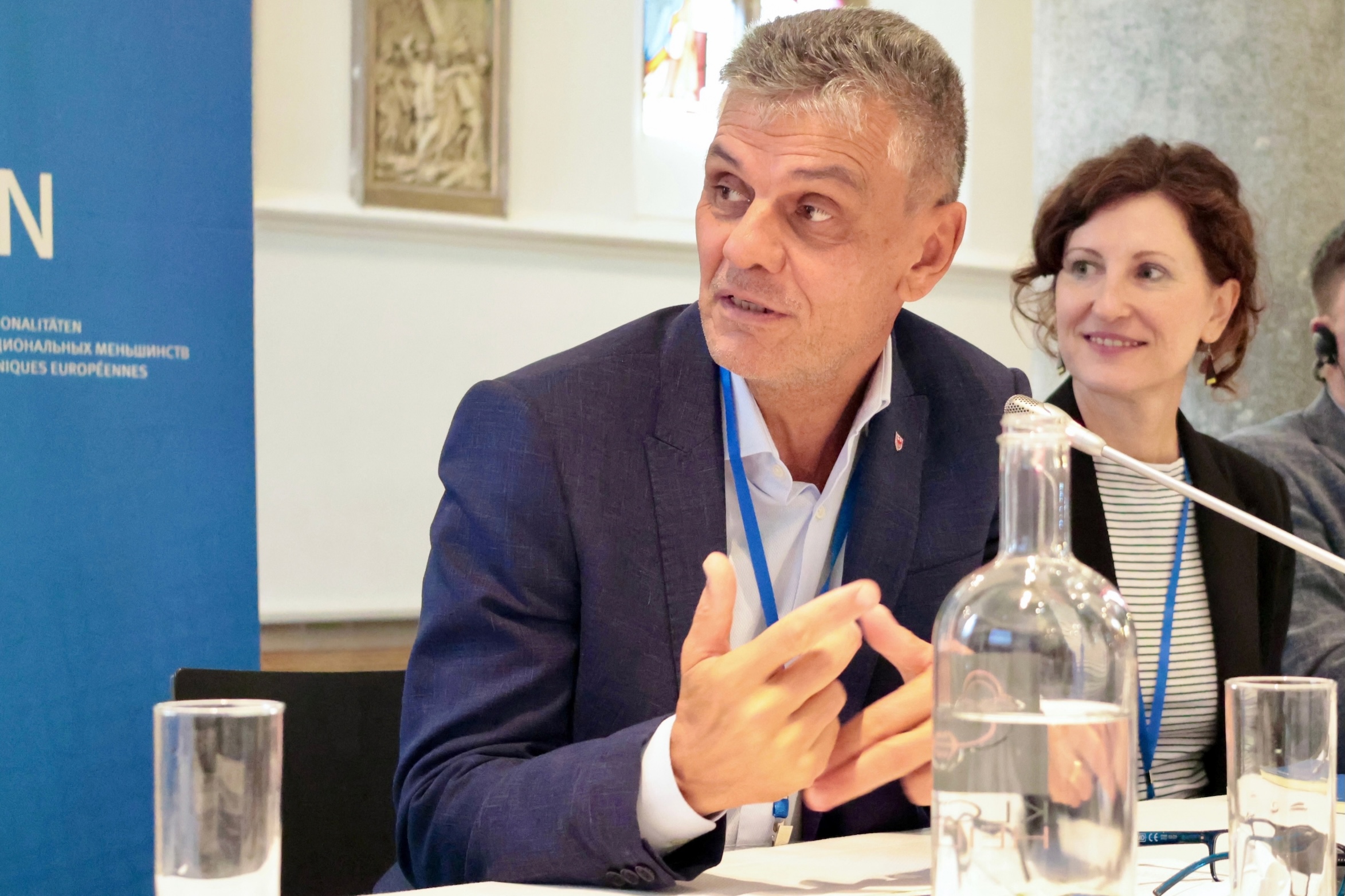
The conference opened at Kloster Heidberg with FUEN Vice-President and spokesperson of the Working Group on Education Harald Stauder. He stressed the importance of education for the future of minority communities, particularly when it comes to passing on language and culture and preparing younger generations for new developments such as artificial intelligence. The opening was moderated by FUEN Secretary General Éva Pénzes.
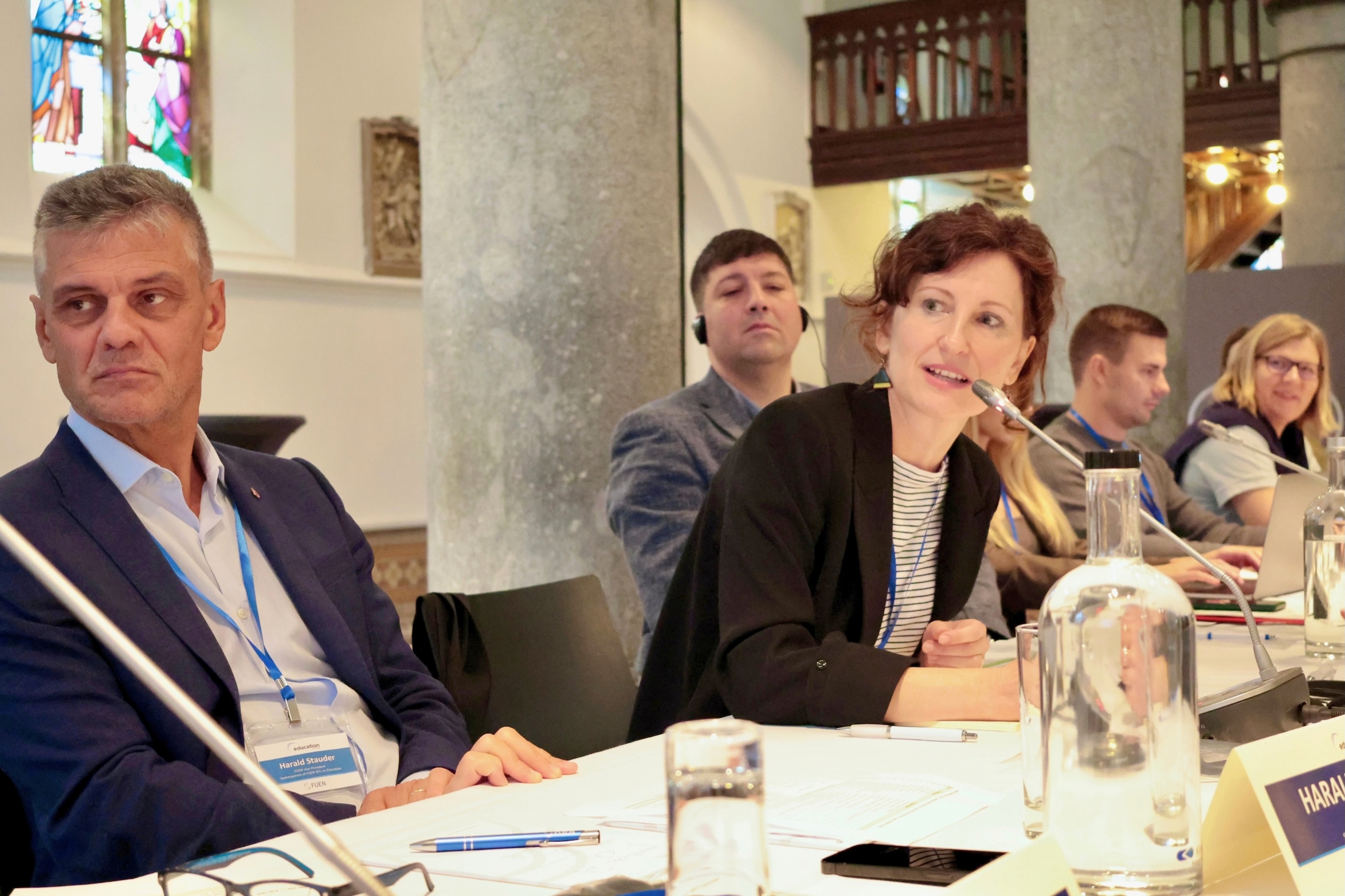
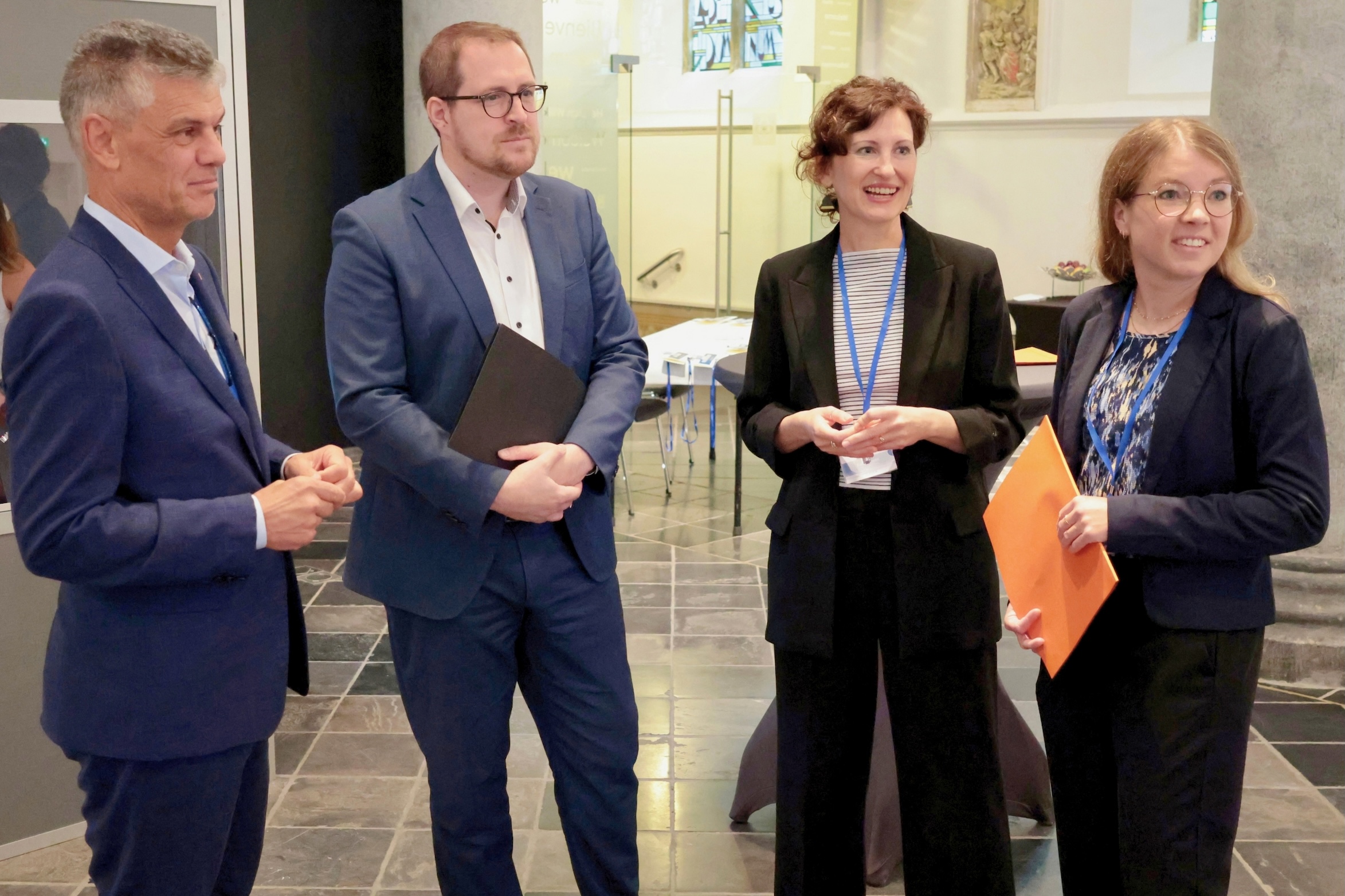
Jérôme Franssen, Minister for Education, Training and Employment of the German-speaking Community, welcomed the participants on behalf of the regional government. He pointed to the extensive responsibilities of the German-speaking Community in education, training and employment and underlined the role of vocational education in creating opportunities for young people, strengthening the labour market and maintaining language and identity. He also highlighted the dual training system, which has a long tradition in the German-speaking Community, as well as the importance of cross-border cooperation in a region closely connected to Germany, Luxembourg and the Netherlands.
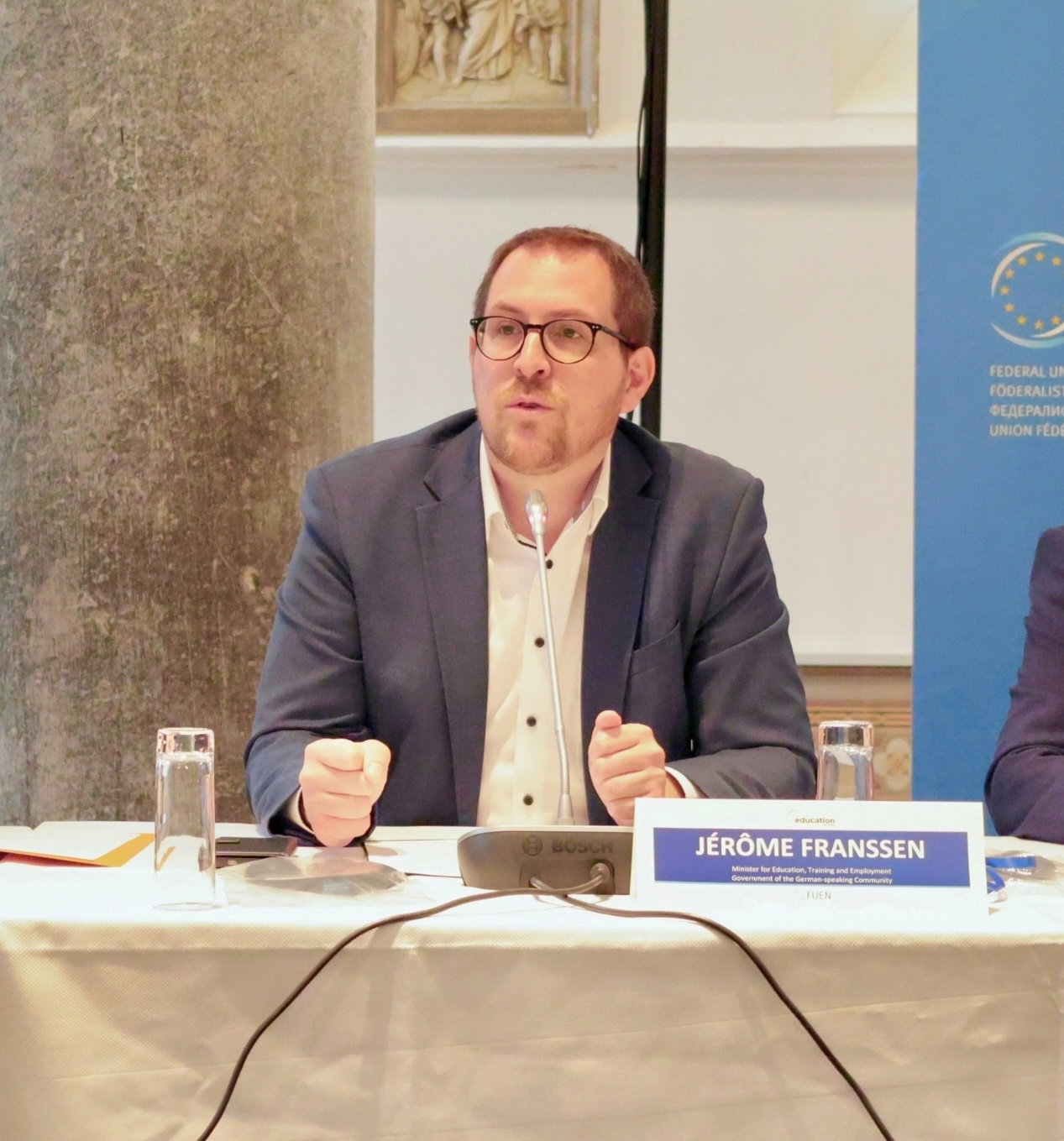
In her opening presentation, Liesa Scholzen, Senator in the Belgian Senate and Co-Chair of ProDG, presented the historical development and current political status of the German-speaking Community. With around 80,000 inhabitants, it has its own parliament and government and extensive competences, including in education. Scholzen also pointed out that political autonomy allows the Community to respond to local needs while cooperation with neighbouring regions and countries remains essential.
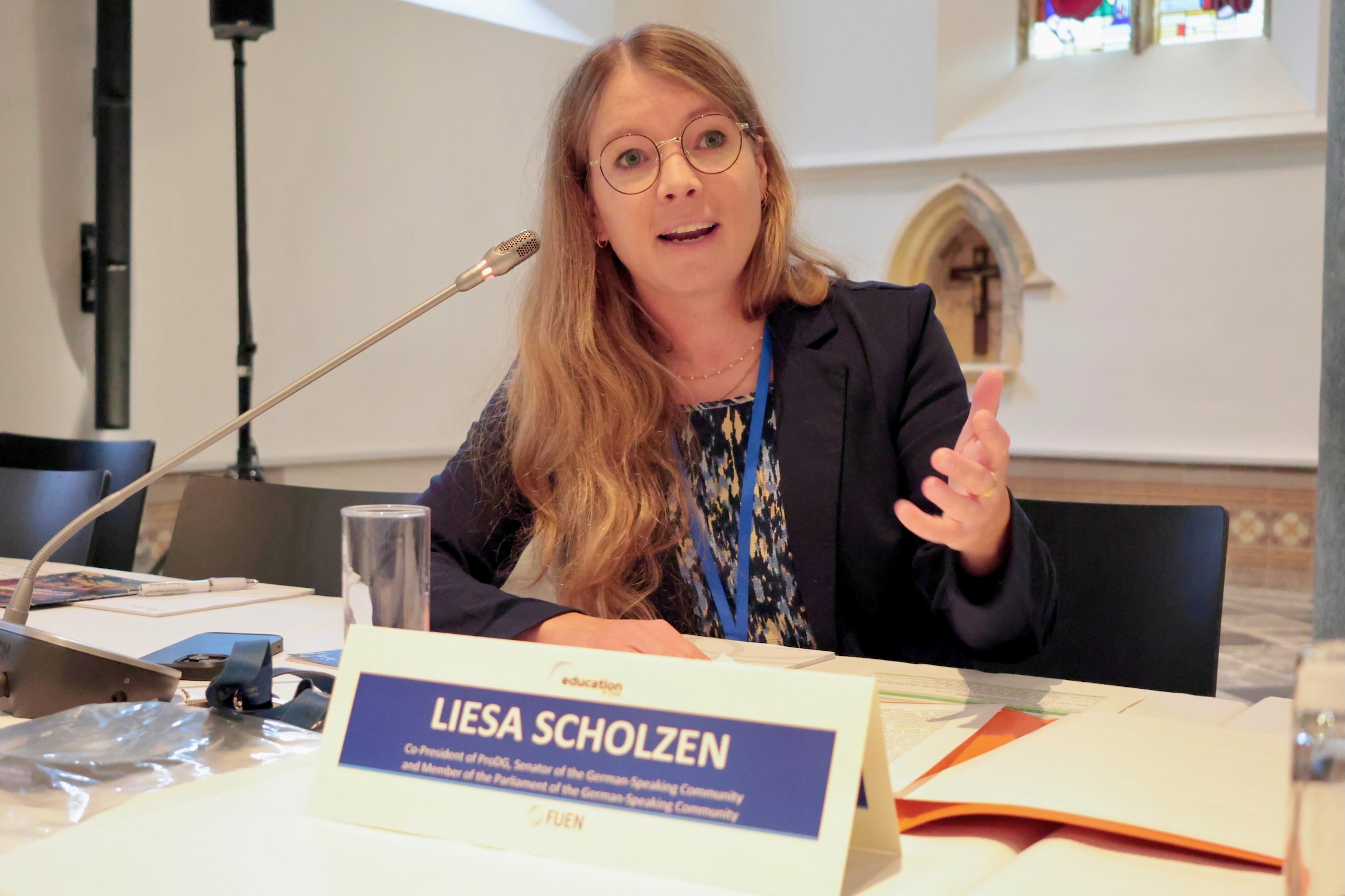
The first conference day focused on the education and training system of the German-speaking Community. Ruth de Sy, Head of the Department of Education at the Ministry of the German-speaking Community, gave an overview of the education system and the responsibilities exercised by the Community within Belgium's federal structure.
A particular focus was placed on vocational education. Dr Verena Greten, Executive Director of the Institute for Training and Further Education in Small and Medium-sized Enterprises (IAWM), presented the dual training system in East Belgium. Around 80% of training takes place in recognised companies, combined with general and vocational theory at training centres such as ZAWM Eupen and ZAWM St. Vith. According to the figures presented, 95% of graduates find a job within six weeks of completing their training.
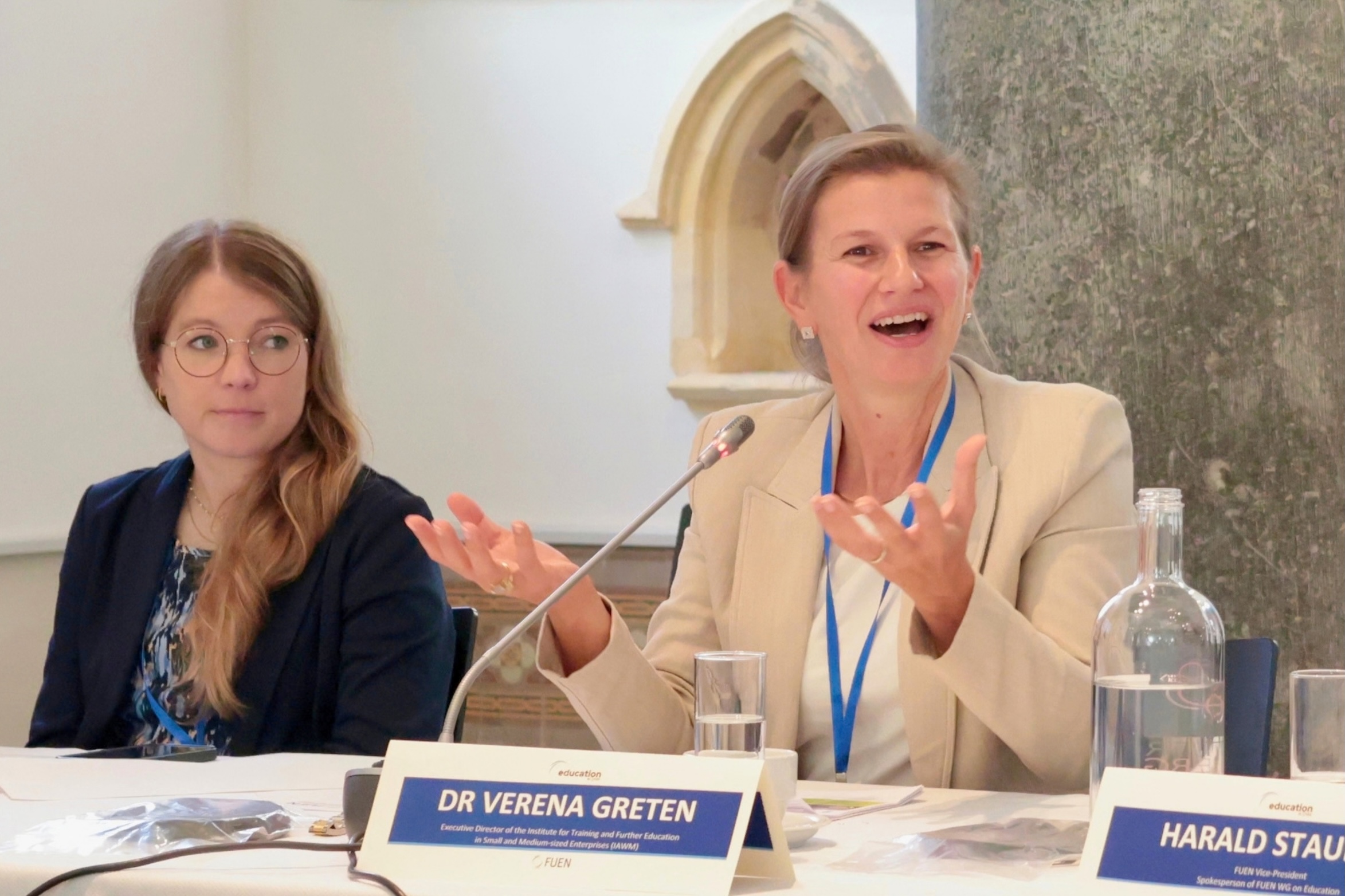
Participants then saw the system in practice during a visit to ZAWM Eupen, where they learned more about the combination of classroom instruction and training in local companies. The programme continued with a visit to the Parliament of the German-speaking Community.
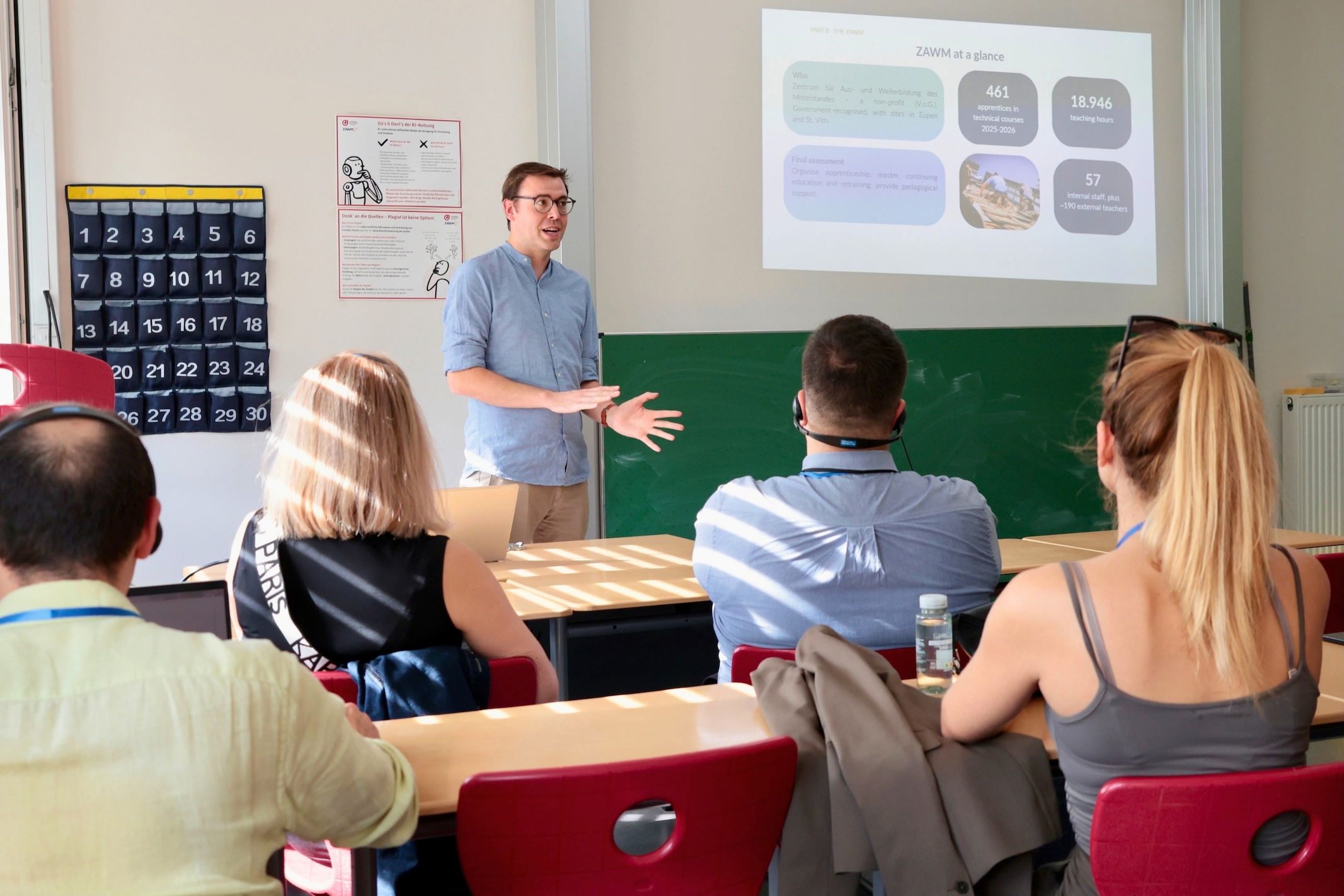
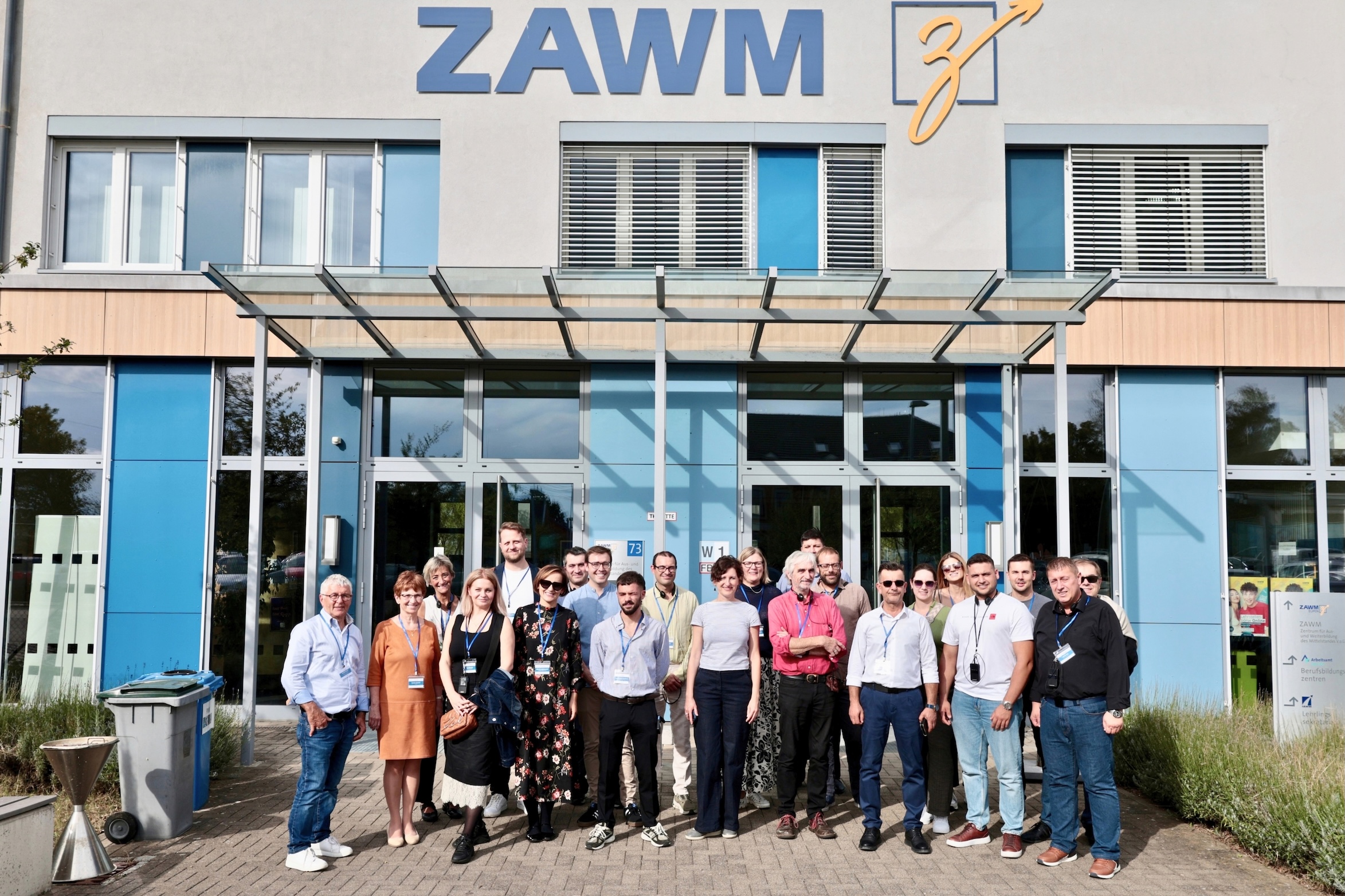
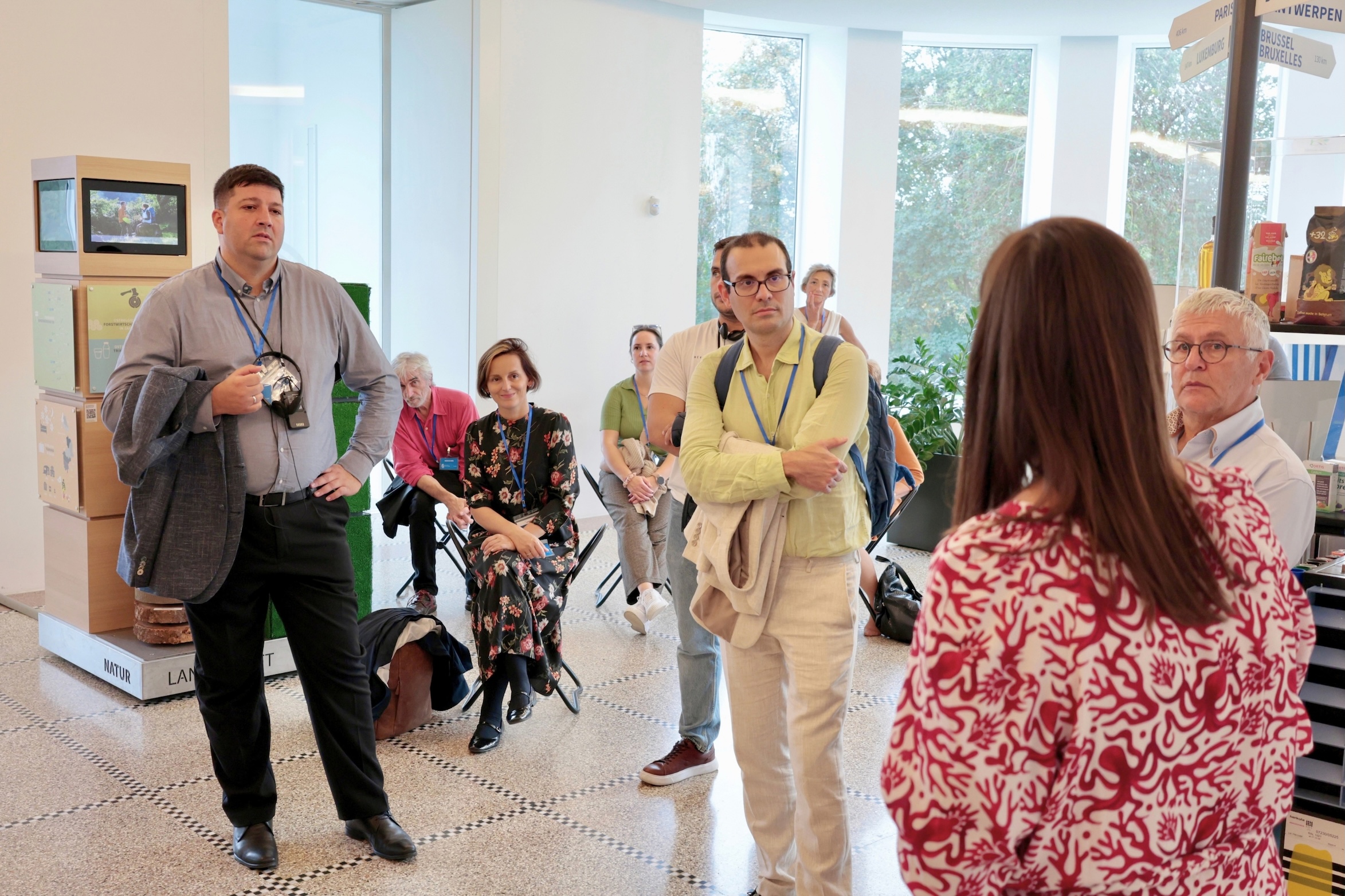
The second conference day broadened the discussion to vocational minority education across Europe. Examples from Slovenia, the Netherlands, Croatia and Finland showed different ways of integrating minority languages into vocational education and highlighted challenges shared by many communities.
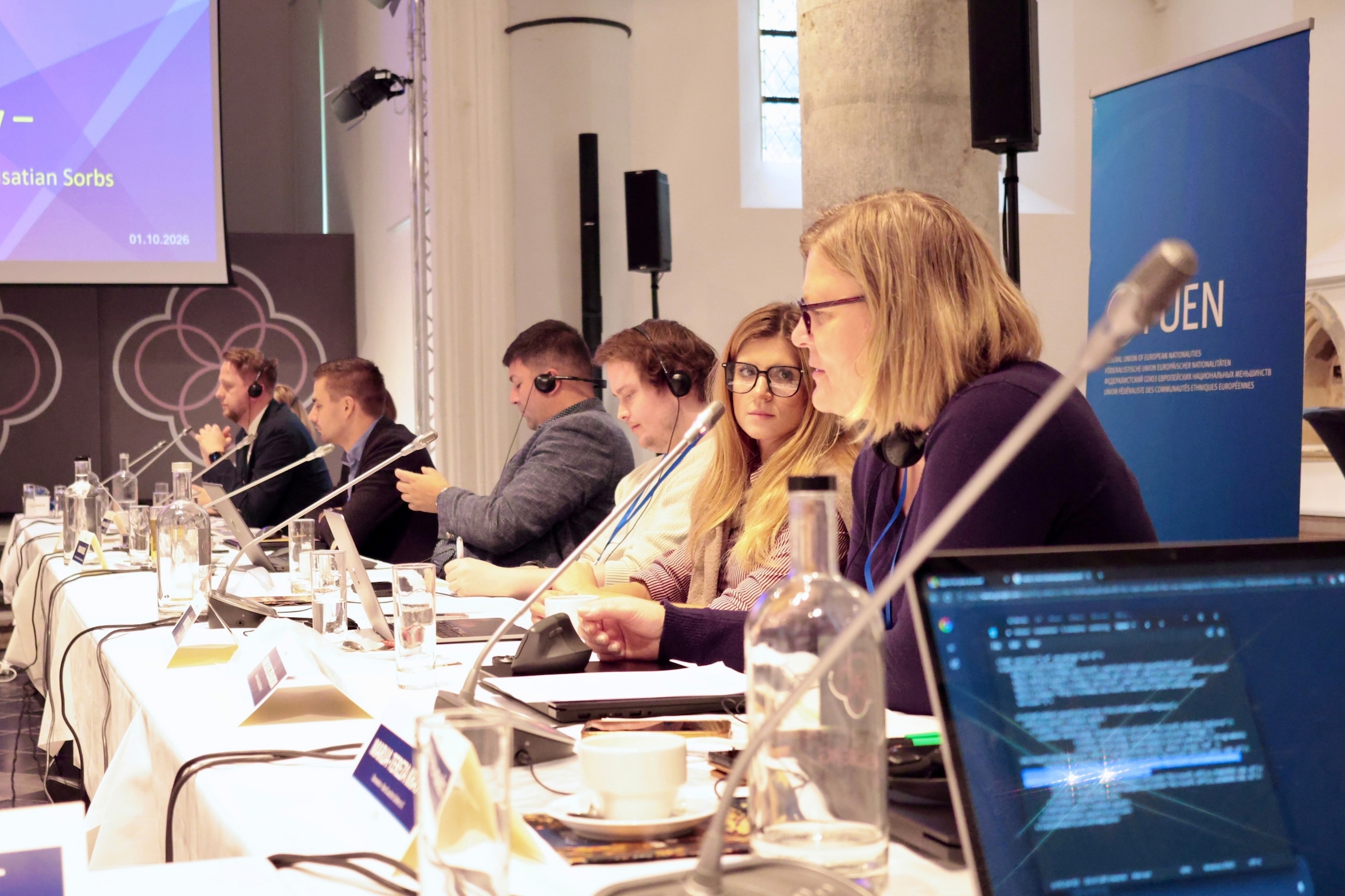
In Slovenia, Alen Vugrinec, Vice President of the Hungarian Self-Governing National Community of Pomurje/Muravidék (PMSNS/MMÖNK) and Vice Principal of the Bilingual Secondary School Lendava, presented the bilingual vocational education system in the Slovenian-Hungarian area of Prekmurje/Muravidék. Slovenian and Hungarian are both languages of instruction, and students acquire professional terminology in both languages. The model combines vocational qualifications with bilingual competence and can strengthen opportunities on the cross-border labour market. At the same time, qualified bilingual teachers, up-to-date teaching materials and specialist terminology remain important challenges.
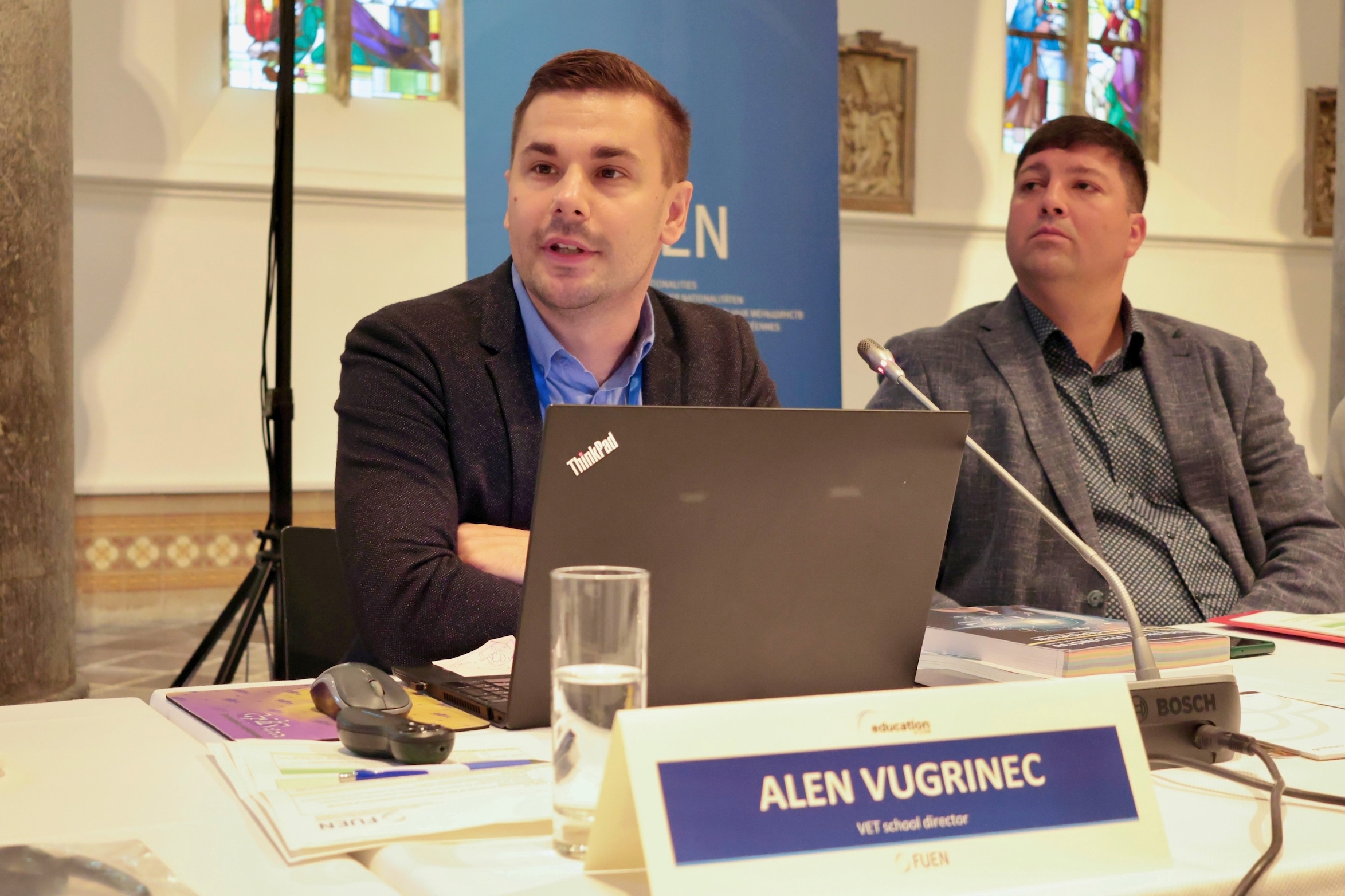
Pieter de Zwart, Chair of De Fryske Beweging, presented the situation of Frisian at Firda, the largest secondary vocational education institution in Fryslân (Netherlands). Dutch is currently the official language of instruction and communication, while Frisian is available only as an elective course and is chosen by around 1% of students. Firda is working to strengthen the position of Frisian by expanding access to the language, integrating language awareness and its professional value into vocational programmes, and increasing its visibility within the school environment.
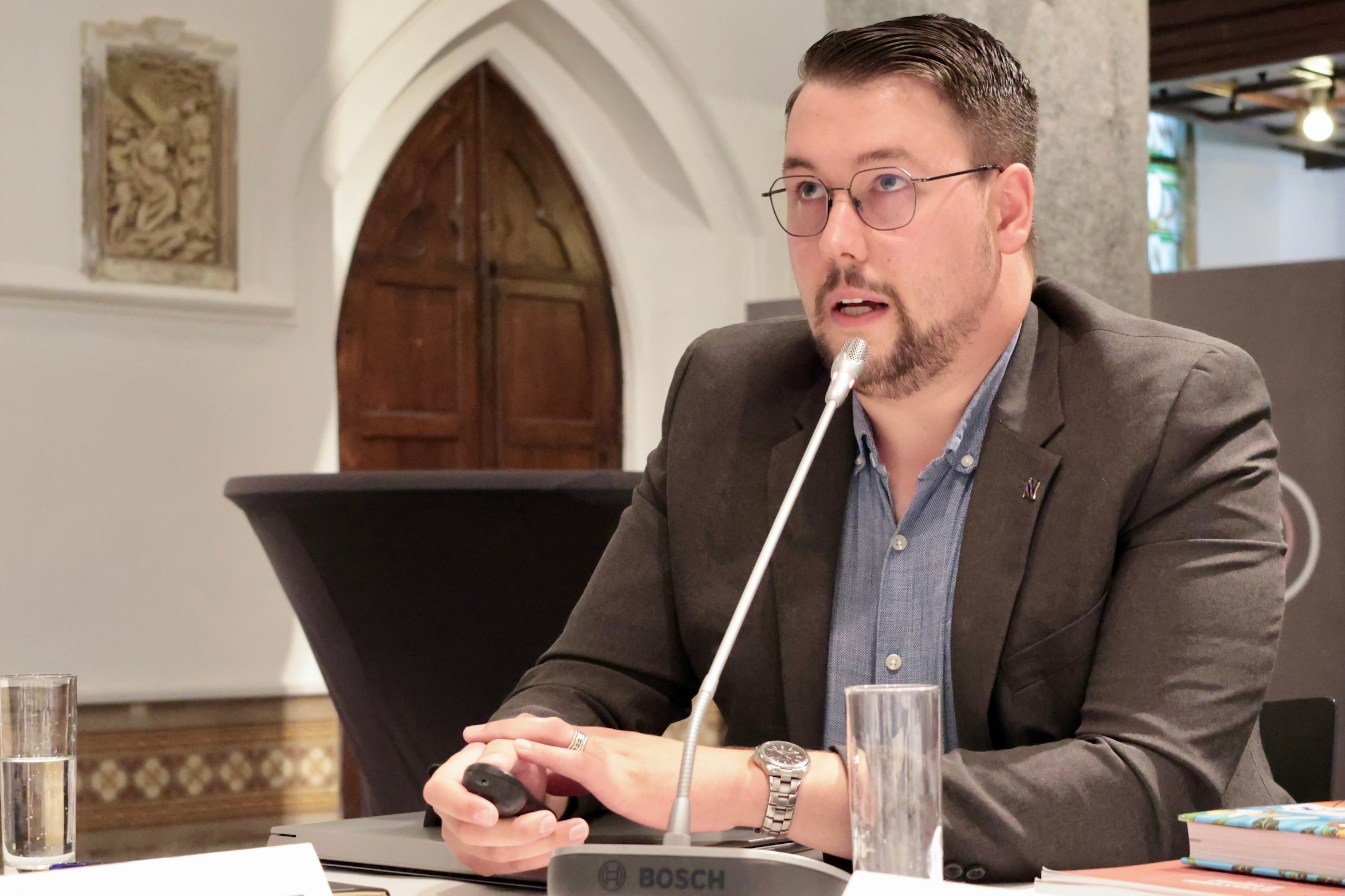
From Croatia, Milan Vukelić from the Ministry of Science, Education and Youth of the Republic of Croatia described vocational minority education as a field linking language preservation with professional skills, employability and mobility. His presentation underlined that legal rights alone are not sufficient if qualified teachers, professional terminology, teaching materials and institutional support are missing.
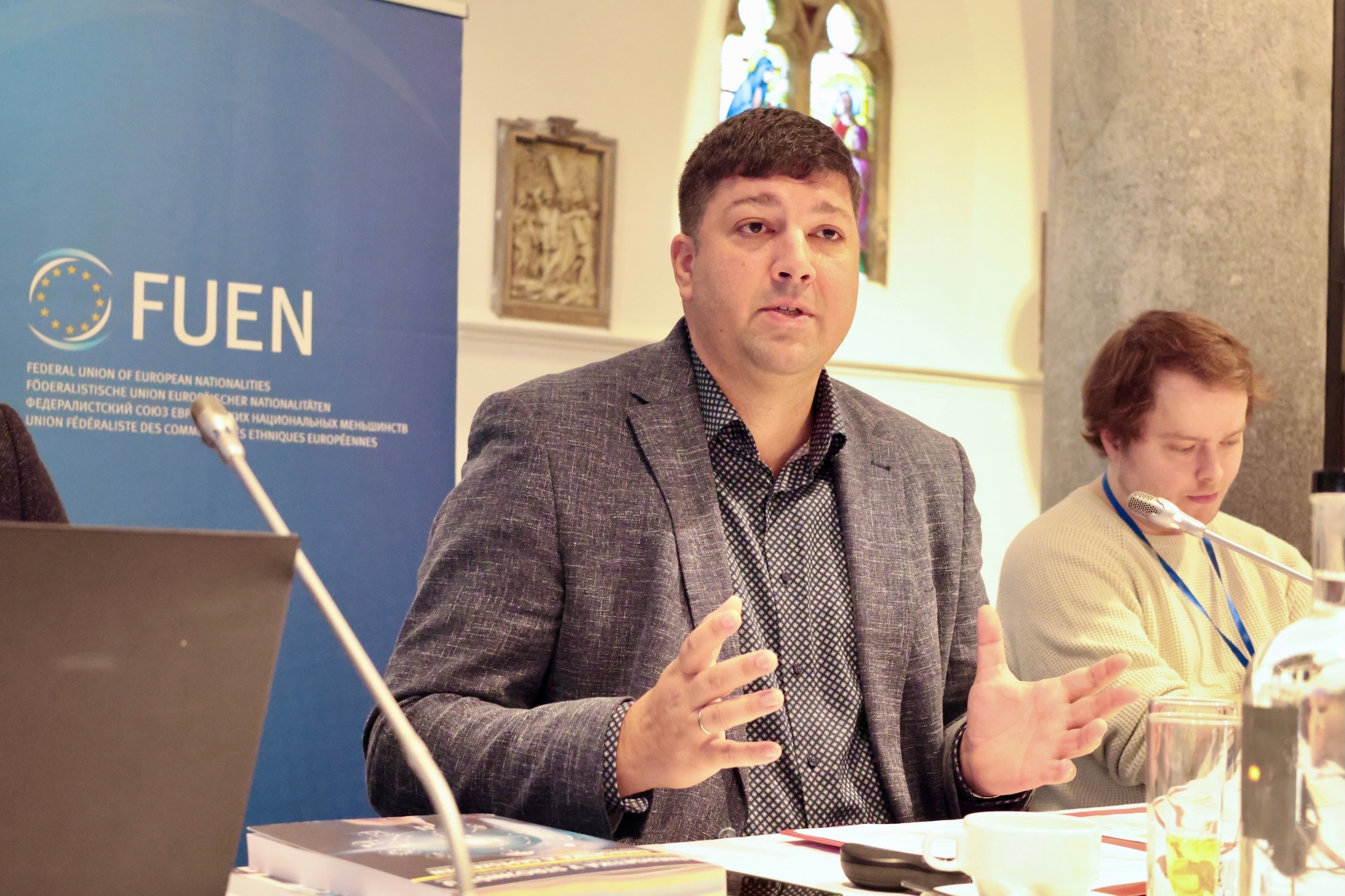
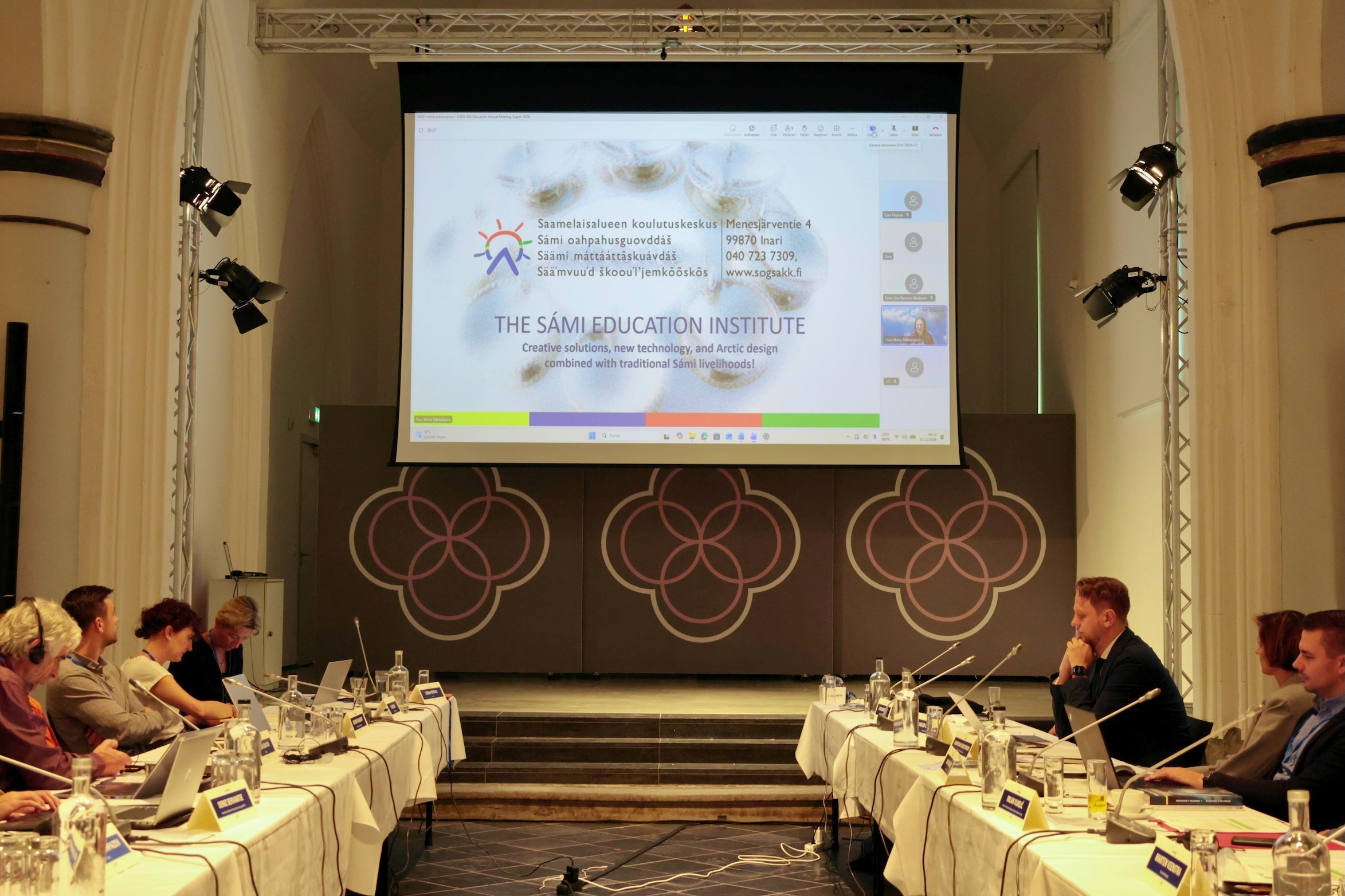
Joining online from Finland, Eeva-Liisa Rasmus-Moilanen from the Sámi Education Institute (SAKK) presented the role of vocational education in supporting the revitalisation of Sámi language and traditions. Her contribution added the perspective of an Indigenous minority and highlighted the close link between vocational education, language transmission and the preservation of cultural knowledge.
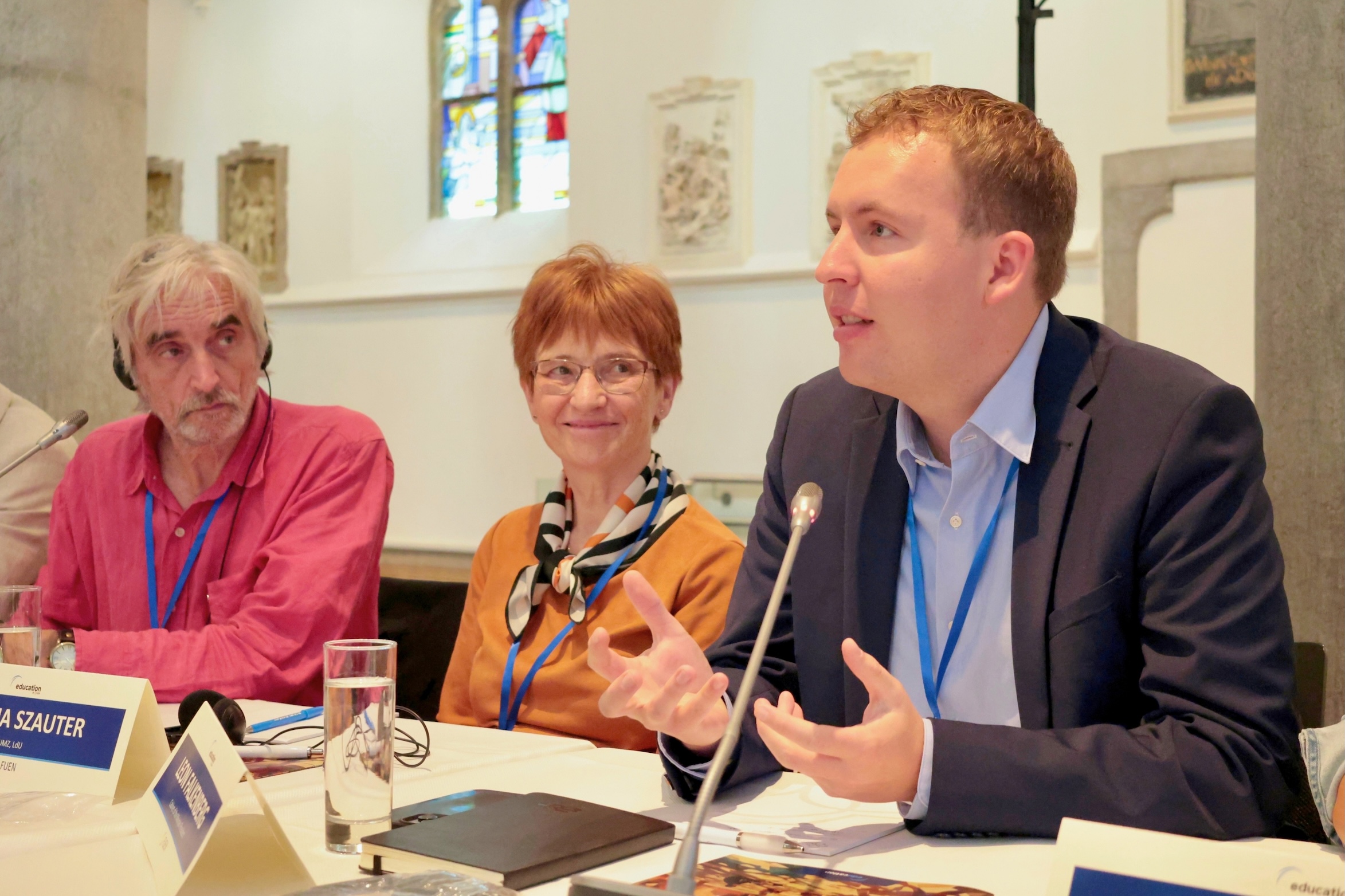
The subsequent country reports confirmed that the transition from general education to vocational training remains a major challenge for a number of minority communities. The reports also showed that strong legal recognition of a minority language does not automatically ensure its continued use throughout the education system and into professional life.
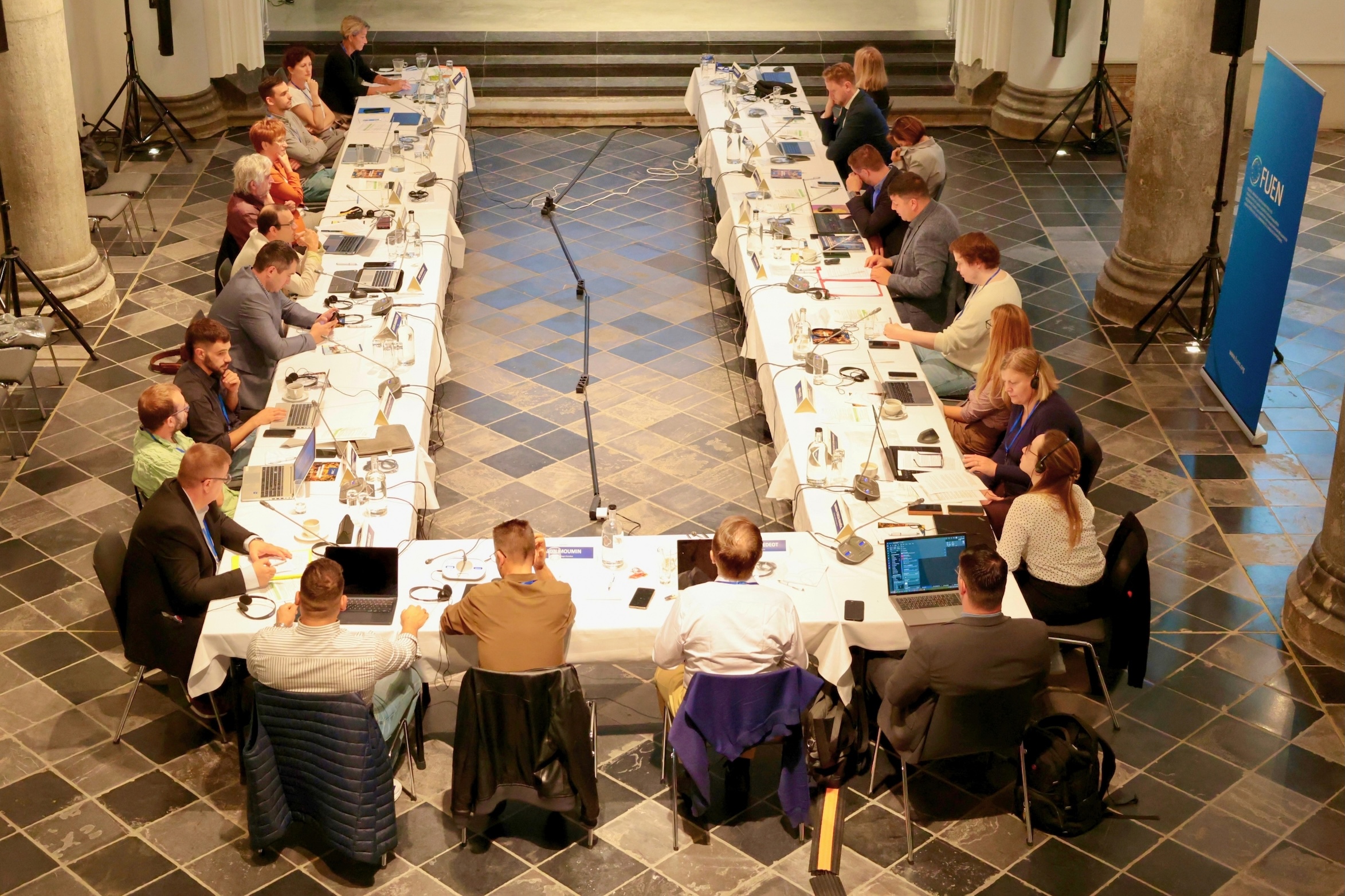
Across the different country reports, recurring challenges included limited minority-language provision in vocational education, a lack of qualified teachers and suitable teaching materials, and difficulties in maintaining language use beyond compulsory schooling. While examples from the Sorbian, Friulian, German and Turkish minority communities showed significant gaps in vocational education, the Diwan schools in Brittany illustrated how minority-language education can also be extended into vocational pathways.
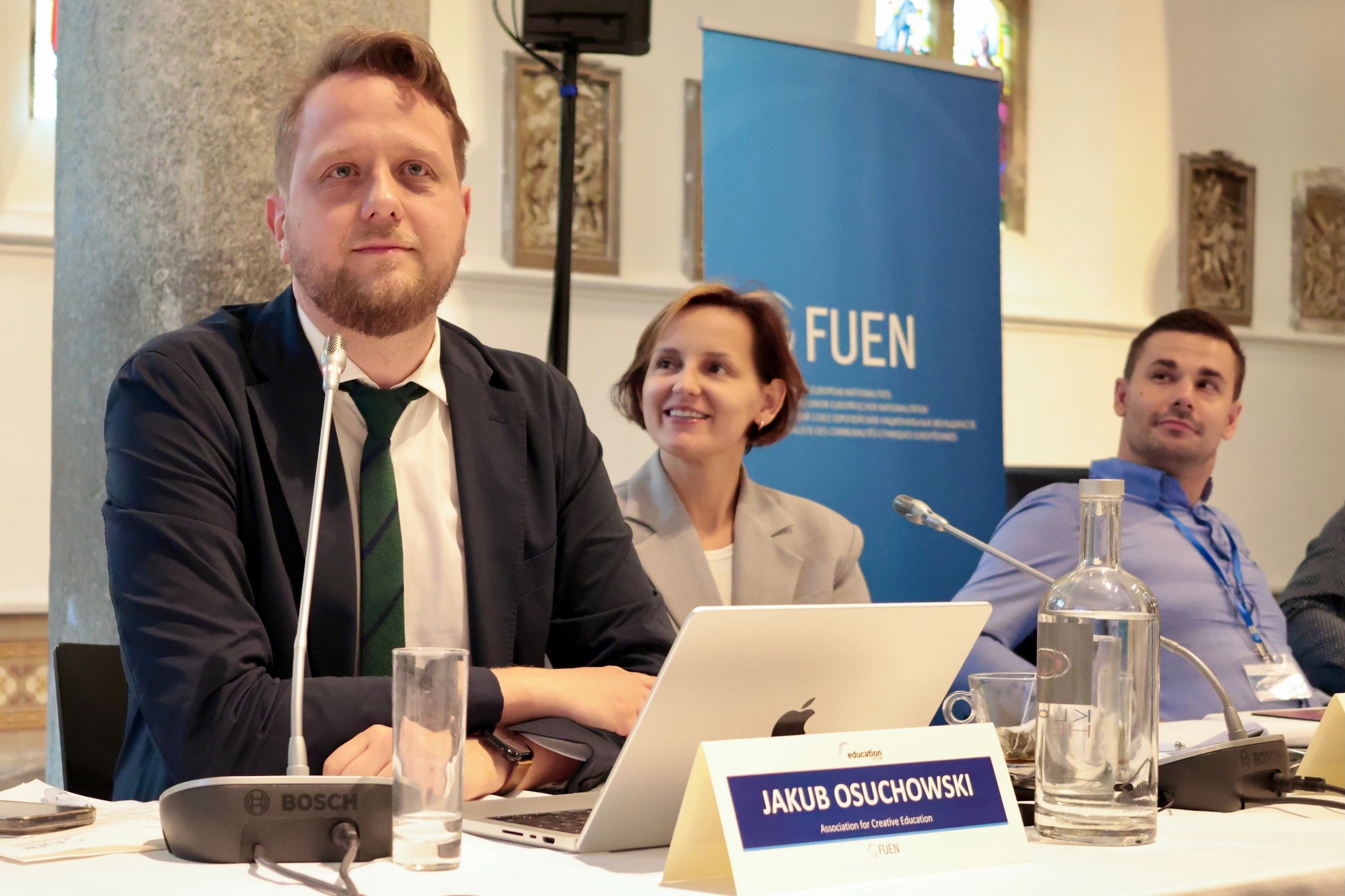
Artificial intelligence formed the second major focus of the annual meeting. In his introductory presentation, Jakub Osuchowski from Opole University of Technology (Poland) argued that education should move beyond the simple question of whether students should be allowed to use AI. More relevant questions concern when students should work without AI, how they can recognise incorrect answers, what knowledge they still need to master themselves and how assessment should change.
The discussion also addressed the specific opportunities and risks of AI for minority education. AI can support the creation of teaching materials, language learning and lesson preparation. In Slovenia, for example, teachers are already using AI to prepare bilingual materials and support translation between Slovenian and Hungarian, while students use it for research, summaries, translations and explanations. At the same time, terminology and generated content still require careful verification. Experiences from Poland and Hungary similarly showed that smaller languages may be underrepresented in AI systems and that linguistic, historical or cultural errors remain a risk. The discussions therefore underlined the importance of teacher training, critical verification and responsible use of AI.
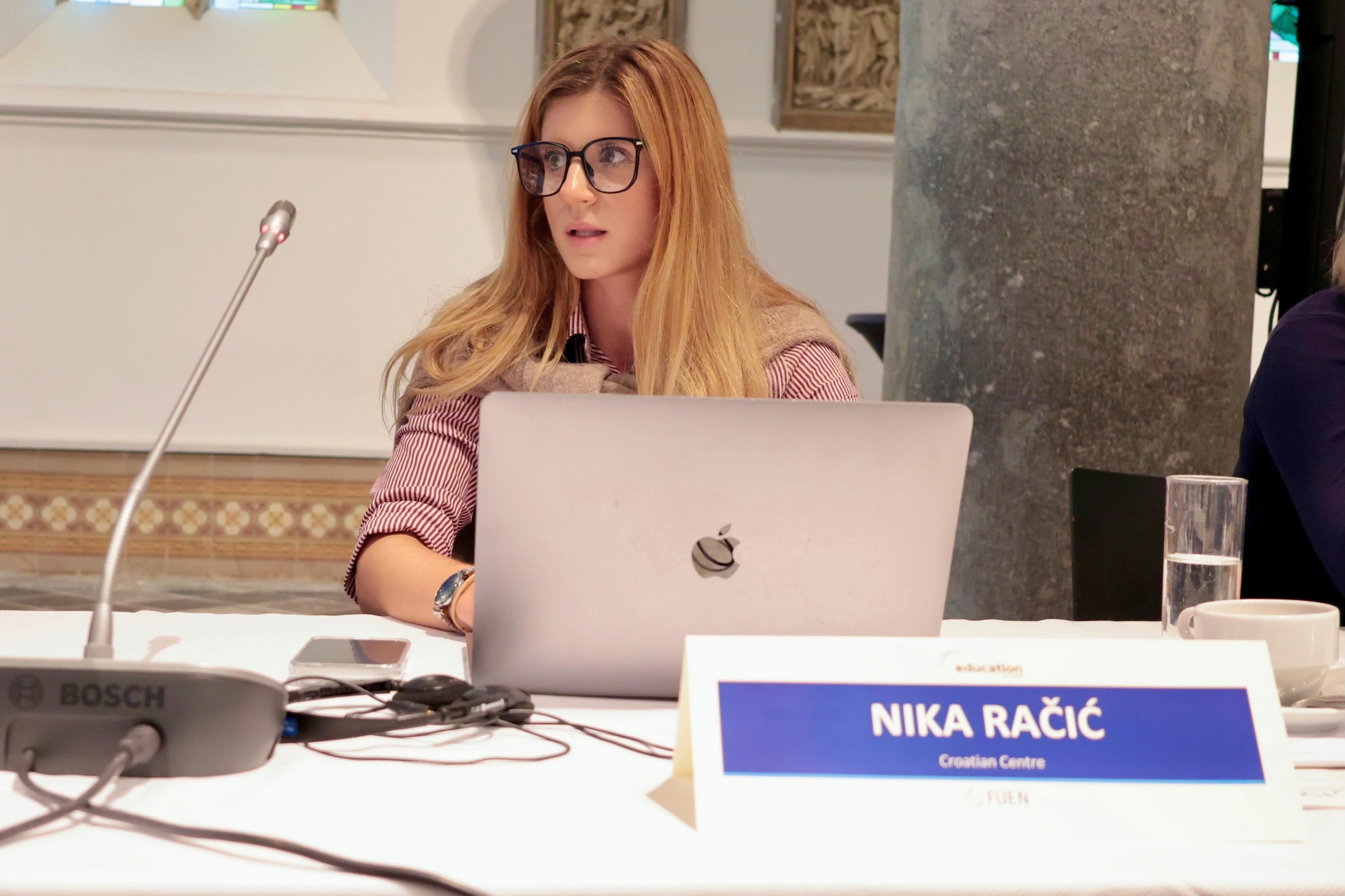
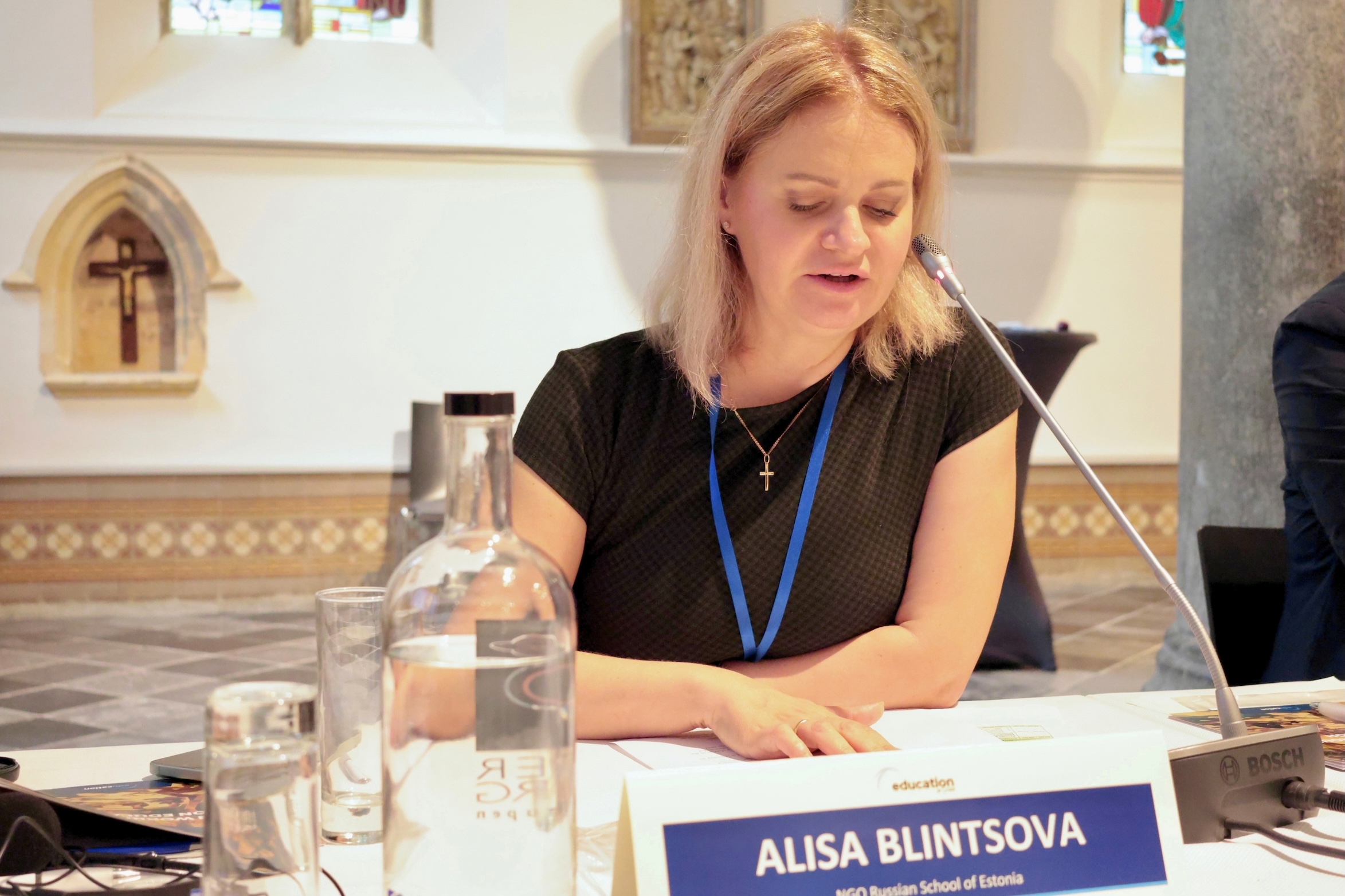
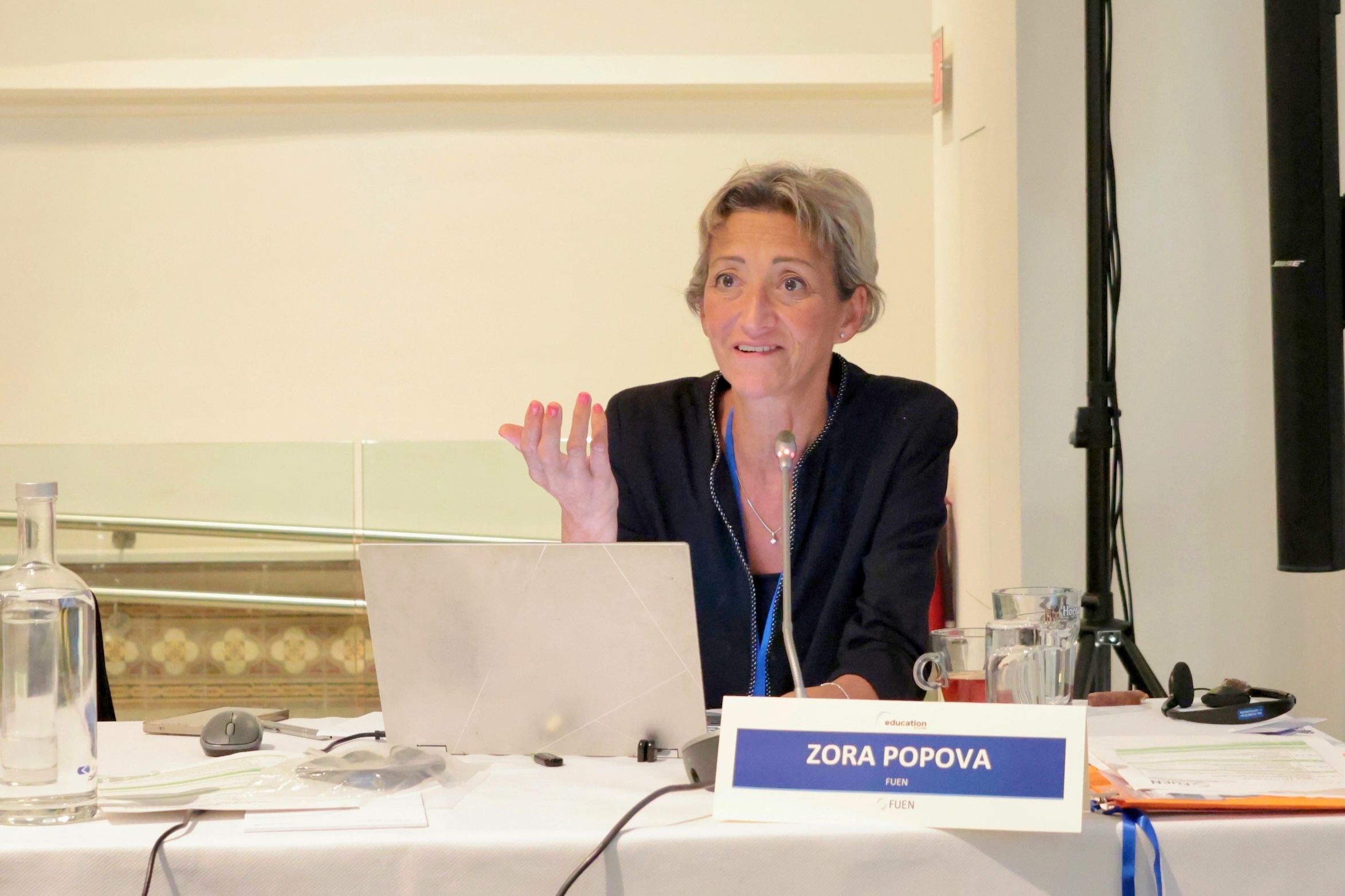
The annual meeting concluded with discussions on future cooperation, the further work of the FUEN Working Group on Education and a FUEN Erasmus+ project. The discussions in Eupen made clear that the future of minority languages is closely linked to their presence beyond general education. Vocational training and working life are therefore key areas for ensuring that minority languages remain in active use across generations.
About the FUEN Working Group on Education
The establishment of the FUEN Working Group on Education was proposed during the FUEN Congress 2017 in Cluj/Klausenburg (Romania). In May 2018, representatives of minority communities met for the first time in the German-Danish border region to exchange experiences in the field of minority education and discuss the future direction of the Working Group.
This meeting marked the first official Annual Meeting of the Working Group on Education. Since then, the Working Group has met every year in a different minority region. These meetings provide an opportunity to gain first-hand insight into the educational situation of the local minority or minorities, exchange experiences and gather new ideas. They also serve to develop joint plans, strategies and priorities for the Working Group’s future activities.
More information about the Working Group on Education is available on the FUEN edu platform.
Pressemeddelelser
- FUEN discussed minority issues with EU institutions in Brussels
- FUEN exhibition opens at the European Parliament: putting minority languages on the European agenda
- FUEN Working Group on Education meets in Eupen: Focus on vocational education, minority languages and AI
- FUEN Assembly of Delegates 2026 calls for greater inclusion of minority languages in artificial intelligence
- FUEN Congress discusses geo-blocking and the protection of minority languages
- FUEN Congress Examines Mother-Tongue Access in Healthcare and Social Services
- FUEN Congress Spotlights the Future of Minority Languages in Public-Service Broadcasting
- 70th FUEN Congress opens in Helsinki/Helsingfors
- For Protection of the Cultural Identity: The Case of the Breton Community in France
- An Existence Under Question: The Case of the Greek-Orthodox Community of Istanbul