









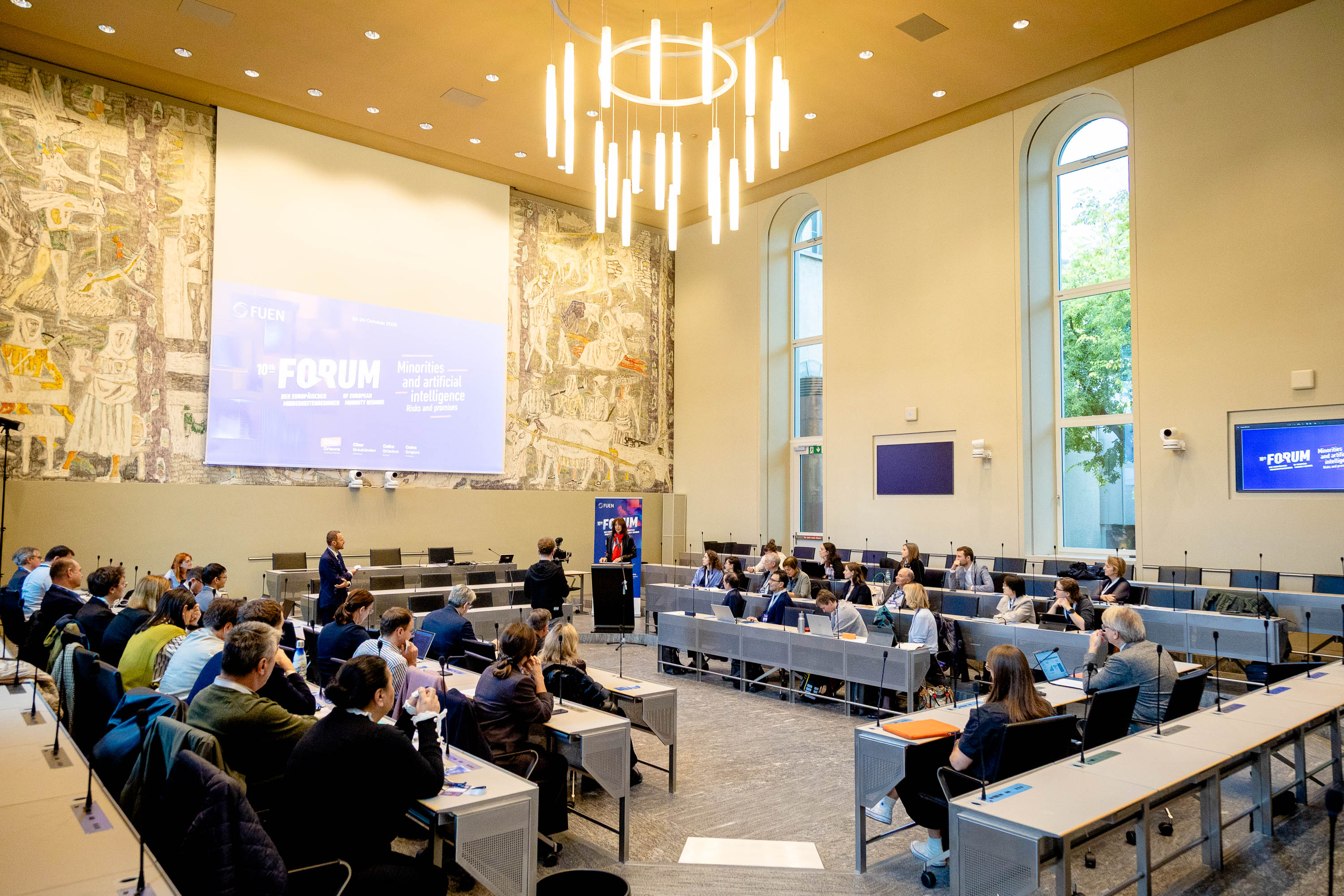
The 10th Forum of European Minority Regions Addressed Artificial Intelligence and Minority Languages
26.10.2026The 10th Forum of European Minority Regions took place on 23-24 October 2026 in Chur, Switzerland. Regional leaders, tech experts, researchers, and cultural advocates gathered to discuss the intersection of minority heritage and emerging digital technologies. Centered on the theme "Minorities and Artificial Intelligence – Risks and Promises," the two-day event explored strategies for lesser-used languages to thrive in the digital era.
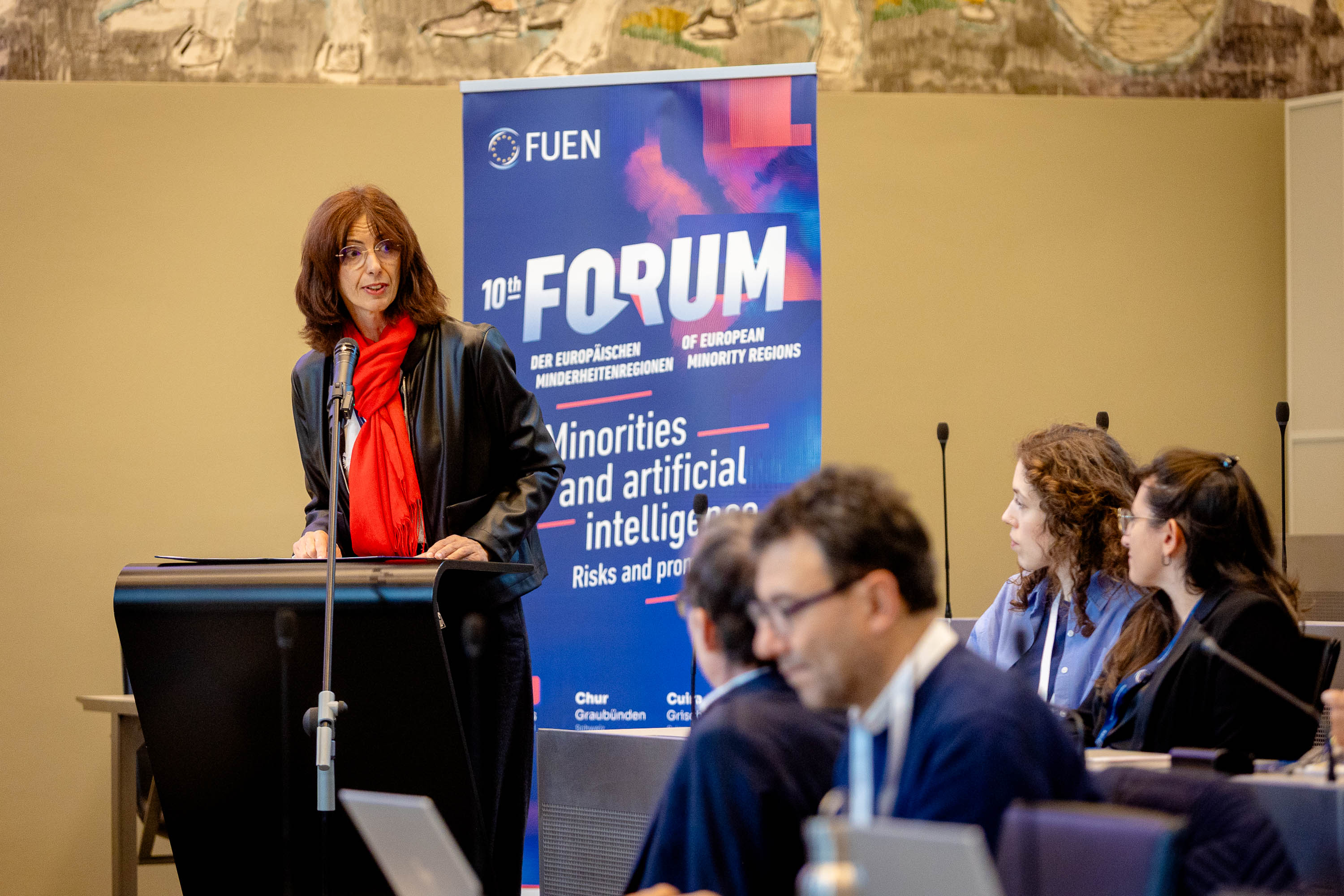
On Friday, 23 October, FUEN President Olivia Schubert opened the Forum, emphasizing that Europe derives strength from respecting its linguistic and cultural diversity. She highlighted the necessity of an inclusive, rights-based approach to Artificial Intelligence. Schubert pointed out that the Council of Europe and the European Parliament are currently addressing AI challenges, making it essential to protect human rights and ensure minority languages maintain their digital presence. She detailed the FUEN 2026 Main Resolution, which calls on the European Union to account for linguistic diversity in the EU AI Act, asks national governments to collect language data and digitize public services, and demands human oversight when AI affects decisions regarding national minorities. Schubert stated that every European language deserves a secure future in the digital world.
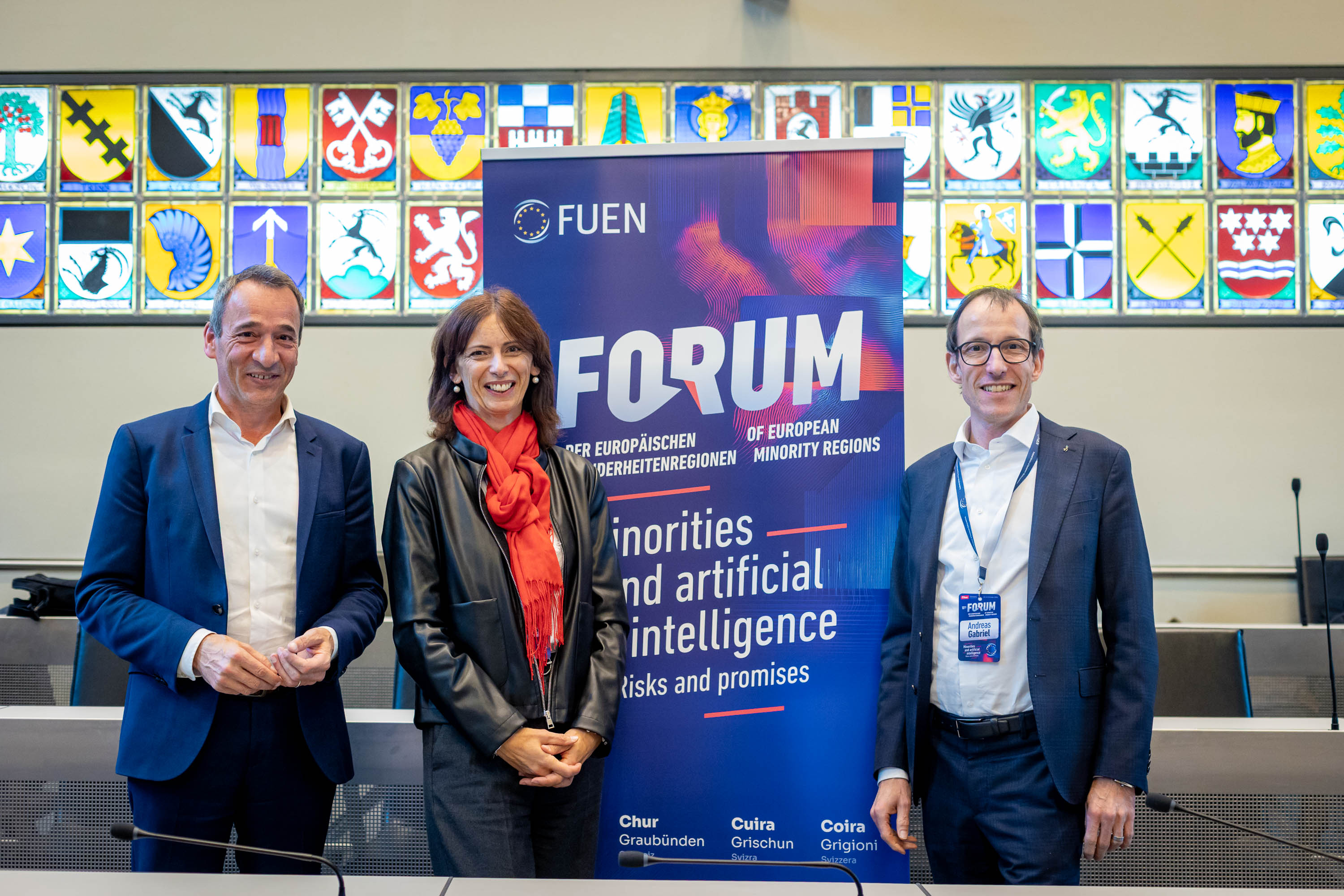
Martin Bühler, President of the Government of Graubünden, observed that the convenience of digital tools influences everyday linguistic choices. He noted that when technology functions better in a dominant language, it alters habits and impacts minority languages. Bühler encouraged the attendees to utilize AI to create opportunities to speak, learn, and connect in their own languages.
Digital Sovereignty and Regional Initiatives
Marius Lukosiunas of UNESCO noted that of the 7,000 languages in use today, 1,000 have online representation. Nicoletta Mariolini, the Swiss Federal Delegate for Plurilingualism, stated that AI frequently favors dominant languages and emphasized that translating a language differs from understanding the community that speaks it.
To secure a digital future, regional representatives advocated for "digital sovereignty" – ensuring language communities possess the resources and technological capabilities to develop their languages in the digital space.
Representatives of Lia Rumantscha showcased its bottom-up digital strategy for the Romansh language, featuring tools like the ClaviRom Android keyboard and the ALAS automated translation system, which has processed over 460,000 translations in 178 days.
Shane Moynihan, TD, Chairperson of the Joint Committee on the Irish Language, the Gaeltacht and the Irish-Speaking Community, discussed Ireland’s Digital Plan, focusing on integrating the Irish language into the delivery of everyday public services. Neasa Ní Chiaráin introduced ABAIR, a public initiative building speech recognition and synthetic voices for the Irish language, emphasizing community data ownership.
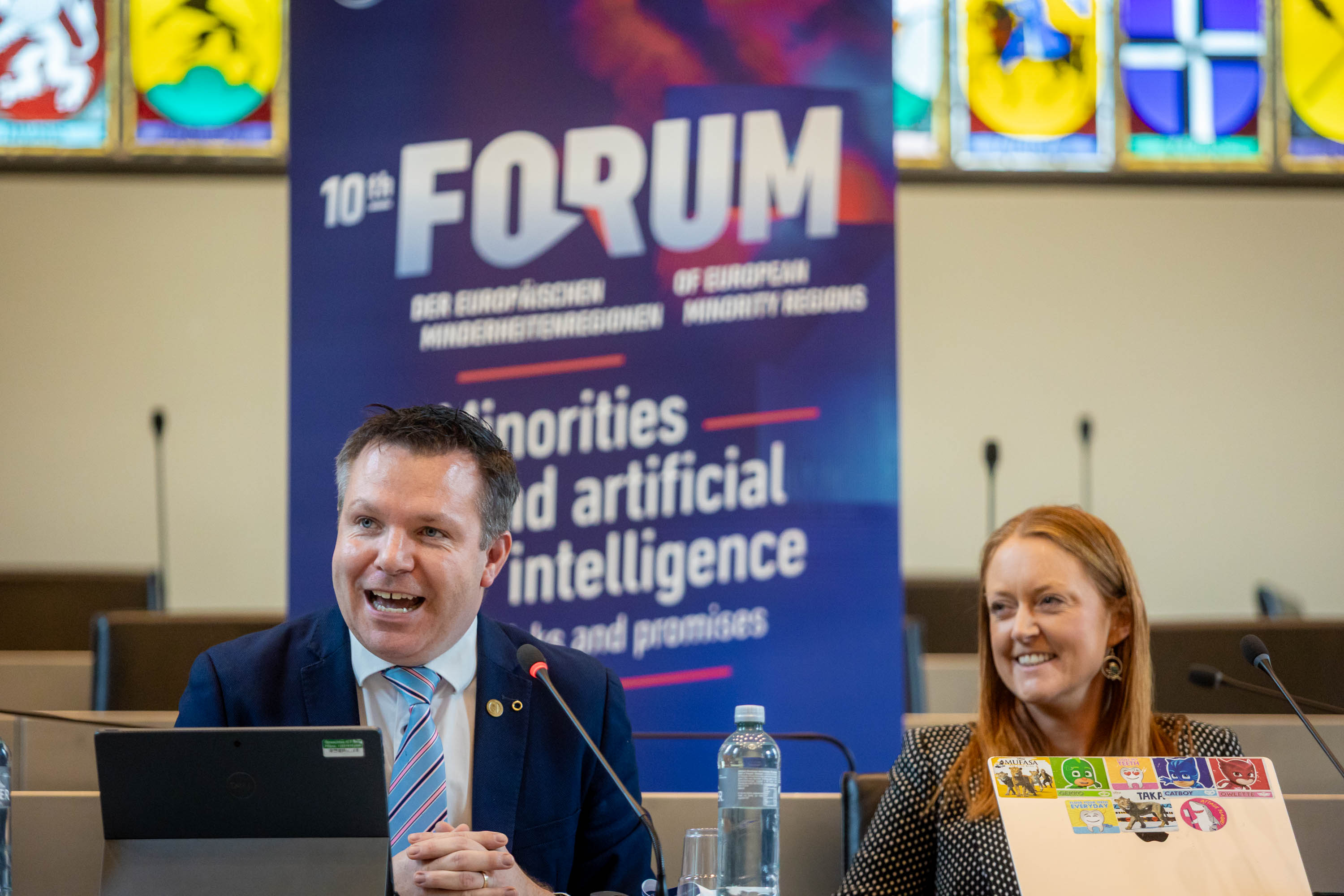
Samuel Frontull, Researcher at the University of Innsbruck and Institut Ladin, demonstrated the Ladin community’s progress using the Tradutur machine translation system, on-device AI tools, and specialized evaluation benchmarks.
Attila Rácz, one of the leaders of the IT cluster from Szeklerland, Romania, shared how their team is developing an AI chatbot to assist Hungarian speakers in managing local administrative procedures in their mother tongue. He outlined an eight-step roadmap for organizations to successfully implement AI solutions.
Bridging Tech Companies and Local Expertise
The Forum facilitated a dialogue on how global technology companies can responsibly promote regional languages. Lenovo and Motorola representatives shared their Digital Inclusion of Indigenous Languages Initiative, which localized over 200,000 words for the Ladin smartphone interface and developed an open-source machine translation model, LiLa, in partnership with local cultural institutes.
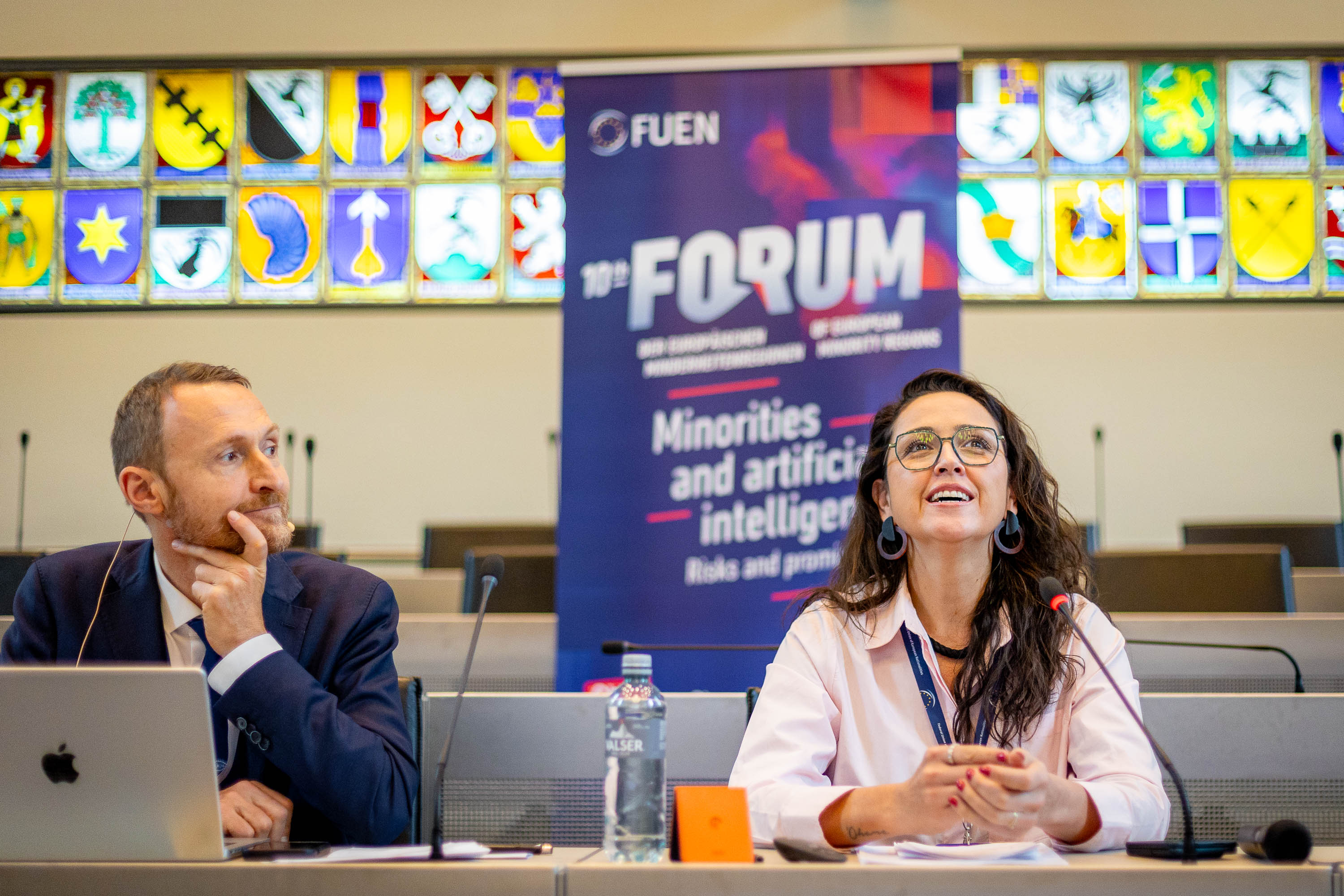
Daan van Esch from Google outlined the company's efforts to make information accessible, detailing support for approximately 900 language varieties on smartphone keyboards and the deployment of open models like Gemma for university linguistics departments to train on their own regional data.
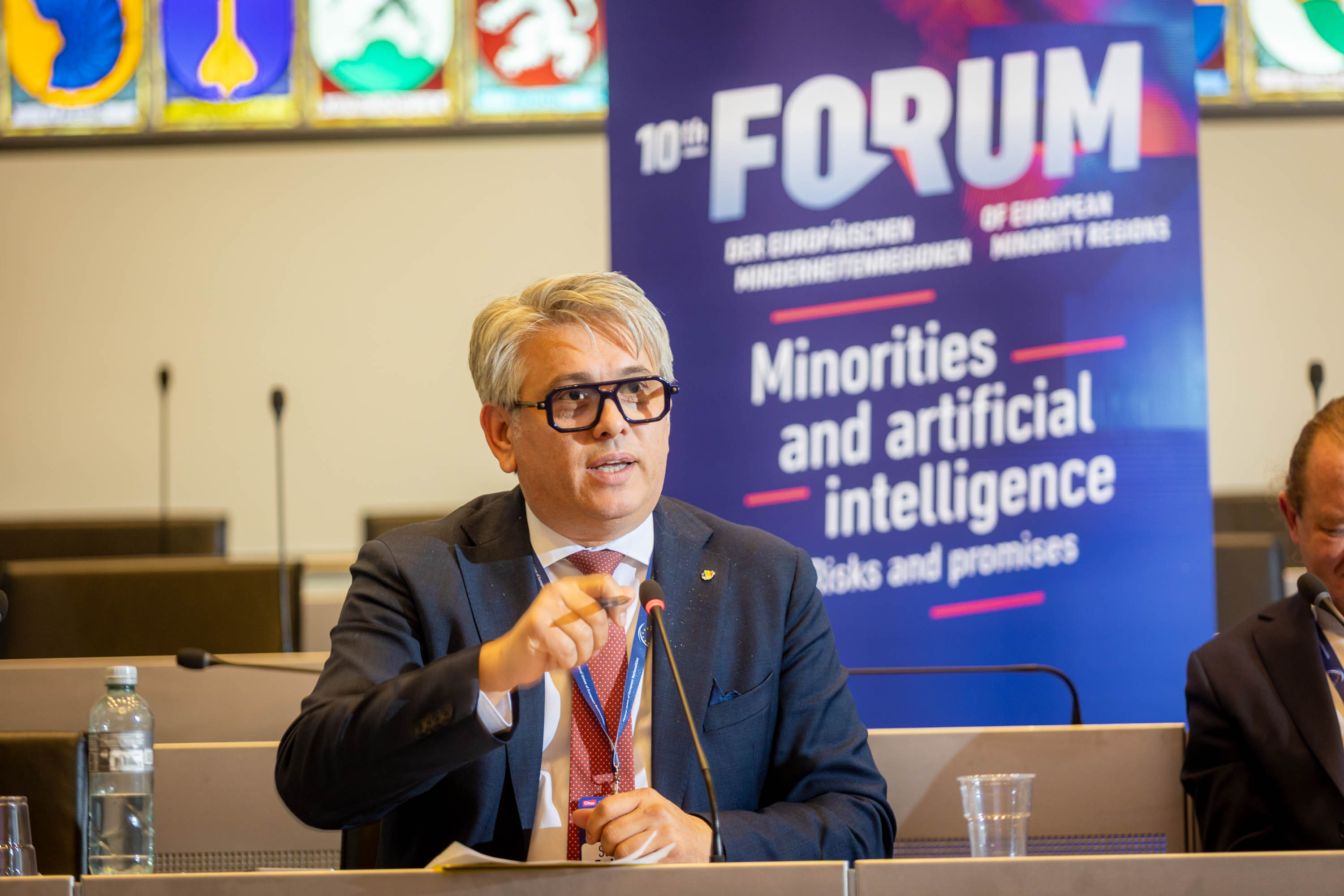
Concluding the discussions, FUEN Vice President Sterică Fudulea summarized the dual nature of AI for minorities: it presents challenges regarding cultural homogenization, while simultaneously serving as an effective tool for language revitalization. To achieve this, he asserted that technology development must adhere to the principle: "Nothing about us without us".
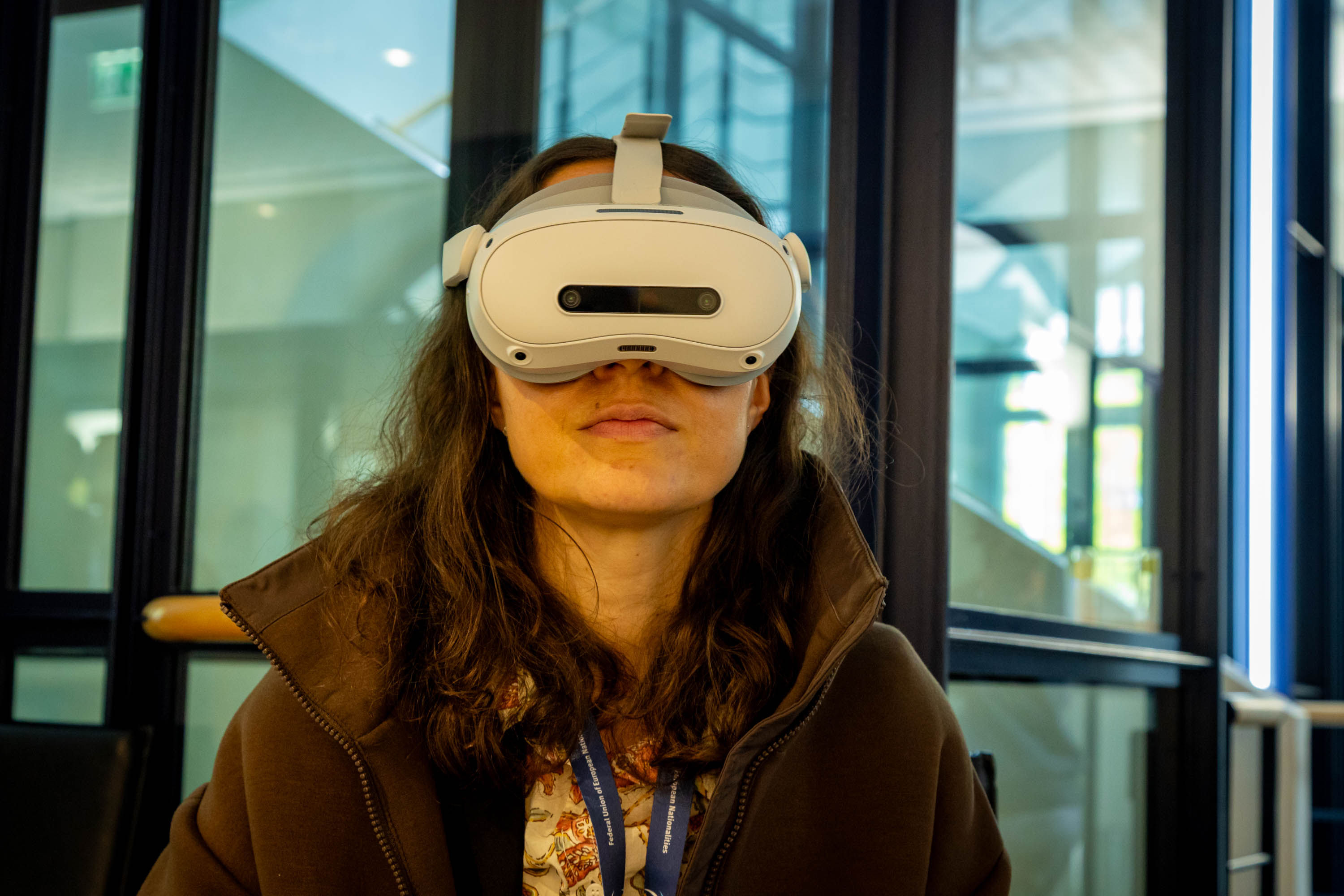
The 10th Forum of European Minority Regions, which also included interactive exhibitions, concluded on Saturday, October 24, with a guided tour of Chur – the oldest town in Switzerland, the capital of Graubünden – Grison, and the place where artist of Alien-fame Hans Ruedi Giger, known for his biomechanical style fusing machines and organic parts was born.
SAJTÓKÖZLEMÉNYEK
- The 12th Annual Meeting of FUEN TAG was hosted by the Turks of North Macedonia
- Minorities and Artificial Intelligence: Bringing Dialects to Life in the Digital Era
- Minorities and Artificial Intelligence: Coding Heritage into the Digital Age
- Turkic minorities and communities are gathering in Skopje, the capital of North Macedonia
- Björn Teir: What we do not digitize today is not visible to the world tomorrow
- 8th Annual Meeting of the FUEN Working Group on Education: vocational education, minority languages and AI in focus
- FUEN discussed minority issues with EU institutions in Brussels
- FUEN exhibition opens at the European Parliament: putting minority languages on the European agenda
- FUEN Working Group on Education meets in Eupen: Focus on vocational education, minority languages and AI
- FUEN Assembly of Delegates 2026 calls for greater inclusion of minority languages in artificial intelligence