








New secretariat in the Polish parliament supports national and ethnic minorities
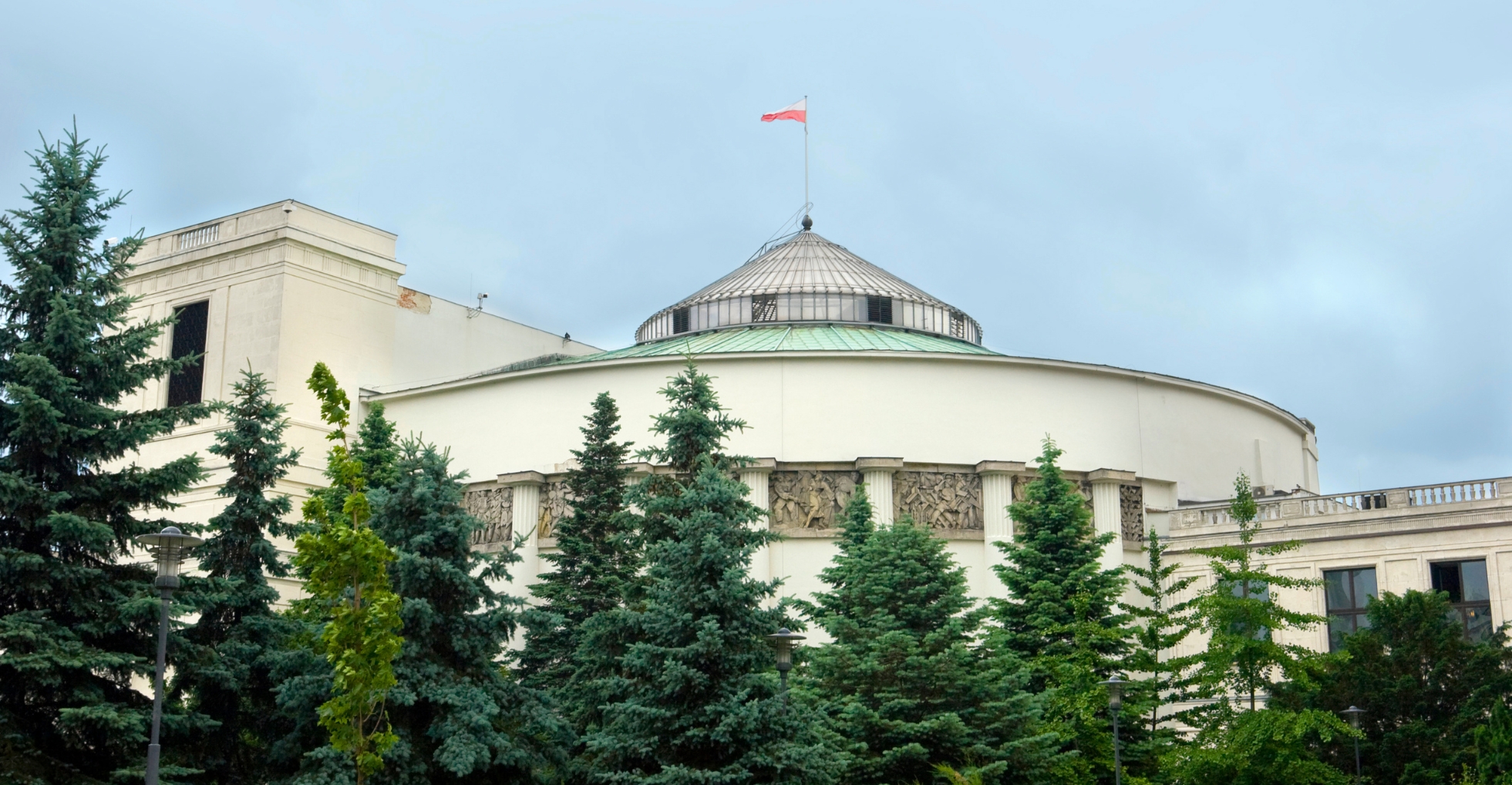
09.02.2026In Poland, the work of the representatives of national and ethnic minorities in the Joint Commission of the Government and National and Ethnic Minorities has had a new institutional basis since autumn 2025: a secretariat has been established within the Chancellery of the Sejm (the lower house of the Polish parliament), which is intended to provide organisational, substantive and legal support to minorities.
This was made possible by a legislative amendment adopted by the Sejm and the Senate (the upper house of the Polish parliament) in July 2025, which entered into force at the beginning of November 2025. The secretariat was officially opened on 4 November 2025 and began its work.
What does this mean in practice? The secretariat is intended to relieve minority representatives in their day-to-day political work and strengthen their capacity to operate. This includes support with expert opinions and consultations, with statements on draft laws and regulations, and with administrative and organisational tasks. In this way, it takes on activities that previously often had to be carried out by minority organisations themselves on top of their other work and with limited staff and financial resources.
The establishment of the secretariat, staffed by four employees, is also significant in light of the current political situation: since 2023, there has been no member of the Polish parliament who openly identifies as belonging to a national or ethnic minority. The new structure therefore creates a fixed institutional point of contact at central level and responds to repeated calls by minorities for a viable organisational and substantive basis for work in the Joint Commission.

The aim is to follow legislative processes more closely from a minority perspective and to support the protection, preservation and further development of the cultural identity of national and ethnic minorities in Poland. The minority organisations associate the secretariat with expectations of improvements in various areas of work, in particular through specialised legal advice, the commissioning of opinions and expert assessments, and administrative and organisational support, for example in the fields of education, culture and social affairs.
The Association of German Social and Cultural Societies in Poland (VdG), a FUEN member organisation and part of the Working Group of German Minorities (AGDM) within FUEN, emphasises that many of these tasks previously had to be taken on by minority representatives in addition to their main work, often outside regular working structures. The decisive factor will now be whether the secretariat has sufficient staff and financial resources to strengthen the work of the Joint Commission in a tangible way.
Whether the new structure creates lasting added value will be measured by concrete results: by more efficient work within the Joint Commission and by a stronger role as an advisory body to the Prime Minister. If this succeeds, the Polish model could also serve beyond the country as an example of good practice for the institutional support of national and ethnic minorities.
Background: Joint Commission of the Government and National and Ethnic Minorities
The Joint Commission of the Government and National and Ethnic Minorities is an advisory and assessment body to the Polish Prime Minister. It was established on the basis of the Minorities Act of 6 January 2005. Its tasks include, among other things, providing opinions on the implementation of minority rights, assessing programmes to preserve and develop cultural identity, issuing opinions on minority-related legislative initiatives, evaluating the allocation of state funds for minority work, and measures against discrimination.
The Commission brings together representatives of several ministries and state bodies with delegates of the recognised minorities. The national minorities represented are Belarusians, Czechs, Lithuanians, Germans, Armenians, Russians (whose membership expired on 18 February 2022), Slovaks, Ukrainians and Jews, as well as the ethnic minorities Karaims, Lemkos, Roma and Tatars. The community using the Kashubian regional language is also represented.
Further information on the Joint Commission is available on the Polish government website: https://www.gov.pl/web/mniejszosci-narodowe-i-etniczne/komisja-wspolna
Photo of the secretariat: Michał Schlüter
SAJTÓKÖZLEMÉNYEK
- 8th Annual Meeting of the FUEN Working Group on Education: vocational education, minority languages and AI in focus
- FUEN discussed minority issues with EU institutions in Brussels
- FUEN exhibition opens at the European Parliament: putting minority languages on the European agenda
- FUEN Working Group on Education meets in Eupen: Focus on vocational education, minority languages and AI
- FUEN Assembly of Delegates 2026 calls for greater inclusion of minority languages in artificial intelligence
- FUEN Congress discusses geo-blocking and the protection of minority languages
- FUEN Congress Examines Mother-Tongue Access in Healthcare and Social Services
- FUEN Congress Spotlights the Future of Minority Languages in Public-Service Broadcasting
- 70th FUEN Congress opens in Helsinki/Helsingfors
- For Protection of the Cultural Identity: The Case of the Breton Community in France