













Statement by UN Special Rapporteur highlights gaps in EU minority protection
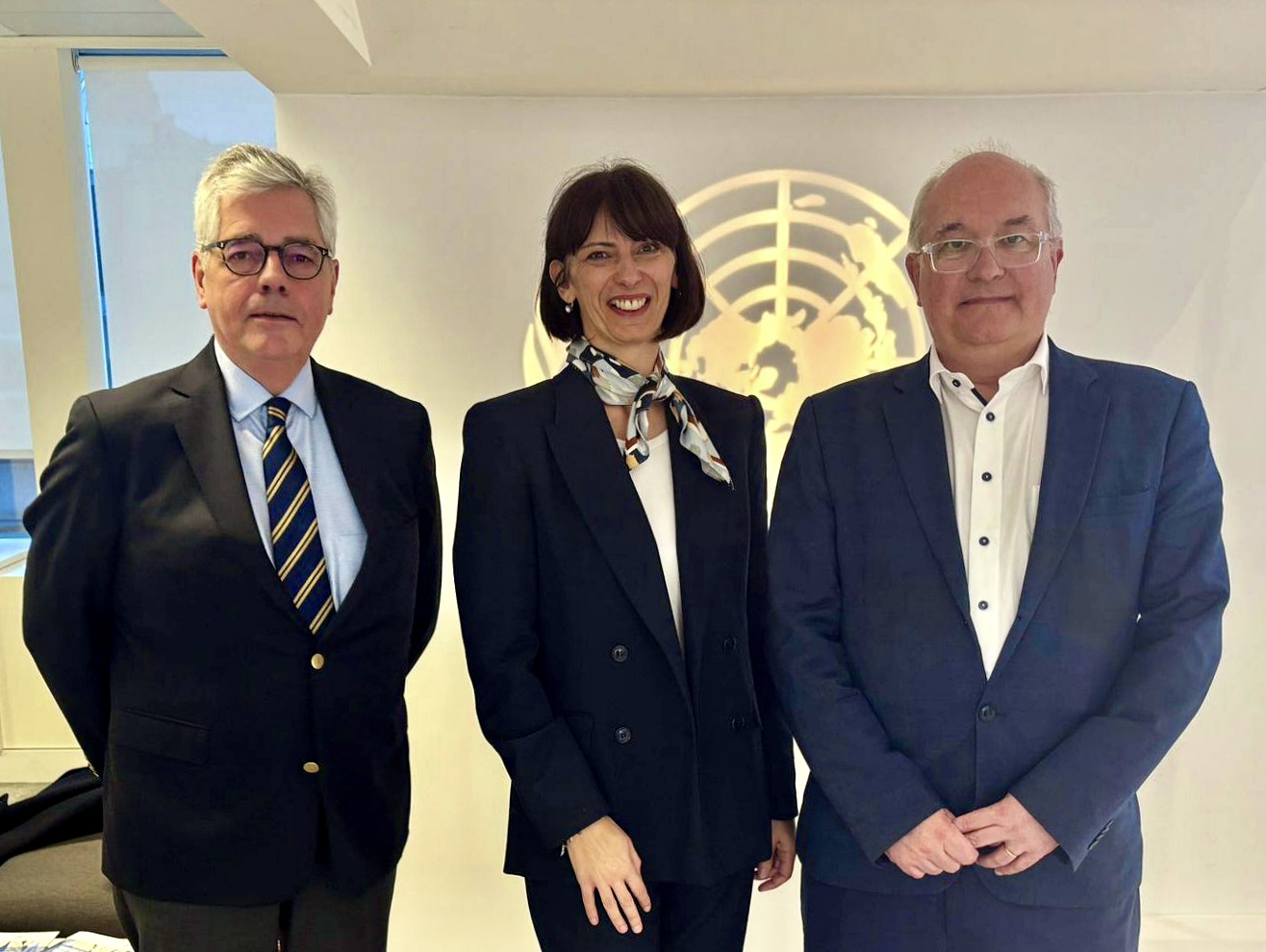
12.03.2026At the end of January, we reported on the meeting between the UN Special Rapporteur on Minority Issues, Nicolas Levrat, and FUEN President Olivia Schubert together with the Spokesperson of the European Dialogue Forum (EDF), Jens A. Christiansen. The meeting took place during the Special Rapporteur’s visit to the institutions of the European Union in Brussels. The exchange focused on the lack of a coherent framework for the protection of national minorities within the EU and the growing need for a more structured European approach to minority rights.
Following his visit to the EU institutions (19–28 January), the Special Rapporteur published an End-of-Mission Statement summarising the main observations of his mission. The document reflects several of the issues that were also raised during the discussion with FUEN and points to structural gaps in the EU’s approach to minority issues.
>>> The End-of-Mission Statement can be viewed and downloaded here. <<<
In his statement, Levrat stresses that while the European Union actively promotes minority rights beyond its borders (particularly through its enlargement policy) it does not possess sufficient instruments to address minority issues effectively within the Union itself. This discrepancy risks creating a double standard and underlines the need for stronger and more coherent mechanisms to protect minorities within the EU.
The statement notes that respect for the rights of persons belonging to minorities is one of the founding values of the European Union. However, since the European Commission does not recognise a clear EU competence in this field, the EU currently lacks the legal basis to adopt binding policies or legislation aimed directly at protecting minorities. The Special Rapporteur therefore calls for a more comprehensive framework that would allow for a more coherent and coordinated approach to minority issues at EU level.
Levrat acknowledged the EU’s anti-discrimination policies as well as strategies addressing racism and inclusion, but emphasised that these instruments do not fully cover the specific needs of national and linguistic minorities. In particular, he noted that linguistic minorities remain largely absent from existing EU strategies and policies, despite the Union’s commitment to cultural and linguistic diversity.
The statement also highlights the important role of civil society organisations and minority representatives in advancing minority rights and maintaining dialogue with European institutions. At the same time, the Special Rapporteur expressed concern about the lack of diversity within EU institutions, noting that persons belonging to minorities remain significantly underrepresented in the EU administration.
The findings of the mission will feed into the Special Rapporteur’s comprehensive report to the UN Human Rights Council, which is expected to be presented in March 2027.
SAJTÓKÖZLEMÉNYEK
- 8th Annual Meeting of the FUEN Working Group on Education: vocational education, minority languages and AI in focus
- FUEN discussed minority issues with EU institutions in Brussels
- FUEN exhibition opens at the European Parliament: putting minority languages on the European agenda
- FUEN Working Group on Education meets in Eupen: Focus on vocational education, minority languages and AI
- FUEN Assembly of Delegates 2026 calls for greater inclusion of minority languages in artificial intelligence
- FUEN Congress discusses geo-blocking and the protection of minority languages
- FUEN Congress Examines Mother-Tongue Access in Healthcare and Social Services
- FUEN Congress Spotlights the Future of Minority Languages in Public-Service Broadcasting
- 70th FUEN Congress opens in Helsinki/Helsingfors
- For Protection of the Cultural Identity: The Case of the Breton Community in France